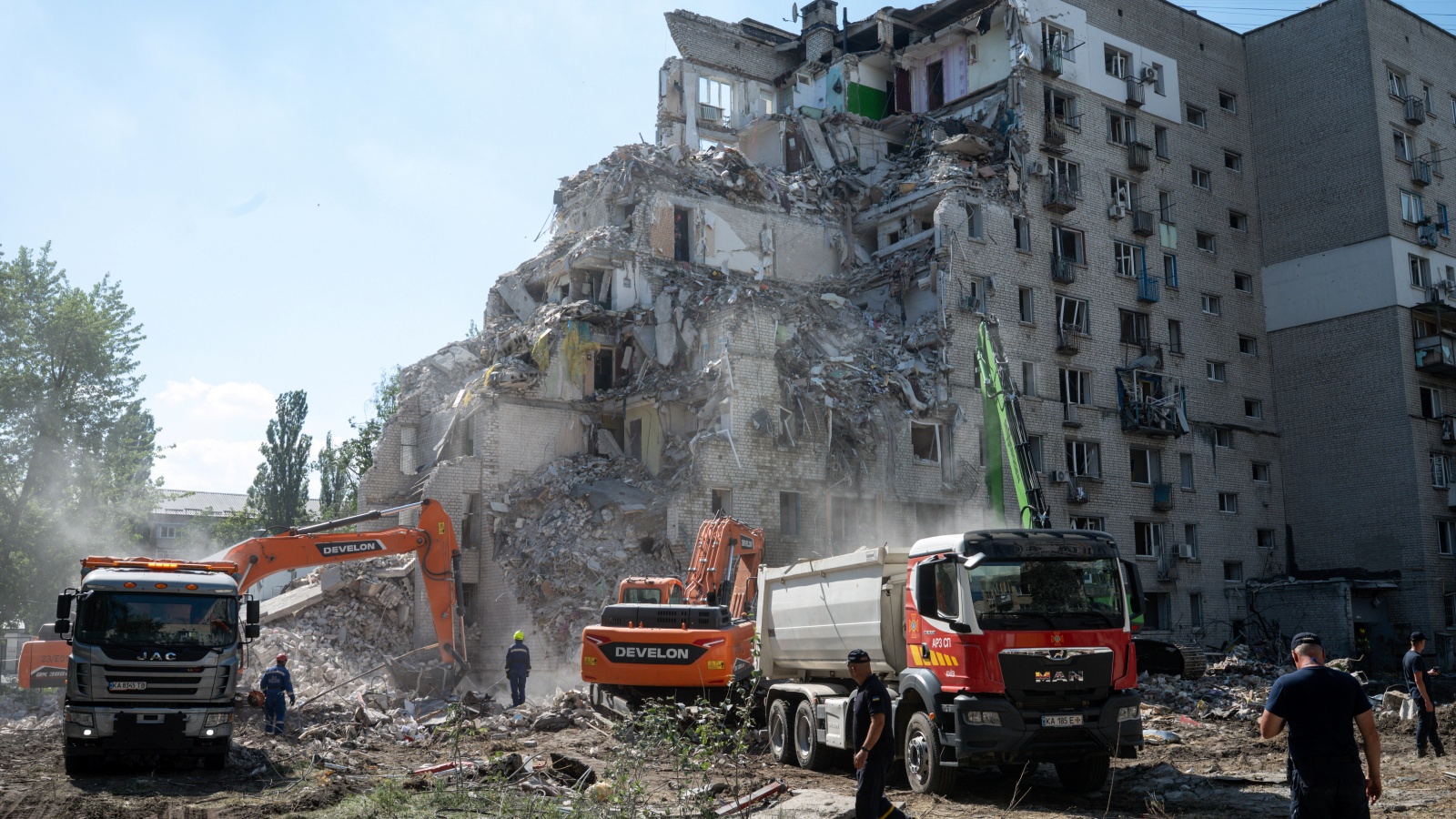
The sheer volume of the assault shatters everything we thought we knew about modern saturation bombing. Overnight, the sky above Ukraine turned into a chaotic, fiery grid. Russia unleashed nearly 500 attack drones alongside more than 70 cruise and ballistic missiles in a highly coordinated, 11-hour blitz primarily targeting the capital city.
Kyiv Mayor Vitali Klitschko didn't mince words, calling it the absolute worst attack the capital has seen in over four years of full-scale war. The numbers coming from the State Emergency Service of Ukraine are grim. At least 27 people are dead, and over 100 more are injured. Search and rescue teams are actively picking through the shattered concrete of a nine-story apartment building that partially collapsed on the eastern bank of the Dnipro River. People are still trapped under that rubble.
If you think this is just another tragic headline from a distant war, you're missing the terrifying tactical evolution happening right now. This wasn't a standard raid. It was a deliberate attempt to completely break a modern Western-supplied air defense grid through sheer numbers.
The Math Behind a 500 Drone Swarm
Let's look at what actually flew into Ukrainian airspace. The Ukrainian Air Force confirmed Russia deployed 496 attack drones—a mix of jet-powered Shaheds, Gerberas, and Italmas models—alongside complex decoys. Mixed into this swarm were 74 heavy missiles. We aren't talking old Soviet surplus either. The barrage featured four cutting-edge Tsirkon anti-ship missiles, 24 Iskander ballistic missiles, and dozens of Kh-101 and Kalibr cruise missiles.
Ukraine's air defense pull off what can only be described as a miracle, intercepting 476 drones and 48 missiles. But simple math shows why the Kremlin is smiling.
Even with a spectacular 95% interception rate, 33 projectiles smashed directly into their targets. At least 20 residential buildings were struck directly across Kyiv. A hotel housing European diplomats and expats caught fire. An ambulance station was hit, severely injuring first responders.
This highlights the fatal flaw in current Western air defense theory. You can have the most advanced system on earth, but if the enemy throws enough cheap metal at you, the numbers game eventually wins. It costs Russia relatively little to manufacture a generic Shahed drone. Conversely, a single PAC-3 interceptor missile for a US-supplied Patriot system costs roughly $4 million.
The Real Reason Moscow Uncorked This Barrage
The Kremlin claims this massive operation targeted military installations, drone production facilities, and energy infrastructure. They called it a "retaliation" for Ukraine's relentless deep-strike drone campaign against Russian oil refineries. Just hours before the Kyiv attack, Ukraine's General Staff confirmed a successful hit on the Kstovo oil refinery in Nizhny Novgorod, a staggering 500 kilometers east of Moscow.
Ukraine's Foreign Minister Andrii Sybiha rightly called Moscow's retaliation narrative completely immoral. But let's look at the underlying strategy.
Ukraine's strikes on Russian oil infrastructure have caused genuine fuel shortages across Russia, a fact Vladimir Putin publicly conceded. By launching a catastrophic attack on Kyiv's civilians, Moscow is trying to force Ukraine to make a brutal choice:
- Pull air defense assets away from the front lines and industrial hubs to protect families in the capital.
- Keep protecting the front lines and watch high-rise apartments in Kyiv get leveled on the nightly news.
Why the West is Fumbling the Logistics
President Volodymyr Zelenskyy cut short an overseas trip to Ireland, returning to stand outside a destroyed Kyiv apartment building. His frustration was palpable. He pointed out that the scale of this tragedy could have been vastly mitigated if Western allies had delivered promised air defense systems on schedule.
Ukraine currently operates roughly eight Patriot batteries supplied by the US and European allies. Experts agree the country needs at least 25 of these systems to build a reliable nationwide shield. But the bottleneck isn't just shipping the launchers—it's the interceptor missiles themselves. We simply don't make them fast enough.
This supply crunch is forcing a radical shift in strategy. Zelenskyy is now openly bypassing the standard aid request loop, pleading with Washington for a license to manufacture Patriot missiles domestically inside Ukraine.
Building a high-tech missile factory in a country under active bombardment sounds insane. But from Kyiv's perspective, relying on the slow, politically gridlocked pipelines of Western capital is proving fatal. Local production means a predictable supply chain. It cuts out the agonizing diplomatic delays that cost lives every time a new aid package gets bogged down in foreign parliaments.
What Needs to Happen Next
The tactical reality shifted overnight. Condemnation from world leaders won't stop the next swarm. If Ukraine's partners want to prevent the total depopulation of major Ukrainian cities, the defensive strategy must adapt immediately.
First, Western allies have to greenlight the domestic production licenses Ukraine is asking for. If tech transfers take time, joint-venture assembly hubs should be established in neighboring NATO states like Poland, which already scrambled fighter jets during this latest raid.
Second, the defensive focus must pivot toward cost-effective directed-energy weapons and electronic warfare systems. Firing million-dollar kinetic missiles at $20,000 drones is financially unsustainable over a long war of attrition.
More than 50,000 Kyiv residents spent their night huddled on concrete floors inside underground metro stations. They brought mattresses, blankets, and camping gear because they knew their homes might not be standing by sunrise. The local government has declared an official day of mourning, lowering flags to half-mast. The message from Kyiv is blunt: stop treating air defense as a policy debate and start treating it as an existential production race.


