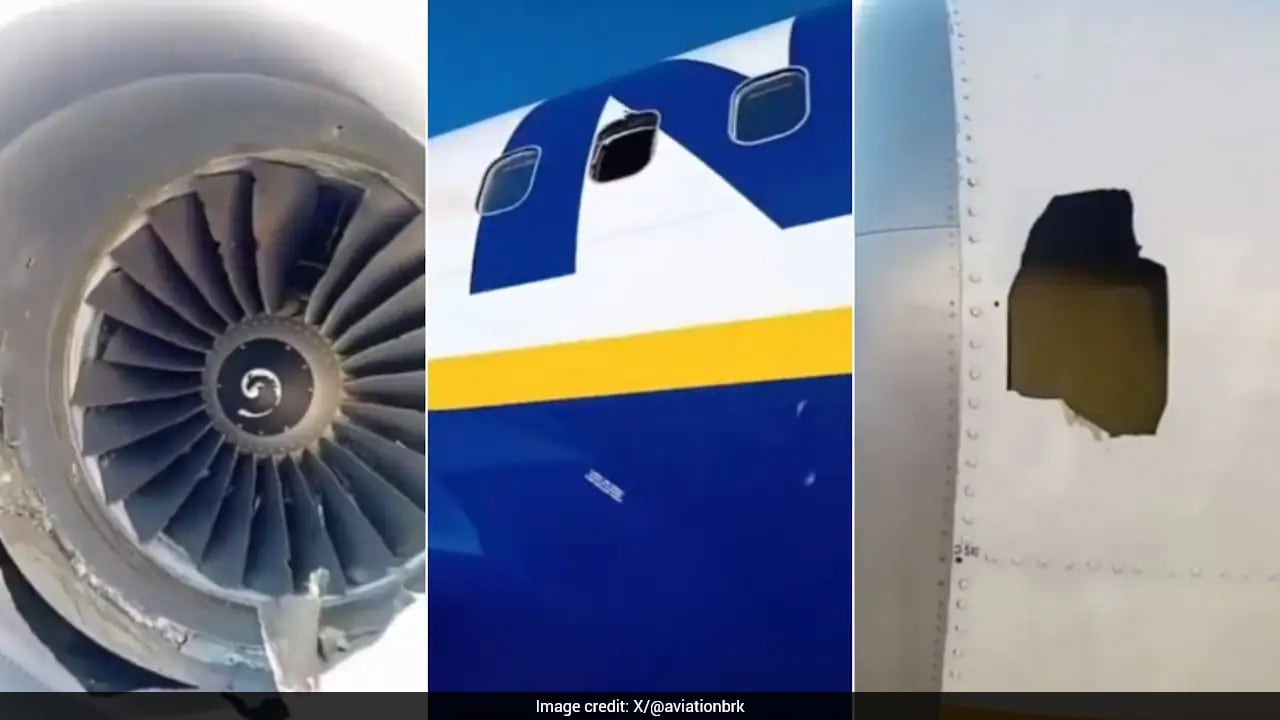
A standard mid-altitude cruise turned into a fight for survival when a sudden, explosive engine failure tore through a Ryanair Boeing 737, nearly pulling an elderly passenger through a ruptured cabin wall. The incident, captured in frantic passenger footage showing a shredded engine cowling and severe structural damage, highlights a growing crisis in commercial aviation. While budget carriers frequently defend their safety records by pointing to modern fleets, this near-disaster exposes the systemic pressures that rapid turnaround times, intense fleet utilization, and outsourced maintenance place on modern aircraft integrity.
The mechanics of a mid-air decompression are violent and unforgiving. When a fan blade shears off at high speed—an event known as an uncontained engine failure—the debris acts like shrapnel. In this instance, metal fragments pierced the aircraft fuselage, causing an immediate drop in cabin pressure.
For the 61-year-old passenger seated adjacent to the impact zone, the physical toll was instantaneous. Air rushes toward the breach at near-sonic speeds, creating a vacuum effect capable of pulling unbuckled passengers toward the opening. Only the swift intervention of nearby travelers and the deployment of emergency oxygen systems prevented a catastrophic loss of life before the flight crew executed an emergency descent.
The Illusion of the Flawless Budget Fleet
Low-cost carriers built their empires on a simple financial model. Keep the planes in the air. A grounded aircraft generates no revenue, which drives an operational culture obsessed with minimizing time on the tarmac.
This operational velocity creates a hidden tax on machinery. While legacy carriers often allow for longer overnight layovers where maintenance crews can conduct deep visual inspections, budget operations rely heavily on rapid turnarounds. Crews routinely have less than thirty minutes to deplane, clean, reload, and inspect an aircraft before the next leg.
The Turning Risk of Micro-Fatigue
Metal fatigue does not announce itself. It hides within the internal grain structure of titanium fan blades and aluminum skin panels. Every time an aircraft pressurizes and depressurizes, the hull expands and contracts.
- High Cycle Frequency: Short-haul budget routes mean more takeoffs and landings per day compared to long-haul carriers.
- Thermal Shock: Engines cycling between intense takeoff heat and high-altitude cold multiple times a day experience accelerated material degradation.
- Visual Limitations: Micro-cracks are rarely visible during a standard walk-around inspection conducted on a crowded apron between flights.
When these micro-cracks go unnoticed, catastrophic failure becomes a matter of probability. The footage from the Ryanair incident reveals a clean separation of structural components, suggesting that the engine housing failed to contain the internal kinetic energy of the rotating machinery. This is a critical vulnerability; engine cowlings are engineered specifically to act as armor, ensuring that if an internal component disintegrates, the destruction remains contained within the nacelle.
The Fragmented Supply Chain of Aviation Maintenance
To maintain rock-bottom ticket prices, the aviation industry has increasingly moved away from in-house engineering departments. Third-party maintenance, repair, and overhaul (MRO) providers now service a massive portion of the global commercial fleet.
This outsourcing creates a fractured chain of accountability. An airline might lease an engine from one global conglomerate, contract its daily maintenance to a regional provider, and send the aircraft to a different country entirely for heavy structural overhauls.
"When responsibility is distributed across multiple corporate entities, critical diagnostic anomalies can slip through the logistical cracks."
Regulatory oversight struggling to keep pace compounds this issue. National aviation authorities perform audits, but they cannot monitor every mechanic working the night shift at a third-party hangar halfway across the continent. The pressure to sign off on airworthiness forms to meet strict airline schedules introduces an element of human error that documentation alone cannot eliminate.
The Problem with High-Stress Materials
Modern jet engines use advanced single-crystal superalloys designed to withstand temperatures exceeding the melting point of the metal itself. They are marvels of engineering.
$$T_{gas} > T_{melting}$$
To survive these conditions, components rely on intricate internal cooling passages and thermal barrier coatings. If a single cooling hole becomes blocked by atmospheric debris or volcanic ash, local hot spots develop rapidly. The metal weakens, warps, and eventually yields under the immense centrifugal forces of flight.
Rethinking the Limits of Cabin Safety Protocols
Passenger behavior during emergencies remains a wild card that standard safety briefings fail to address adequately. In the chaos of a sudden decompression, the immediate reaction of many travelers is panic rather than compliance with basic safety protocols.
During this mid-air crisis, several passengers reportedly attempted to film the damaged engine before securing their own oxygen masks. This delay is dangerous. At 30,000 feet, the useful consciousness window without supplemental oxygen is measured in seconds, not minutes. Hypoxia sets in silently, impairing judgment before the individual even realizes they are losing cognitive function.
[Sudden Decompression]
       │
       ▼
[Rapid Loss of Cabin Pressure]
       │
       ├──────────────────────────────┐
       ▼                              ▼
[Physical Vacuum Force]     [Hypoxia Onset (Seconds)]
       │                              │
       ▼                              ▼
[Structural Danger]         [Impaired Judgment / Collapse]
The obsession with capturing viral smartphone footage has fundamentally altered emergency dynamics inside the cabin. Flight attendants are trained to manage evacuations and medical crises, but they cannot combat a cabin full of distracted passengers recording a crisis for social media. This behavior slows down response times and increases the likelihood of secondary injuries during an emergency descent.
The True Cost of Cheap Tickets
The aviation industry operates on razor-thin margins, and the consumer has become accustomed to cross-continental travel for the price of a modest dinner. However, the physical reality of keeping a 70-ton metal tube aloft at 500 miles per hour remains bound by the laws of physics and metallurgy, not marketing strategies.
As fleets age and operational cycles intensify, the margin for error shrinks. Airlines must confront the reality that current inspection intervals may no longer be sufficient for aircraft subjected to the relentless schedules of modern low-cost travel. Sweeping structural issues under the rug of statistical probability works until it doesn't.
Regulatory bodies must enforce stricter, mandatory non-destructive testing for high-cycle aircraft, regardless of the operational delays it causes. Until maintenance protocols shift from reactive fixes to aggressive, preventative structural analysis, the industry remains one cracked fan blade away from a tragedy that no emergency landing can fix.