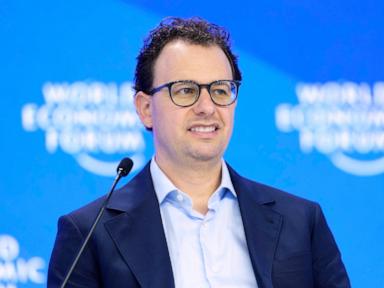
When the chief executive of OpenAI sits before the United Nations Security Council, the spectacle is rarely about solemn diplomacy. It is about power. Sam Altman’s presence at the highest international table of security and conflict resolution marks a profound shift in how nation-states view software. Code is no longer just a commercial product or an academic curiosity. It is treated as a geopolitical force capable of destabilizing borders, shifting economic power, and rewriting the rules of warfare without firing a single kinetic round.
For decades, the Security Council has convened to address territorial disputes, nuclear proliferation, humanitarian crises, and transnational terrorism. Inviting a tech executive to brief this specific body signals an alarming realization among diplomats. The architects of advanced neural networks hold more immediate sway over global stability than many elected heads of state. They build proprietary black boxes, dictate the terms of access, and deploy systems that can outpace human reaction times before international treaties can even draft a definition. For a deeper dive into this area, we suggest: this related article.
The core premise behind Altman’s appearance is straightforward. Governments want control, or at least a seat at the table before the machine outgrows its cage. But the mechanics of this diplomatic engagement reveal a deeper structural tension. Silicon Valley operates on a philosophy of velocity, breaking things, and iterating publicly. International law operates on consensus, slow deliberation, and the preservation of sovereignty. When these two opposing forces collide in a chamber designed to prevent global catastrophe, the friction is immediate.
The Illusion of Safety Governance
Every major technology summit features polished pronouncements regarding responsible development and democratic alignment. Executives speak of guardrails, alignment research, and voluntary commitments. Yet, behind closed doors, the commercial incentive structures tell a vastly different story. Capital markets reward speed, scale, and dominance. If one laboratory slows down for exhaustive international oversight, a rival lab captures the market share. For broader details on this development, comprehensive reporting is available at The Verge.
This dynamic creates a dangerous prisoner's dilemma for global security. Voluntary corporate pledges are insufficient substitutes for binding international law. When a model's weights are finalized and distributed, the genie does not return to the bottle. Security Council members understand this vulnerability. They are not merely asking tech leaders to be careful; they are trying to figure out how to regulate an industry that moves faster than the legislative process can comprehend.
Consider the dual-use nature of modern machine learning models. The same architecture trained to assist with protein folding or code generation can also optimize cyber-attacks, accelerate the discovery of synthetic pathogens, or automate targeted disinformation campaigns at an unprecedented scale. Traditional arms control treaties rely on verifiable inspections of physical infrastructure, such as uranium enrichment centrifuges or missile silos. How do you inspect a cluster of millions of high-end GPUs distributed across data centers worldwide, or audit millions of lines of proprietary training data? The traditional verification toolkit is obsolete.
The Geopolitical Arms Race
The rush for artificial intelligence dominance is frequently framed as a bilateral competition between the United States and China. This binary narrative, while convenient for defense contractors and political pundits, misses the broader picture. Middle powers, from the European Union to the Global South, find themselves caught in a digital colonization process. They provide the raw data, the localized labor for data labeling, and the consumer markets, while the foundational models are shaped by the cultural and economic priorities of a tiny sliver of the San Francisco Bay Area.
When Altman briefs international diplomats, he is acting as an unofficial ambassador for a corporate entity that wields disproportionate influence over sovereign digital infrastructure. Nations that outsource their computational sovereignty to a handful of American and Chinese corporations risk becoming economic and security vassals in the twenty-first century.
Some argue that international bodies should establish a centralized global agency, modeled after the International Atomic Energy Agency, to monitor and license advanced training runs. The analogy sounds compelling on paper, but it breaks down under scrutiny. Fissile material is scarce and difficult to refine. Compute, while expensive, is infinitely more portable and reproducible. A rogue actor does not need a massive state apparatus to train a dangerous model; they need capital, cloud credits, and a repository of open-source weights.
The Realities of Enforcement
Diplomacy requires teeth. Without enforcement mechanisms, resolutions and communiques are little more than diplomatic theater. The United Nations Security Council has struggled for decades to enforce agreements on conventional and nuclear weapons when major powers hold veto power or choose to look the other way. Applying this fractured apparatus to a technology that is diffuse, software-based, and commercially driven introduces a new tier of complexity.
If a government decides to bypass international safety standards to gain a military advantage, who stops them? Sanctions can target physical hardware supply chains, such as advanced lithography machines and semiconductor manufacturing equipment. But restrictions on hardware have repeatedly proven leaky, spurring illicit smuggling networks and domestic workaround efforts. Furthermore, the increasing efficiency of smaller, highly optimized models means that older hardware can achieve results that previously required elite supercomputers.
The dialogue between tech executives and diplomats often glosses over these hard truths in favor of optimistic timelines and abstract governance frameworks. But the window for effective international coordination is closing. As models gain autonomy in execution and decision-making loops, the human-in-the-loop safety buffer becomes a liability in high-speed tactical environments.
The Security Council session featuring OpenAI’s leadership is a symptom of a systemic governance vacuum. Technology companies have outpaced the political structures designed to regulate them, forcing diplomats into a reactive posture where they must negotiate terms with the very entities disrupting the global order. The conversation in New York is no longer about whether advanced systems will change the world. It is about whether human institutions retain the capacity to govern the tools they have unleashed.