Thirteen saves on nineteen shots. You don't need an advanced analytics degree to know what a .684 save percentage does to an NHL hockey team holding a three-goal lead in the third period.
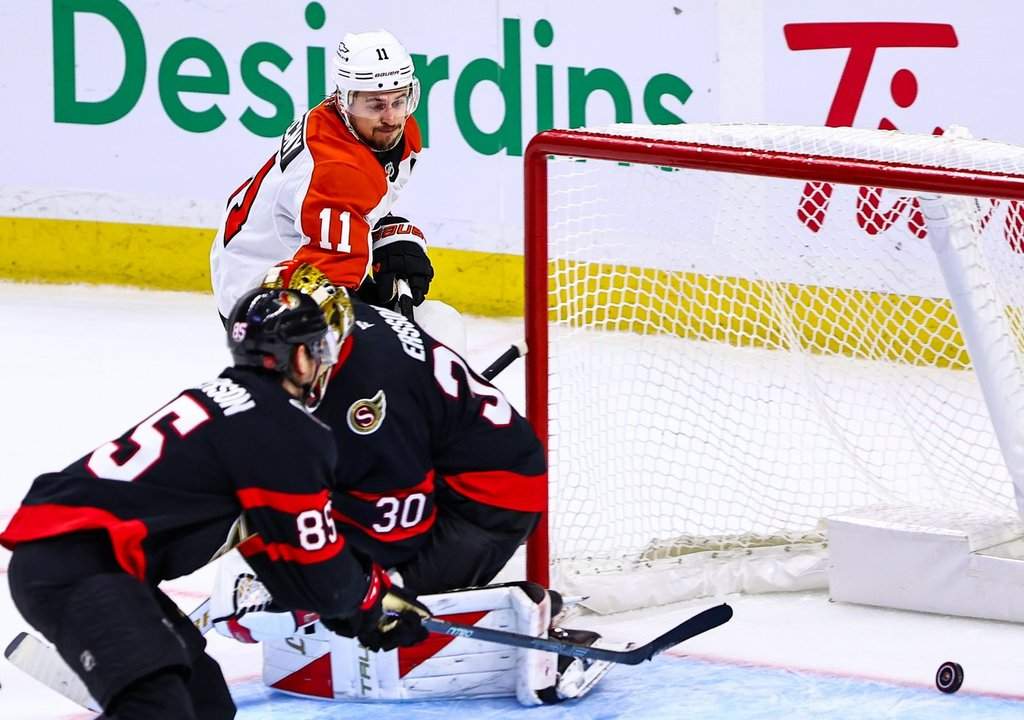
When Samuel Ersson took the crease at Canadian Tire Centre on November 19, 2026, against the Philadelphia Flyers, it was supposed to be a quiet, satisfying revenge game against the franchise that drafted him and traded him away the previous June. Instead, Ersson's rough night turned into a 6-5 overtime loss that saw the Ottawa Senators blow a 5-2 cushion with less than fifteen minutes left on the clock.
If you only read the standard post-game recap, it sounds like a fluke. Head coach Travis Green shrugged it off as one of those weird nights where bounces go the wrong way. Tim Stützle echoed the sentiment, pointing out that Ottawa mostly carried the play and deserved two points.
They're right about the skaters. Ottawa outshot Philadelphia 26-19, dominated the middle frame 11-3 in shots, and generated plenty of offense.
What those polite locker-room quotes dance around is the glaring elephant in the crease. Ottawa didn't lose because of bad luck. They lost because their backup goaltender couldn't buy a timely stop, exposing a massive vulnerability behind starter Linus Ullmark.
How a 5-2 Senators Lead Evaporated in Fourteen Minutes
For forty-five minutes, Ottawa looked like a legit contender in the Atlantic Division. Claude Giroux—another former Flyer—opened the scoring less than two minutes in by tipping a Jake Sanderson point shot past Joseph Woll. Even after Owen Tippett tied it on a Philadelphia power play, the Senators controlled the tempo.
Dylan Cozens and Drake Batherson pushed the lead to 3-1 in the second period. Cam York clawed one back late in the second, making it 3-2, which felt like a minor hiccup given how thoroughly Ottawa was tilting the ice.
Then the third period started, and Ottawa immediately stepped on the gas. Philip Tomasino scored just 38 seconds in. Cozens buried his second of the night at 5:27. Up 5-2 at home with 14:33 remaining, the game was effectively over.
Except it wasn't.
Philadelphia didn't mount a relentless, suffocating barrage of 25 shots in the third period. They didn't even get close to that. The Flyers finished the entire game with just 19 shots on goal. Yet somehow, four of their final chances found the back of the net:
- 6:25 of the third: Cam York cleans up a Noah Cates rebound on the power play.
- 6:40 of the third: Fifteen seconds later, Travis Konecny hits Tyson Foerster on a 2-on-1 rush, and Foerster snaps it home from the left circle.
- 17:27 of the third: With Joseph Woll pulled for an extra attacker, Jamie Drysdale ties the game at 5-5.
- 0:39 of overtime: Konecny blows past Tim Stützle through the neutral zone and beats Ersson with a shot that trickles across the line.
After the game, Konecny grinned about his mini-rivalry with his former teammate, noting that Ersson robbed him in the first period before Konecny got him back in overtime. Four points for Konecny, two goals for York, and two crucial standings points snatched right out of Ottawa's hands.
Why Samuel Ersson Struggled Against His Former Team
Playing your old club for the first time messes with your head. I've seen veteran netminders overplay angles, fight the puck, and lose their crease depth simply because they want that specific win a little too badly.
Ersson spent years in the Philadelphia organization after the Flyers took him in the fifth round of the 2018 NHL Draft. He started 51 games for them in 2023-24 and another 47 in 2024-25 before the front office finally pulled the plug on June 16, 2026, shipping him to the Toronto Maple Leafs. Ten days later, Ottawa acquired him to back up Linus Ullmark.
When you face shooters who have practiced against you for four years, every tendency is on the scouting report. Konecny, Tippett, and Foerster know where Ersson drops his gloves early. They know how aggressively he challenges shooters at the top of the paint.
Still, blaming emotions only goes so far when the numbers across the entire 2026-27 season tell the exact same story.
The Numbers Behind Ersson's Slump
Before puck drop against Philadelphia, Ersson was already carrying shaky metrics. Including the 6-5 overtime defeat, his 2026-27 stat line through 11 appearances (eight starts) dropped to a bloated 3.43 goals-against average and an .869 save percentage. Even more concerning for the coaching staff, he has surrendered four or more goals in four separate outings already this fall.
Look at his game log from October and November to see the volatility:
- October 13 vs. St. Louis: Allowed 7 goals on 26 shots (.731 SV%) in a 7-2 blowout loss.
- October 22 vs. San Jose: Gave up 4 goals on 26 shots (.846 SV%) in a 6-2 loss.
- November 4 at Buffalo: Stopped 24 of 25 shots (.960 SV%) in a crisp 2-1 road win.
- November 7 vs. Utah: Turned aside 31 of 33 shots (.939 SV%) for a 4-2 victory.
- November 19 vs. Philadelphia: Stopped 13 of 19 shots (.684 SV%) in the 6-5 overtime collapse.
Notice the pattern? When Ersson gets into a rhythm with consistent starts—like his brief early-November stretch against Buffalo and Utah—he looks like a capable NHL goaltender. When he sits on the bench for nine days between starts, his timing falls apart completely.
Against the Flyers, he hadn't seen game action since a 3-2 overtime loss to Washington on November 10, where he only faced 17 shots and gave up three goals. Rust combined with high-stakes emotion against his old teammates proved fatal.
The Linus Ullmark Dilemma in Ottawa
Here's the real problem for Senators general manager Steve Staios and head coach Travis Green. You can't just bury Samuel Ersson on the bench for the next five months and ride your starter into the ground.
Linus Ullmark has been nothing short of sensational this season. Sitting at 10-1-0 with a 1.42 goals-against average and a .940 save percentage, the 33-year-old Swede is playing at a Vezina Trophy level. Every time Ullmark puts on the pads, Ottawa feels virtually unbeatable.
There's just one massive catch. Ullmark has never started or played more than 49 games in a single NHL season during his entire career.
Hockey fans in Ottawa don't need a reminder of what happens when Ullmark's workload spikes or off-ice pressures mount. Last season, the Senators had to navigate a difficult stretch when Ullmark stepped away on a leave of absence to focus on his mental health. Managing his minutes isn't optional—it's mandatory if Ottawa wants him healthy for the Stanley Cup Playoffs in April.
That means Ersson is going to get another 25 to 30 starts whether fans like it or not.
Why Coach Travis Green Protected His Goalie
If you listened closely to Travis Green's post-game press conference, you noticed he refused to throw Ersson under the bus. Calling it "a weird game" where Philadelphia "got a couple of bounces" wasn't blindness on Green's part. It was pure survival instinct.
Goaltenders are notoriously fragile psychologically. If a coach publicly torches a backup netminder after a .684 performance, that goalie's confidence can vanish for two months. Green knows he needs Ersson to steal wins on the second half of back-to-backs and give Ullmark breather nights against non-conference opponents.
Publicly, you blame bad bounces and defensive lapses. Privately, goalie coach Justin Peters has to get Ersson's rebound control and lateral tracking sorted out immediately.
What Skaters Actually Did Wrong in the Third Period
Laying 100% of the blame on Ersson ignores the sloppy habits Ottawa showed once the scoreboard hit 5-2. While a .684 save percentage is brutal, the Senators' skaters actively invited Philadelphia back into the building.
First, penalty trouble killed their momentum. Stephen Halliday took a cross-checking minor at 5:13 of the third period—just fourteen seconds before Cozens scored shorthanded or right around the fifth goal sequence—handing the Flyers a power play that Cam York converted at 6:25. Philadelphia had entered the night stuck in a dismal 1-for-14 power-play slump over their previous three games, yet Ottawa gifted them four man-advantages and watched them cash in twice.
Second, puck management vanished right after York's power-play marker. Instead of chipping the puck deep and settling the arena down, Ottawa immediately gave up an odd-man rush. Fifteen seconds after making it 5-3, Konecny and Foerster carved up a 2-on-1 to cut the deficit to a single goal.
Third, Stützle's neutral-zone gamble in 3-on-3 overtime ended the night before Ottawa even touched the puck. Konecny picked up speed through the middle, took a feed from Drysdale and Woll in stride, and burned Stützle wide before slipping the winner past Ersson.
When your backup goalie is clearly fighting the puck, you have to lock down the neutral zone and play boring, low-event hockey. Ottawa did the exact opposite.
How the Senators Can Fix Their Backup Goaltending Issue
Ottawa still walked away with a loser point, pushing their record to 14-6-3 (31 points)—good for third place in the Atlantic Division and extending their point streak to seven straight games (5-0-2). The season isn't falling apart.
Still, leaving a regulation point on the table against an 8-11-6 Flyers squad hurts in a division where the Montreal Canadiens (32 points) and Tampa Bay Lightning are breathing down their necks. If you're tracking how Ottawa handles this crease situation over the coming weeks, watch for three specific adjustments:
- Tighten the rotation intervals: Leaving Ersson cold for nine or ten days at a time clearly ruins his timing. Even when Ullmark is red-hot, Green needs to slot Ersson in roughly once every five days—ideally against lower-scoring teams—so he maintains game sharpness without derailing momentum.
- Simplify defensive zone coverage in front of him: Ersson's career save percentage sits at .884 across 155 NHL games. He isn't suddenly going to morph into Dominik Hasek. When Ersson starts, Ottawa's defensemen—especially Jake Sanderson, Thomas Chabot, and Artem Zub—must prioritize clearing second-chance rebounds like the one Cam York buried in the third period.
- Evaluate the trade market by January if the .870 trend holds: In 2025-26 with Philadelphia, Ersson posted an .870 save percentage. Through November 2026 in Ottawa, he's hovering right around that exact same mark. If his numbers haven't climbed above .895 by the midway point of the season, Steve Staios cannot gamble a playoff run on hoping Ullmark stays healthy for 60 games.
Next time Ersson gets the nod, pay attention to his first ten minutes. Watch how cleanly he absorbs chest shots and whether he's kicking rebounds into the slot. Until he proves he can close out third-period leads, no cushion is safe when Linus Ullmark has the night off.