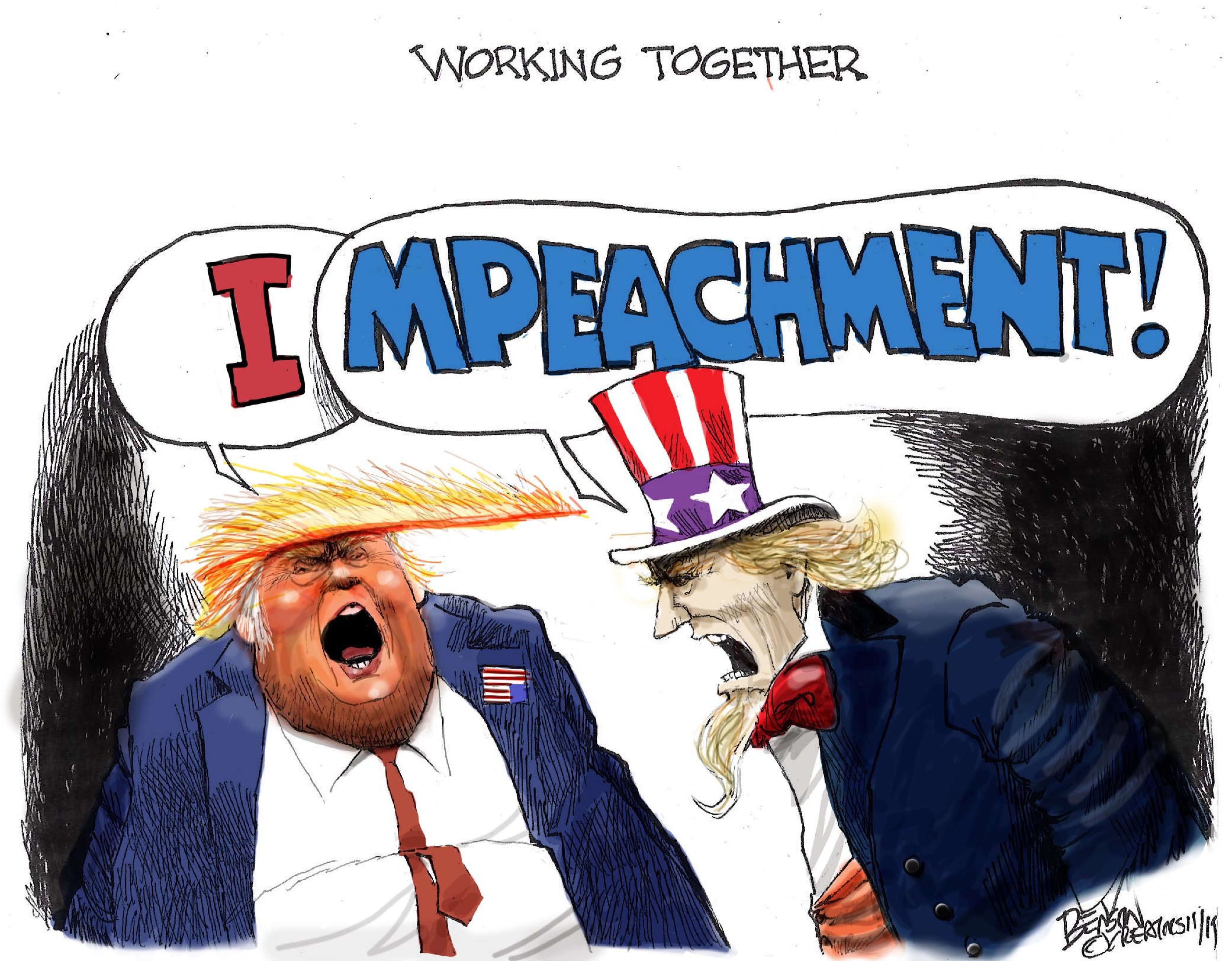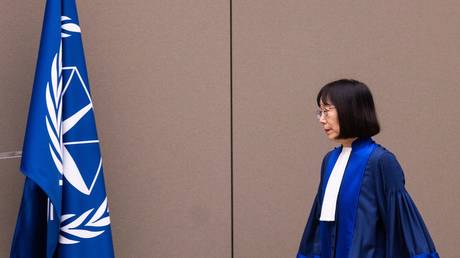
The Washington press corps treats every clash between the White House and the International Criminal Court as a moral crisis. The lazy consensus is predictable. American penalties against international jurists are painted as the death rattle of a rules-based order, proof that superpowers only obey laws when they write them.
That framing is pure theatrical nonsense.
Sanctioning the chief prosecutor of the Hague isn't an assault on international justice. It is the only rational response to a rogue bureaucracy overstepping its legal mandate. I have watched regulatory bodies weaponize vague jurisdictional mandates for years, blowing through institutional guardrails because nobody had the spine to cut off their funding or freeze their assets. The ICC crossed a bright red line, and Washington is treating them like any other overreaching agency.
Let's strip away the diplomatic fluff and look at the actual mechanics of international jurisdiction.
The Myth of Universal Jurisdiction Without Consent
Every time a prosecutor in the Netherlands issues a warrant that targets officials of a non-member state, the commentariat gasps. They talk about impunity. They lecture us on how nobody is above the law.
They are confusing municipal criminal law with international treaty law.
In a domestic court, a citizen is bound by laws passed by a legislature representing their geographic constituency. You consent to the social contract, or at least your representatives did. The ICC operates under the Rome Statute. The United States never signed it. Israel never signed it. Russia and China never signed it.
Expecting a sovereign superpower to submit its military commanders to a court it explicitly rejected is not upholding justice. It is administrative imperialism.
Imagine a scenario where a foreign municipal council passes an ordinance banning the sale of gasoline in your hometown, thousands of miles away, and then dispatches a local sheriff to arrest you for driving to work. You would call that a kidnapping, not an arrest. Yet when the Hague tries the exact same stunt with geopolitical muscle, international relations experts clutch their pearls and demand compliance.
The ICC was designed to handle failed states and dictators who lack functional domestic judiciaries. It was never meant to sit as a supreme constitutional court over nations with independent, functioning military justice systems. When the court expands its reach to bypass the principle of complementarity—the rule that the ICC only steps in when domestic courts refuse to act—it ceases to be a court. It becomes a political hit squad.
Why Lawfare is Just War by Another Name
We need to talk about lawfare, because nobody in the mainstream media has the stomach to define it correctly.
Lawfare is the abuse of legal systems and institutions to achieve strategic, military, or political objectives. When an international prosecutor targets leaders of democratic nations while systematically ignoring asymmetric non-state actors who hide behind civilian infrastructure, they are not dispensing equity. They are picking sides in an active conflict under the guise of neutrality.
I have spent enough time tracking regulatory overreach to recognize the playbook. Bureaucracies expand to fill the void of accountability. When funding stagnates and relevance fades, these organizations manufacture crises to justify their budgets. Issuing high-profile arrest warrants against leaders of nuclear-armed states generates headlines, secures donor funding, and keeps the institution relevant.
It is a self-preservation strategy disguised as human rights advocacy.
The prosecutor's office knows full well that Washington cannot accept these warrants. To do so would mean conceding that foreign bureaucrats can criminalize the defense policy of the United States and its allies. By pushing the envelope, the ICC forced Washington's hand.
Sanctions are not a rejection of the rule of law. They are the enforcement of sovereignty against an institution that forgot its own jurisdictional limits.
The Hypocrisy of Selective Accountability
Let's look at the data. Since its inception, the ICC has spent billions of dollars and decades of effort almost exclusively prosecuting figures in African nations. Critics spent years calling it out as a neo-colonial instrument targeting the global south.
Then, desperate to shake off that well-deserved reputation, the court pivoted toward the Middle East and Eastern Europe, swinging wildly at major geopolitical players to prove its independence.
You cannot spend twenty years functioning as a regional tribunal and then suddenly declare yourself the universal conscience of humanity when it suits your public relations strategy. That is not consistency. That is panic.
The honest truth about international law is that it rests entirely on voluntary consent and reciprocal enforcement. There is no global police force. There is no international marine corps waiting to haul prime ministers to Dutch holding cells. There is only power, diplomacy, and the fragile architecture of treaties.
When an international court decides to tear up the treaty that created it by asserting jurisdiction over non-parties, it destroys its own foundation.
What Happens When the Gavel Breaks
The downstream effects of Washington’s pushback are already reshaping global institutions. Other nations are watching. They see that an international bureaucracy cannot issue edicts against major powers without facing economic and professional consequences.
This brings us to the downside of my own argument. Aggressive asset freezes and travel bans against judicial officials carry real risks. They create a chilling effect. They make future international cooperation on genuine atrocities—like cross-border drug cartels, environmental crimes, or actual war crimes committed by failed states—much harder to coordinate. When you target the machinery of international justice, you risk breaking the useful parts along with the corrupt ones.
That is a fair critique. But it is a price worth paying.
The alternative is worse. The alternative is a world where unelected prosecutors in Europe can paralyze the defense apparatus of any democratic nation simply by holding a press conference and signing a piece of paper. That is not a rules-based order. That is rule by unaccountable lawyers.
Washington is not dismantling international justice. It is performing urgent, brutal surgery on a cancerous growth of institutional overreach.
Stop mourning the sanctity of the court. Start looking at who gave them the right to write laws for countries that never invited them in the first place.