We love a good resurrection story.
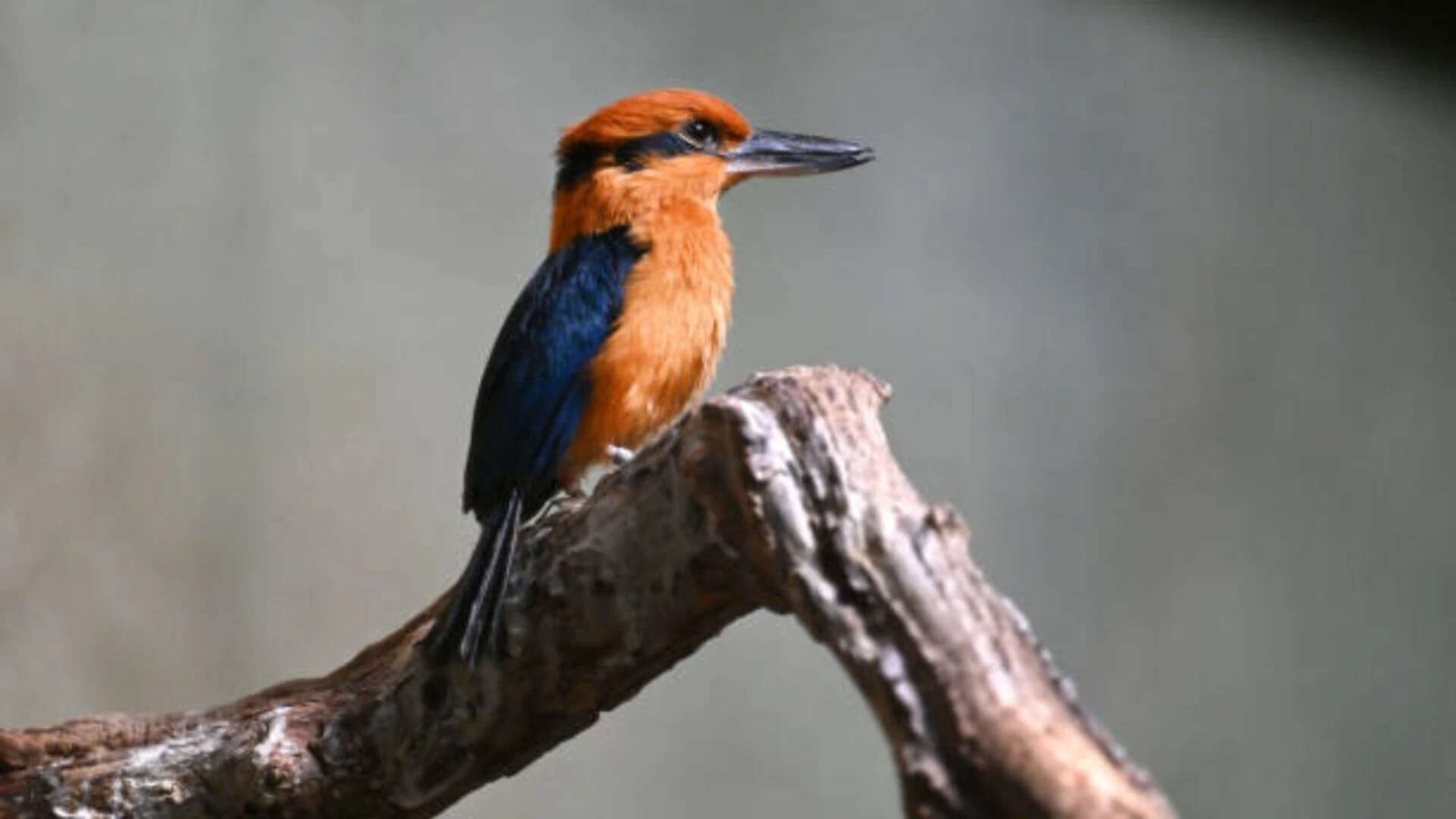
Mainstream media outlets are currently falling over themselves to celebrate the "triumphant return" of the Guam kingfisher, or sihek. They point to a handful of captive-bred chicks and a high-stakes transport operation to Palmyra Atoll as a monumental victory for biodiversity. The narrative is neat, emotional, and profoundly misleading.
It is a feel-good trap.
The lazy consensus in wildlife management dictates that if a species is wiped out in the wild, we must spend millions of dollars, decades of research, and thousands of human hours trying to force it back into an ecosystem that no longer exists. We treat individual species like museum exhibits that must be restored to their original cases.
But ecology does not care about our nostalgia.
The hard truth is that the Guam kingfisher is functionally extinct in its homeland, and trying to engineer its survival on a tiny, artificial life-support machine thousands of miles away is a misallocation of finite conservation resources. We are burning cash on a symbol while ecosystems crumble around us.
The Fatal Flaw of the Palmyra Experiment
The current media darling of the avian world is the relocation of sihek chicks to Palmyra Atoll. It sounds brilliant on paper: an island free of the brown tree snake (Boiga irregularis), the invasive predator that ate Guam’s native birds into oblivion after World War II.
But look at the map. Look at the ecology.
Palmyra Atoll is not Guam. It is a completely different habitat, thousands of miles away, with its own delicate balance of species. Introducing a highly territorial, predatory bird like the kingfisher to an ecosystem where it never historically existed is not "restoration." It is assisted colonization.
I have watched conservation boards blow millions on these high-profile, single-species rescue missions. They treat wild animals like chess pieces. Here is what happens when you play god with a ecosystem:
- The Novel Predator Dilemma: The sihek eats insects, lizards, and small vertebrates. Palmyra’s native fauna did not evolve with this specific predator. By saving one bird, we risk destabilizing a dozen other vulnerable, unphotogenic species that do not get headlines.
- The Genetic Bottleneck: Every single living Guam kingfisher today descends from a tiny pool of fewer than 30 birds captured in the 1980s. You cannot breed out the inherent risks of inbreeding depression through sheer optimism.
- The Permanent Dependency Loop: These chicks are being fed by hand, monitored by satellites, and shielded from reality. They are not wild animals anymore; they are wardens of a high-tech zoo without walls.
If a species requires perpetual human intervention just to avoid blinking out of existence, we have not saved it. We have just elongated its expiration date at an exorbitant cost.
Dismantling the Snake Myth
The standard narrative blames the brown tree snake entirely for the destruction of Guam's avifauna. It is an easy villain. The snake arrived, it multiplied, it ate everything.
But fixing the snake problem does not fix Guam.
Even if tomorrow we deployed a sci-fi bioweapon that wiped out every single brown tree snake on Guam, the kingfisher still could not go home. Why? Because the island itself has moved on. The loss of the birds triggered a catastrophic trophic cascade.
Without birds to disperse seeds, Guam’s native forests are actively dying, replaced by invasive flora. The spider population has exploded by up to forty times in certain areas because there are no avian predators to eat them. The entire structure of the jungle has transformed.
The premise of the question "How do we bring the kingfisher back to Guam?" is fundamentally flawed. The real question should be: "Does the habitat required by the kingfisher even exist anymore?" The answer is a brutal, definitive no.
The Opportunity Cost of Emotional Conservation
Every dollar spent tracking a single kingfisher chick on a remote atoll is a dollar stolen from protecting intact ecosystems that actually have a chance at survival.
Conservation is a zero-sum game. Funding is finite. Governments and private donors have a limited appetite for environmental philanthropy. When we funnel millions into charisma-driven mega-projects—like cloned ferrets, resurrected mammoths, or captive-bred kingfishers—we are triage doctors choosing to perform plastic surgery on one patient while three others bleed out in the hallway.
Consider the data. The cost per individual bird reared and released in these programs is astronomical. For the same price tag, conservation groups could buy up thousands of acres of threatened rainforest in the Americas or Southeast Asia, protecting tens of thousands of species simultaneously.
Instead, we choose the story. We choose the cute chick in the incubator because it makes for a great press release and drives donations. It satisfies human guilt. We destroyed Guam's ecosystem, so we want to build a monument to our forgiveness.
Embracing Ecological Realism
Am I suggesting we let the Guam kingfisher die?
Yes. If the alternative is an endless, multi-million-dollar artificial life support system that yields no self-sustaining wild populations.
We need to trade our romantic obsession with individual species for a cold, calculated focus on systemic resilience. This means accepting extinction as a tragic reality of a changing planet and shifting our strategy from restoration to preservation.
- Fund Ecosystems, Not Species: Stop donating to campaigns focused on a single animal. Put money into contiguous land acquisition and marine protected areas where nature can manage itself without a team of scientists hovering overhead.
- Acknowledge the No-Analog Future: Climate change and invasive species have created "novel ecosystems." These are environments that have been permanently altered. Trying to force them back to a pre-colonial baseline is a fool's errand. We must manage islands for what they are now, not what they were in 1940.
- Ruthless Triage: Conservationists need to adopt the mindset of battlefield medics. If a species cannot survive without permanent human micro-management, it is time to move to the next patient.
The four new chicks on Palmyra are not a beacon of hope. They are a stark reminder of our inability to let go of a lost cause. Stop cheering for the illusion of recovery while the rest of the natural world burns in silence.