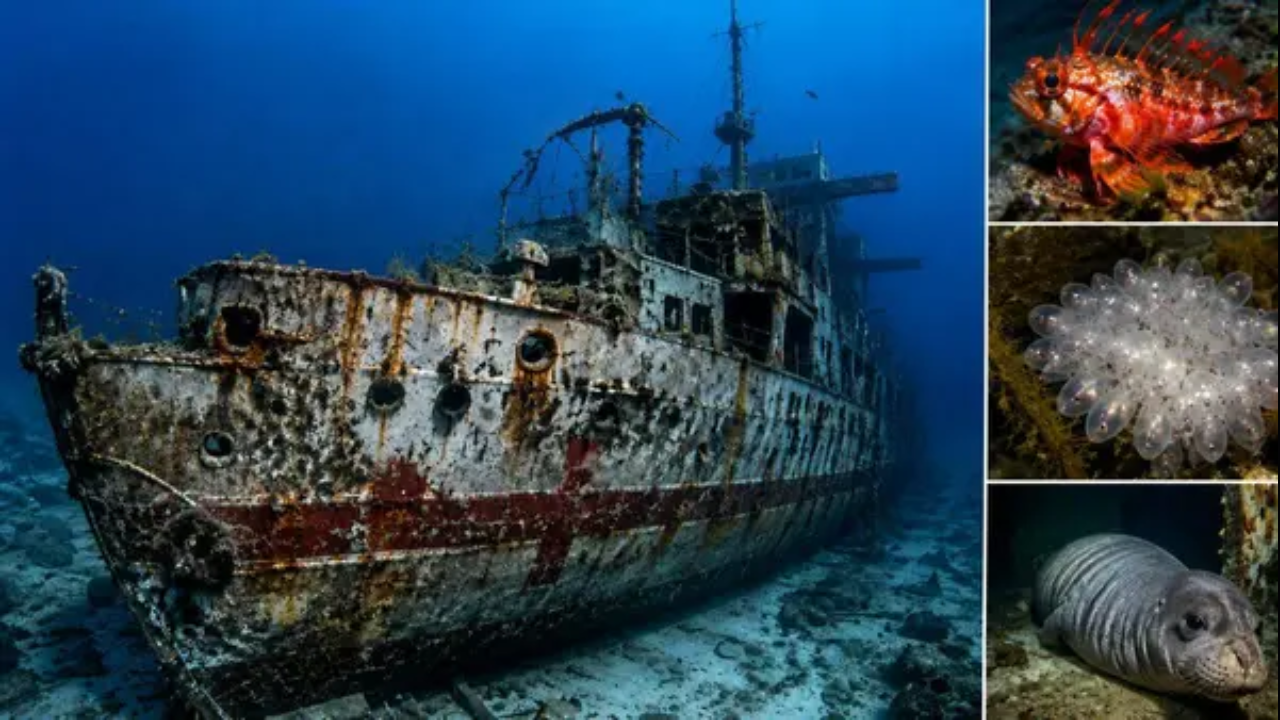
You finish a stunning fifty-minute dive, climb back onto the boat, and swear you never touched the bottom. Your buoyancy felt locked in. You stayed clear of the coral gardens. Yet, marine scientists tracking underwater tourism tell a completely different story. Recreational scuba divers make physical contact with fragile reefs an average of once every four minutes. Even worse, over forty percent of those touches cause direct, visible damage to living coral structures.
Most people descending into the ocean operate under a comforting illusion. They think that if they don't feel a heavy crash, they are leaving the ecosystem untouched. Reality on the seabed proves otherwise. When researchers survey divers immediately after surfacing, those same individuals underestimate their contact frequency by nearly fivefold. You aren't lying on purpose. You simply don't feel the light graze of a fin tip or the subtle brush of a gauge console against a slow-growing brain coral. Recently making news in this space: Why Sinking Ships for Reefs is an Environmental Con Job.
The Overconfidence Trap Underwater
A massive psychological disconnect drives this destruction. During field studies, the vast majority of participating divers rated themselves well above average at avoiding both intentional and accidental reef contacts. They trusted their skills completely.
Interestingly, the data exposed a strange paradox. The divers who racked up the highest number of reef collisions were often the most confident about their buoyancy control. Psychologists point straight to the Dunning-Kruger effect here. When your skill level plateaus at an intermediate stage, you stop noticing your own limitations. You think you are hovering effortlessly, but your low-hanging fins are quietly dusting centuries-old coral skeletons into broken fragments. Further information regarding the matter are covered by Condé Nast Traveler.
Because these impacts happen behind you or out of your direct line of sight, your brain registers zero feedback. Without immediate feedback, you never fix the flaw in your finning technique. You swim away feeling like an eco-conscious explorer while tiny clouds of pulverized calcium carbonate settle on living polyps, suffocating them slowly.
Gear Choices and Marine Attraction Points
Your equipment loadout plays a massive role in how often you collide with the seabed. Divers carrying heavy underwater camera rigs, metal muck sticks for stabilization, or thick neoprene gloves record significantly higher contact rates. When you look through a macro lens or try to frame a shot of a pygmy seahorse, your brain drops its spatial awareness. You stop thinking about where your knees and fins are drifting. You focus entirely on the viewfinder, turning your body into an accidental wrecking ball.
Social dynamics underwater make things worse. Marine scientists have documented clear instances of social contagion on popular dive sites. If one diver kneels on a coral head to adjust a mask or rests a hand on a rock, nearby divers unconsciously copy that behavior. It normalizes destruction. Suddenly, a pristine section of reef becomes a designated resting spot simply because the person ahead of you did it first.
Big marine life encounters trigger the exact same collapse in form. Spotting a reef shark, a sea turtle, or a passing manta ray causes an instant spike in adrenaline. Rational technique flies out the window. Divers kick harder, drop their buoyancy, and drift dangerously close to the delicate benthos just to get a clear look or a quick photograph.
Real Solutions for Better Dive Practices
Fixing this problem requires an honest appraisal of your own underwater habits. Stop assuming that good air consumption equals good environmental awareness. You can breathe slowly and still cause havoc if your trim is flat-out wrong.
- Check your trim constantly. Keep your knees bent at a ninety-degree angle and your fins raised higher than your chest. If your feet drop toward the sand, you are dragging dead weight behind you.
- Ditch the gloves unless water temperature strictly requires them. Wearing thick neoprene strips away your tactile sensitivity, making it far too easy to grab a coral outcrop for balance without realizing how abrasive your grip is.
- Simplify your camera setup. If you cannot manage your buoyancy with absolute perfection while holding your photography gear, leave the camera on the boat until your skills catch up with your ambitions.
- Support operators aligned with credible sustainability initiatives like Green Fins, which actively track and reduce direct environmental impacts across dive centers.
Pay closer attention to your personal footprint on your next descent. Stop trusting your gut feeling about how well you are hovering and start watching your proximity to the seabed with ruthless honesty.