Paper rustles. A door clicks shut. Somewhere in the quiet periphery of international diplomacy, away from the glaring lights of the General Assembly and the performative theater of televised summits, a conversation happens. It does not make headlines on the evening news. It does not trend on social media. But it is happening nonetheless.
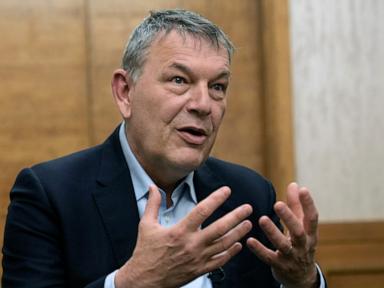
Consider the room. It is nondescript. Fluorescent lights buzz with a low, monotonous drone that feels less like illumination and more like a headache waiting to happen. Across a polished mahogany table that has seen its share of desperate men and weary negotiators sit two parties whose very existence in the same room defies conventional political gravity. On one side, representatives of the Board of Peace. On the other, shadows of the United Nations Relief and Works Agency, personified by the quiet gravity of a former agency chief who knows the exact weight of a flour sack delivered to a refugee camp in Gaza or the West Bank.
They did not come here to sign a treaty. They came to test whether the floor beneath their feet still holds.
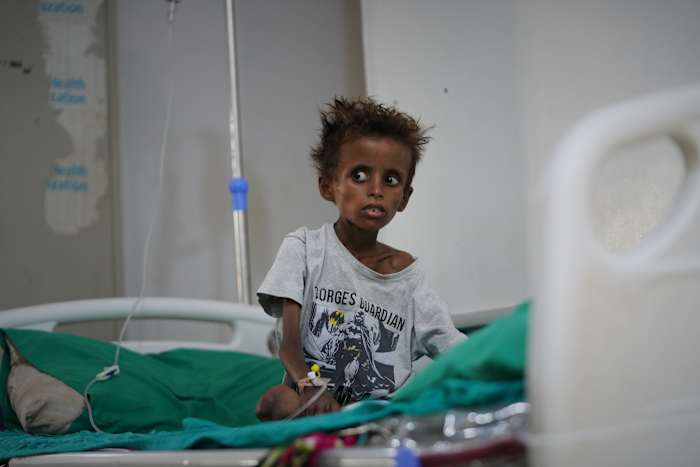
For decades, the architecture of humanitarian aid in the Middle East has rested on a foundation of precarious sand. We talk about millions of displaced persons as if they were digits on a spreadsheet, neat rows of columns denoting rations, medical clinics, and school attendance rates. But numbers do not bleed. Numbers do not huddle under corrugated tin roofs while winter rain turns the dirt tracks of refugee settlements into impassable swamps.
The former agency chief knew this better than anyone. Imagine walking into a warehouse where the ledger shows three months of flour remaining, while outside, thousands of desperate faces press against chain-link fences. You feel the cold seep through your jacket, but the chill inside your chest is worse. It is the realization that the bureaucratic machinery of the international community is grinding to a halt, choked by shifting political winds, frozen funding streams, and the bitter polarization of modern geopolitics.
Then came the Board of Peace.
A quiet initiative. An alternative channel. A group operating outside the rigid, calcified corridors of traditional diplomatic bodies. When word leaked that they had met quietly with the former UNRWA official, the diplomatic corps reacted with the panic of aristocrats hearing footsteps in the courtyard during a revolution. Why? Because institutional monopolies hate competition, especially when that competition involves practical survival.
To understand why this covert meeting matters, you have to strip away the abstractions of international relations and look at the logistics of human endurance.
Water does not care about political mandates. Children do not wait for Security Council resolutions before they fall ill. When traditional channels of aid are weaponized, restricted, or starved of capital, human beings look for alternative doors. And when those doors are locked, they kick them open or perish.
The meeting was not about endorsing a new political ideology. It was about plumbing. Can the pipes still carry water? Can the delivery systems bypass the political gridlock that turns every humanitarian crisis into a bargaining chip?
Think of a dam threatening to burst. The engineers know it is failing. They can see the hairline fractures spreading across the concrete. The official committees are locked in an endless parliamentary debate over who should pay for the sealant. Meanwhile, a group of independent contractors shows up with bags of quick-setting concrete and a truckload of gravel. They don't have the proper permits. They didn't go through the public bidding process. But they are pouring the mix into the cracks anyway, because waiting for consensus means drowning.
That is what happened behind closed doors.
The Board of Peace represents a pragmatic, if controversial, pivot in how modern conflicts are managed. Traditional diplomacy relies on grand bargains: all parties agree to everything, or nothing moves. But reality rarely cooperates with all-or-nothing propositions. When millions depend on daily distributions of basic necessities, ideological purity is a luxury reserved for the comfortable.
Critics argue that bypassing established multilateral frameworks undermines the legitimate authority of international bodies. They warn of a fragmented aid landscape where private actors and ad-hoc boards carve up humanitarian mandates like colonial powers dividing a map. There is truth in that fear. Accountability can easily get lost in the fog of informal negotiations. When aid becomes transactional, vulnerable populations risk becoming leverage in a high-stakes game played by unseen hands.
Yet the alternative to informal channels is paralysis.
During the secret talks, according to those familiar with the exchanges, the focus remained relentlessly tactical. How do you move medical supplies through a checkpoint when the border guards have received conflicting orders? How do you pay local teachers and sanitation workers when international banking corridors are frozen by sanctions and bureaucratic inertia? These are not questions answered by grand manifestos. They are solved in drafty rooms over lukewarm coffee by people who realize that the existing system is breaking under its own weight.
We have romanticized international institutions for so long that we forget they are merely human constructs, fragile and prone to decay. When an institution becomes an end in itself rather than a means to a human outcome, it begins to devour its own purpose. UNRWA has spent decades fulfilling an indispensable, life-sustaining role for millions of Palestinian refugees, yet it has also become a lightning rod in a geopolitical war of attrition. Its funding has been weaponized; its mandate has been scrutinized not for its operational efficacy, but for its symbolic weight in an intractable conflict.
When the former agency chief sat down with the Board of Peace, they were acknowledging a sobering reality. The old ways are buckling.
This is not a story about heroes or villains. It is a story about desperation and adaptation. It is about the moment institutional loyalty collides with the raw, unyielding imperative of keeping people alive.
History is rarely made in the grand public squares where triumphant speeches echo off marble columns. More often, it is forged in the quiet margins, in basement offices, in whispered phone calls, and in clandestine meetings between adversaries who realize that if they do not find a way to talk to one another, the world they both inhabit will simply burn down around them.
The meeting ended without a joint communique. There was no press conference, no flashing cameras, no celebratory handshakes broadcast to the capitals of the world. The participants packed their briefcases, stepped out into the evening chill, and vanished into the anonymity of the city.
The crisis remains. The blockades are still in place. The funding gaps yawn like open graves. But somewhere in the dark, a different kind of map was drawn. And when the next emergency strikes, the aid might not travel the route the textbooks say it should. It will travel the secret paths carved out in that quiet room, driven by the oldest and most stubborn force known to human history: the refusal to simply let go and watch people drown.