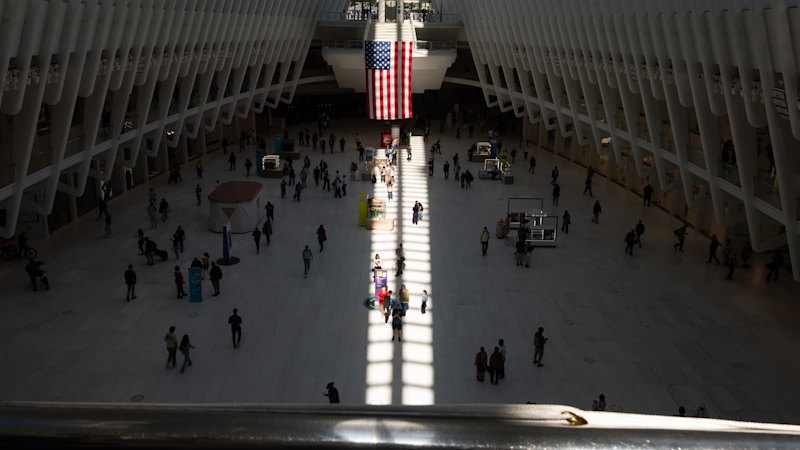
September 11, 2001, is remembered as the day commercial airliners turned into guided missiles, collapsing the Twin Towers and rewriting the emotional baseline of the Western world. That morning did not just alter geopolitics. It triggered a fundamental reengineering of modern civilization, casting a long shadow over civil liberties, data collection, and the relationship between the citizen and the state.
We live inside the architectural machine built in the immediate aftermath of those attacks.
Decades removed from the dust of Lower Manhattan, the permanent security apparatus forged in the panic of late 2001 remains fully operational, having metastasized far beyond its original mandate. Security analysts often frame the post-9/11 era through the lens of foreign wars and airport body scanners. Those are the visible symptoms. The true transformation occurred beneath the surface, inside server rooms, intelligence fusion centers, and corporate-state partnerships that normalized the continuous surveillance of ordinary people.
To understand how the world arrived at this juncture, one must look past the grief and examine the mechanical response of governments facing an unprecedented shock.
The Authorization of Total Information Awareness
Within forty-five days of the attacks, the United States Congress passed the USA PATRIOT Act. A legislative text running hundreds of pages long, it was rushed through both chambers with barely any debate. Most lawmakers admitted they had not read it before voting.
The rationale was simple. The old rules belonged to a bygone era of slow communications and physical borders. Terrorists moved across borders using modern finance and encrypted channels, so the state needed equal velocity and reach.
Secret courts expanded their mandate. Wiretapping thresholds lowered. The Foreign Intelligence Surveillance Court, once a quiet legal backwater, morphed into an agency rubber-stamping broad data collection requests. Agencies that were historically walled off from one another—the domestic intelligence operations of the Federal Bureau of Investigation and the foreign espionage of the Central Intelligence Agency—were suddenly told to share everything.
This integration spawned a massive bureaucracy. New departments emerged almost overnight. The Department of Homeland Security consolidated dozens of disparate agencies into a single, sprawling monolith. Billions of dollars flooded into counterterrorism contracts, creating a military-industrial complex that stretched deep into the private sector. Silicon Valley startups and defense contractors found a bottomless well of federal funding tied to threat detection, facial recognition, and data mining.
The Corporate Panopticon
Governments could never have built the modern surveillance state alone. They needed partners with scale. Telecommunications giants, internet service providers, and social media platforms became the unwilling or eager collectors of human behavior.
When Edward Snowden leaked classified documents in 2013, he did not reveal a temporary emergency measure. He exposed a permanent system where fiber-optic cables crossing the ocean were tapped at the source. Tech companies were compelled by secret directives to hand over user logs, search histories, and private communications.
What began as a counterterrorism initiative quietly expanded into routine policing and corporate business models. The tools crafted to track foreign threats were soon deployed against domestic drug crimes, tax evaders, and ordinary citizens.
Consider the automated license plate reader mounted on a local police cruiser in a suburban town. It captures thousands of images daily, logging the location, timestamp, and vehicle of people driving to work, visiting a doctor, or attending a protest. That data feeds into regional fusion centers, shared with federal databases, and stored indefinitely. The justification is always the same. If you have nothing to hide, you have nothing to fear.
That logic breaks down under scrutiny. Privacy is not about hiding wrongdoing. Privacy is the structural boundary that prevents power from accumulating unchecked in the hands of the state and corporate monopolies. When every movement is logged, dissent becomes expensive. Behavioral modification follows naturally when people know they are watched.
The Normalization of Emergency Power
Emergency powers possess a dangerous half-life. Once granted during a crisis, governments rarely surrender them voluntarily. They find new problems to solve, new threats to mitigate, and new justifications for keeping the machinery running.
The threat landscape shifted over the decades. Al-Qaeda gave way to decentralized domestic extremism, cyber warfare, and foreign disinformation campaigns. Each new crisis became a reason to upgrade the existing infrastructure rather than dismantle it. Algorithms designed to catch foreign operatives now scan social media feeds for keywords associated with civil unrest or political dissent.
This normalization created a culture of perpetual vigilance. Citizens accepted intrusions that would have sparked massive riots in the twentieth century. Taking off shoes at airport security checkpoints, submitting to facial recognition at stadiums, and allowing smartphones to track GPS coordinates down to the meter are treated as minor inconveniences of modern life.
Yet, this security theater has a questionable track record. Massive intelligence budgets and sweeping data collection sweeps have repeatedly failed to stop lone-actor attacks driven by radicalization or mental health crises. The vast oceans of collected data often create more noise than signal, burying critical intelligence analysts under mountains of irrelevant digital debris.
The Unresolved Dilemma
The world shaped by September 11 is defined by a permanent bargain. Societies traded a measure of liberty for the promise of security.
Decades later, the security remains porous, but the loss of privacy is absolute. The foundational question raised by the events of that Tuesday morning remains stubbornly unanswered. How does a free society protect itself from destruction without adopting the totalitarian methods of its enemies?
As artificial intelligence accelerates automated surveillance, biometric tracking, and predictive policing, that question grows more urgent by the day. The architecture built in the wake of tragedy is no longer just monitoring the horizon for foreign threats. It is watching us.