Deep Water, Long Shadows
Salt water eats everything given enough time. It gnaws through aluminum, dissolves iron, and erases memory.
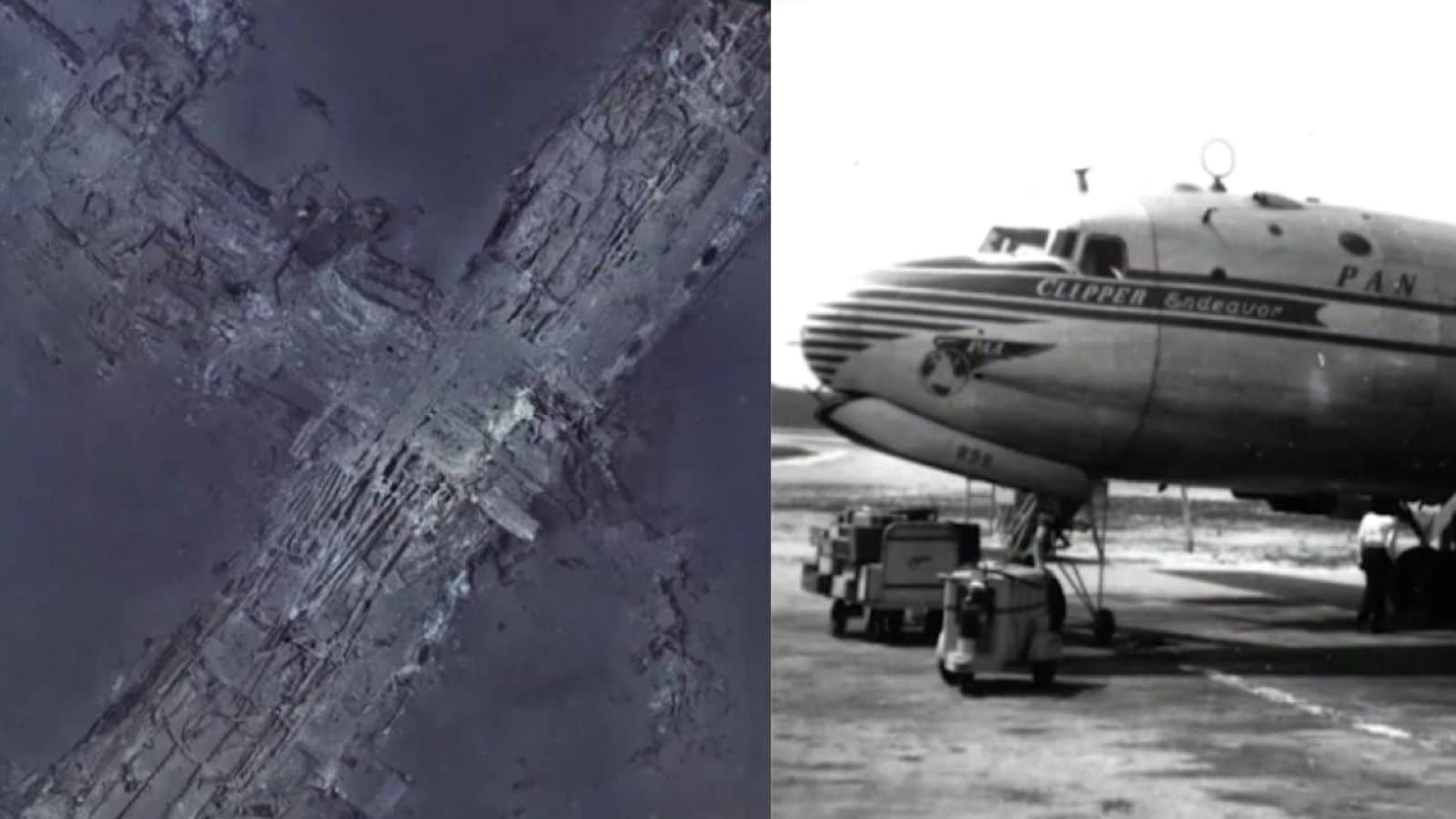
In April 1952, a Pan American World Airways Douglas DC-4 lifted off from San Juan, Puerto Rico, bound for New York. Fifty-two people were on board. They carried suitcases packed with tropical clothes, small gifts for relatives, and plans for the spring. Minutes into the flight, an engine failed. Then another. The massive aircraft lost altitude, cutting through the warm night air toward a dark, unforgiving ocean.
The impact was swift. Within minutes, the plane sank into the deep trenches off the northern coast of the island.
For decades, the waters kept the secret. Search crews scanned the surface, recovering a handful of survivors and debris, but the hull itself vanished into the abyssal plane. The families left behind aged, waited, and carried a quiet, persistent grief across generations.
Then, seventy-four years later, a ping echoed off the seafloor.
The Science of Finding What Is Lost
Finding a wreck thousands of feet beneath the surface is not a matter of luck. It demands patience and brutal mathematical precision.
Modern deep-sea exploration relies on autonomous underwater vehicles equipped with side-scan sonar. These machines glide along the ocean floor, sending acoustic pulses into the blackness. When those sound waves strike an object, they bounce back, creating a silhouette based on density and shape. Most of the ocean floor is a repetitive desert of silt and mud. But every so often, a hard, geometric outline breaks the pattern.
A wing. An engine block. A tail section.
When marine researchers identified the anomalies near Puerto Rico, the acoustic signature was unmistakable. Human hands had built this object. The wreckage lay in a realm of crushing pressure and complete darkness, largely undisturbed since the night it settled into the sand.
For maritime historians, the discovery solves a decades-old structural riddle regarding mid-century aviation accidents. But for the descendants of those on board, the technical data matters far less than the location itself.
It turns an endless ocean into a specific point on a map.
The Weight of Late Answers
To understand why a seventy-four-year-old discovery matters, you have to look away from the technology and toward the living room of a child who grew up without a father or mother.
Uncertainty is a heavy burden. When a loved one vanishes at sea, there is no headstone to visit, no physical space to process loss. The mind lingers on possibilities, however improbable. For seven decades, families of the Pan Am flight held onto a fragmented narrative—a sudden mechanical failure, a frantic ditching in the dark, and then silence.
The location of the wreckage provides an anchor.
"A grave on land gives you a place to stand," one researcher noted during the survey effort. "A wreck on the ocean floor gives you a place to look."
The recovery of answers, even across three generations, changes how history is remembered. It moves an event from an open file in a government archive into the permanent record of human experience.
A Quiet Peace in the Abyssal Plain
The deep ocean is cold, silent, and motionless. Down near the floor of the Atlantic, light never arrives, and the noise of the world above disappears entirely.
The remains of the Douglas DC-4 will almost certainly stay where they landed. Recovery at such depths is technically hazardous and ethically complex. Often, maritime sites of this nature are designated as underwater gravesites, left undisturbed out of respect for the lives lost.
Engineers and historians will study the sonar maps and high-resolution imaging to piece together the final trajectory of the flight. Every angle of impact and piece of twisted metal tells a story about the structural limits of early commercial aviation and the desperate efforts of the crew to save their passengers.
Out on the water above the crash site, the surface remains unchanged. Waves break against the Puerto Rican coast just as they did on that April night in 1952. But far below, in the cold dark, the long search is finally over.

