The coffee in the paper cup went cold hours ago. Elena didn't drink it anyway. She stared through the reinforced glass of the fume hood, watching a slow, iridescent drop of solvent slide down the side of a quartz beaker. Outside, the Cambridge air carried that familiar, biting autumn chill, stripping the last stubborn maples of their gold. Inside lab 404, the temperature was strictly regulated to sixty-eight degrees, but a sudden draft seemed to sweep through the room, chilling her spine.
It was an order. Not a polite request. Not a grant review board's cautious inquiry.
An order.
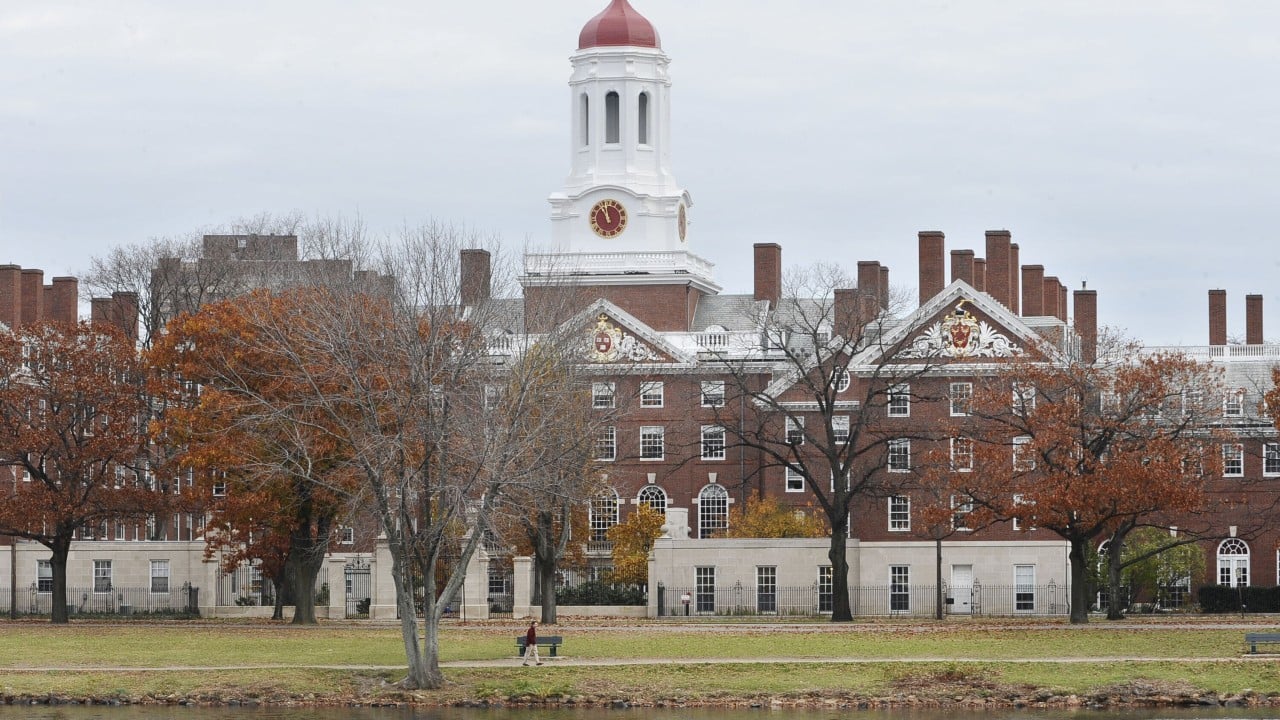
Thirty elite American universities—names carved into limestone archways, names that echoed with Nobel prizes and centuries of intellectual gravity, institutions like Harvard and MIT—had just been told to audit their research ties to China. Every partnership. Every shared data set. Every visiting scholar whose visa was stamped with a return ticket to Beijing.
Elena wiped her palms on her lab coat. She wasn't a spy. She was a biochemist trying to fold proteins that refused to behave. But her second-floor office was now ground zero for a quiet, high-stakes geopolitical tug-of-war that nobody signed up to play.
Science used to be a shared language.
We grew up believing that the periodic table belonged to everyone. You write a paper. You publish the methodology. Another researcher in Munich or Melbourne or Shanghai reads it, tests it, builds upon it, and pushes the boundary of human capability a fraction of an inch further. That is how we mapped the human genome. That is how we developed vaccines in record time. It was messy, competitive, and entirely borderless.
Then the horizon darkened.
To understand why thirty universities are suddenly opening filing cabinets they locked years ago, you have to look past the bureaucratic prose of federal directives. You have to look at the machinery of modern innovation. Innovation is no longer just a flash of insight in a lonely garage; it is a massive, capital-intensive engine requiring supercomputers, rare isotopes, and thousands of hours of specialized computation.
China built an engine of its own. A vast, hungry, state-sponsored apparatus designed to leapfrog decades of trial and error. And it looked westward. It looked at the open doors of American laboratories where brilliant minds from every corner of the globe sat side by side, sharing coffee, whiteboard space, and breakthroughs.
Collaboration became a pipeline. And some federal officials began to wonder if that pipeline was flowing in only one direction.
Consider a hypothetical scenario, one mirrored in dozens of quiet compliance meetings happening this week behind closed doors. Dr. Chen, a brilliant materials scientist, works at an East Coast institute. He has dual citizenship or deep familial roots in Shenzhen. He secures a grant to study quantum dots—nanoparticles with massive implications for both solar energy and encrypted military communications. His lab receives American tax dollars. His co-author, funded by a Chinese provincial grant, publishes a breakthrough two months later that bears a suspicious structural resemblance to Chen's unpublished work.
Nobody broke a window. No industrial spy lowered themselves from the ceiling with a flash drive.
The information simply walked out the front door, carried in the head of a researcher who belonged to two worlds that are rapidly becoming hostile strangers.
This is the tension gripping Harvard, MIT, and their peers right now. How do you audit an ecosystem built on openness? How do you separate legitimate, life-saving academic exchange from state-directed intellectual property transfer?
The federal government wants a ledger. Every dollar. Every contract. Every joint publication. Every overseas affiliation that didn't make it onto an annual disclosure form.
The universities are scrambling. Compliance officers who used to spend their days managing hazardous waste disposal and sexual harassment policies are now wading through decades of grant agreements, translating Mandarin CVs, and cross-referencing foreign talent programs. They are looking for ghosts. They are looking for omissions that could trigger federal fraud investigations or the sudden, catastrophic freezing of research funds.
Panic has a specific sound. It sounds like a printer running non-stop at two in the morning. It sounds like lawyers speaking in clipped, cautious tones over encrypted messaging apps.
Elena felt that panic creep into her own lab last Tuesday. Her best post-doc, a young man from Hangzhou who could calculate reaction yields faster than a pocket calculator, asked her if he should still apply for the upcoming National Science Foundation grant.
She didn't know what to tell him.
For months, the political rhetoric had cast every foreign national in a university lab as a potential threat. That is the tragedy of this moment. The policy is ostensibly about national security, about protecting critical infrastructure and defense-adjacent technology. But the human fallout lands squarely on people like her post-doc—researchers who came to America for the freedom to chase curiosity, only to find themselves caught in the crossfire of a new Cold War.
Science thrives on trust. Bureaucracy thrives on suspicion. When the two collide, the collateral damage is almost always creativity.
If you force every university to view its international partners through the lens of counterintelligence, people stop talking. They stop sharing half-baked ideas over lunch. They stop taking chances on unconventional collaborations. The walls go up. The moat is dug. And the global engine of discovery begins to stutter.
Yet, to pretend there was no problem was equally naive.
For years, the academic establishment turned a blind eye to obvious warning signs. Funding agencies whispered about foreign talent plans that required participants to sign loyalty oaths and transfer intellectual property back to their home countries while cashing American paychecks. Universities, addicted to international student tuition and flush with global partnership prestige, looked away. They wanted the prestige of global collaboration without the messy burden of geopolitics.
The audit order is a reckoning. It is a blunt instrument, clumsy and disruptive, but it forces a conversation that should have happened a decade ago.
What belongs to a nation, and what belongs to humanity?
That question does not have an easy answer. When a researcher cures a rare form of leukemia using a technique developed jointly by an American university and a Chinese state laboratory, whose triumph is it? Does the cancer care which flag flew over the bench where the cure was mixed?
No. But the treasury department does. The department of defense does. The politicians running for reelection next November certainly do.
Back in lab 404, the drop of solvent finally reached the bottom of the beaker and dissolved into a clear, churning pool. Elena turned off the fume hood fan. The sudden silence was deafening.
She picked up her phone and scrolled through a list of emails from the dean's office. Subject lines filled with urgent acronyms. Deadlines for compliance. Forms to sign, certifications to verify, past projects to unearth and examine under a harsh, unsparing light.
She looked back at the empty workspace. The equations scribbled on the whiteboard behind her represented months of painstaking work, symbols and arrows pointing toward a future that felt increasingly fragile. She wondered how many other labs across the country were staring at the exact same blank wall, realizing that the world outside had changed irrevocably, and that ivory towers were never truly out of reach of the storm.
The lights in the hallway flickered off, leaving only the amber glow of the safety monitors casting long, distorted shadows across the floor.