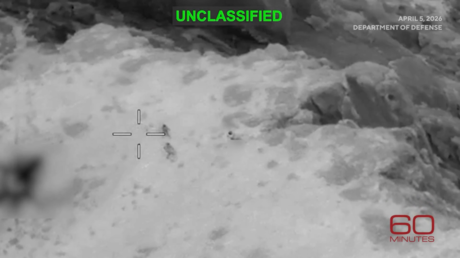
The modern architecture of state conflict relies on plausible deniability. When whispers and unverified clips emerge regarding United States military personnel operating inside Iranian borders, the reflexive reaction in Washington is institutional silence or immediate denial. Declassified material and leaked operational assessments rarely arrive as neatly packaged revelations; instead, they surface through the friction of competing bureaucratic interests, intelligence leaks, and the inevitable decay of secrecy in the digital age.
Public fascination centers on the visual evidence, but the presence of US boots on the ground in Iran, or within its immediate contested peripheries, is not a sudden policy shift. It is the continuation of a long-standing doctrine of clandestine reconnaissance, proxy management, and intelligence architecture that has hummed beneath the surface of Middle Eastern geopolitics for decades.
The Mechanics of Clandestine Presence
Understanding how military personnel operate within heavily hostile territory requires setting aside Hollywood tropes of large-scale amphibious landings or mechanized columns. Special operations units and intelligence collection elements do not occupy territory in the traditional sense. They infiltrate. They establish temporary listening posts. They exfiltrate before local security forces can mount a coherent response.
The logistical framework supporting these deployments depends entirely on regional friction points. Operating inside Iran means navigating a state apparatus with extensive internal security networks, counter-intelligence operations, and deeply entrenched regional proxies. To bypass these barriers, operators rely on advanced technical surveillance, indigenous networks, and small footprint insertion teams typically drawn from elite joint commands.
The primary objective during these missions is rarely direct combat engagement. Instead, the focus rests squarely on electronic surveillance, mapping communications infrastructure, tracking ballistic missile telemetry, and establishing communication links with internal dissident groups or minority populations estranged from Tehran's central authority. Every movement is calculated against the severe risk of international escalation, meaning that an exposed operative represents not just a tactical failure, but a strategic crisis capable of accelerating a regional war.
Intelligence Gathering Versus Direct Action
A persistent misconception in popular media equates any military presence with an impending invasion or large-scale bombing campaign. In practice, the deployment of specialized personnel inside a denied area serves primarily as an information-gathering mechanism. National technical means, including satellites and signals intelligence platforms, possess severe blind spots when target systems move underground, into urban environments, or utilize fiber-optic communications shielded from orbital interception.
Human intelligence and ground-based electronic sensors close those gaps. When visual evidence surfaces suggesting foreign operators within a sovereign adversary's borders, analysts are usually looking at the tip of a vast technical iceberg. These teams deploy specialized gear designed to intercept regional military frequencies, sample soil or water for chemical or nuclear indicators, and verify target coordinates with pinpoint accuracy that remote systems simply cannot achieve.
The tension between the Department of Defense and the intelligence community often hinges on these operations. The military prefers redundancy and overwhelming force protection, while intelligence agencies demand minimal signatures and extreme operational security. When missions go wrong, the resulting political fallout forces administrations to disavow actions that were authorized at the highest levels of government.
The Regional Echo Chamber
Tehran's internal security apparatus understands the foreign intelligence threat intimately. The government in Iran operates under a state of permanent defensive mobilization, viewing foreign intelligence penetration as an existential threat to the regime's survival. Consequently, any discovered foreign presence is magnified and weaponized for domestic political consumption, utilized by hardline factions to justify internal repression, economic hardship, and increased military spending.
Simultaneously, regional neighbors watch these developments with profound unease. Gulf states and transit nations caught in the geopolitical crossfire understand that an escalation involving direct ground-level friction inside Iran could trigger retaliatory asymmetric strikes against regional energy infrastructure, shipping lanes, and diplomatic outposts. The calculus of modern statecraft dictates that even limited incursions carry massive multiplier effects across global markets and security alliances.
Beyond the Declassified Veil
The appetite for declassified footage and sensationalized leaks reflects a public desire for definitive proof in an era defined by gray-zone conflict. Yet focusing solely on the visual confirmation of operators on the ground obscures the broader reality. The shadow war between Washington and Tehran is fought across multiple domains simultaneously, from cyber warfare and economic strangulation to maritime skirmishes and targeted covert actions.
Boots on the ground represent a high-risk, high-reward tactical choice deployed only when the perceived intelligence deficit is too dangerous to ignore. As detection technologies improve and surveillance capabilities become ubiquitous on both sides, maintaining absolute secrecy grows exponentially more difficult. The leaks and declassifications will continue, not as isolated anomalies, but as permanent features of a silent conflict where the line between peace and open war is perpetually blurred.


