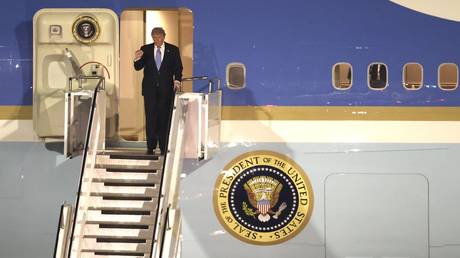
The tarmac at the air base in Ankara radiated heat shimmering like water under a merciless midday sun. Thousands of miles away from home, beneath the concrete and steel architecture of a high-stakes NATO gathering, the mechanics and security details moved with a synchronized, silent urgency. To the casual observer peering through chain-link fences from a distance, it looked like standard protocol. A president arriving. A summit concluding. A journey resuming.
Yet beneath the polished surface of diplomatic routine, an invisible current of tension pulled at every protocol.
Consider what happens when intelligence analysts intercept fragments of information that cannot be ignored. A warning arrives, quiet and chilling. It speaks of targets, trajectories, and a persistent, unblinking focus from adversaries across borders. For months, the machinery of state security has quietly hummed under the weight of active threats originating from deep within regional power struggles. The antagonism is historical, personal, and absolute. When warnings crystallize into specific plots, the margin for error shrinks to zero.
The President stepped toward the familiar, older-model aircraft that had carried commanders-in-chief through decades of crises. This was not the sleek, newly introduced luxury jet gifted from abroad—the one boasting a pristine paint job and a towering profile designed to catch the eye. That newer vessel had been touted as a marvel of modern transit, but under the cold calculation of risk assessment, familiarity and proven defense systems outweighed aesthetic triumph.
The Secret Service made the call. A silent pivot.
An abrupt aircraft swap in the middle of an international itinerary is never a casual logistical adjustment. It requires layers of deception, ghost transponders, and split-second coordination across international airspace. The motorcade moved, the doors closed, and the older jet lifted off into the Turkish sky, leaving the gleaming new flagship to travel an alternate path toward a British Royal Air Force base.
High above the clouds, window blinds were pulled tight on direct orders. Inside the cabin, the atmosphere was thick with the quiet paranoia that defines modern high-office survival. Every radar blip on the tactical screens represents a question mark. Every shift in altitude reminds those on board that power comes with a target painted directly onto the fuselage.
When the older plane finally touched down hours later at Mildenhall in Suffolk, the transition to the secondary aircraft happened away from public view before the final leg toward Washington. The public would soon notice the discrepancy. Questions bubbled up through the press corps. Was it a matter of missing defensive architecture on the new luxury bird? Was it a mechanical ghost in the machine?
The reality was far starker.
Down on the ground, addressing reporters with characteristic defiance, the acknowledgment slipped out between layers of political posturing. The life of a leader occupying the highest office is relentlessly hazardous. Names sit at the top of foreign lists, penned by hostile regimes waiting for a single window of vulnerability during an overseas transit.
We forget, sitting safely behind glowing screens in quiet rooms, that political friction often translates into physical peril. We look at leaders as symbols, monoliths immune to the basic biological fragility that haunts every human being. We see titles, motorcades, and gleaming wings, forgetting that beneath the aluminum skin beats a very vulnerable pulse.
The planes landed. The press gathered. Subpoenas flew across journalistic desks in a bitter fallout over leaked security details, proving that the battlefield extends far beyond foreign skies into the information war at home. But the core truth remains etched into the asphalt of that tarmac in Ankara.
Power does not insulate against danger; it magnifies it.
The engines have long since cooled. The secret service details have shifted to the next secure perimeter. Yet somewhere in the dark airspace between nations, the invisible game of chess continues, played out by individuals whose lives hang by the thinnest of threads, high above a world that rarely sees the shadows chasing them.
An assassination plot & last-minute plane swap
This short video explores the unfolding security details and last-minute aviation changes prompted by foreign threats against the U.S. leadership.
http://googleusercontent.com/youtube_content/1