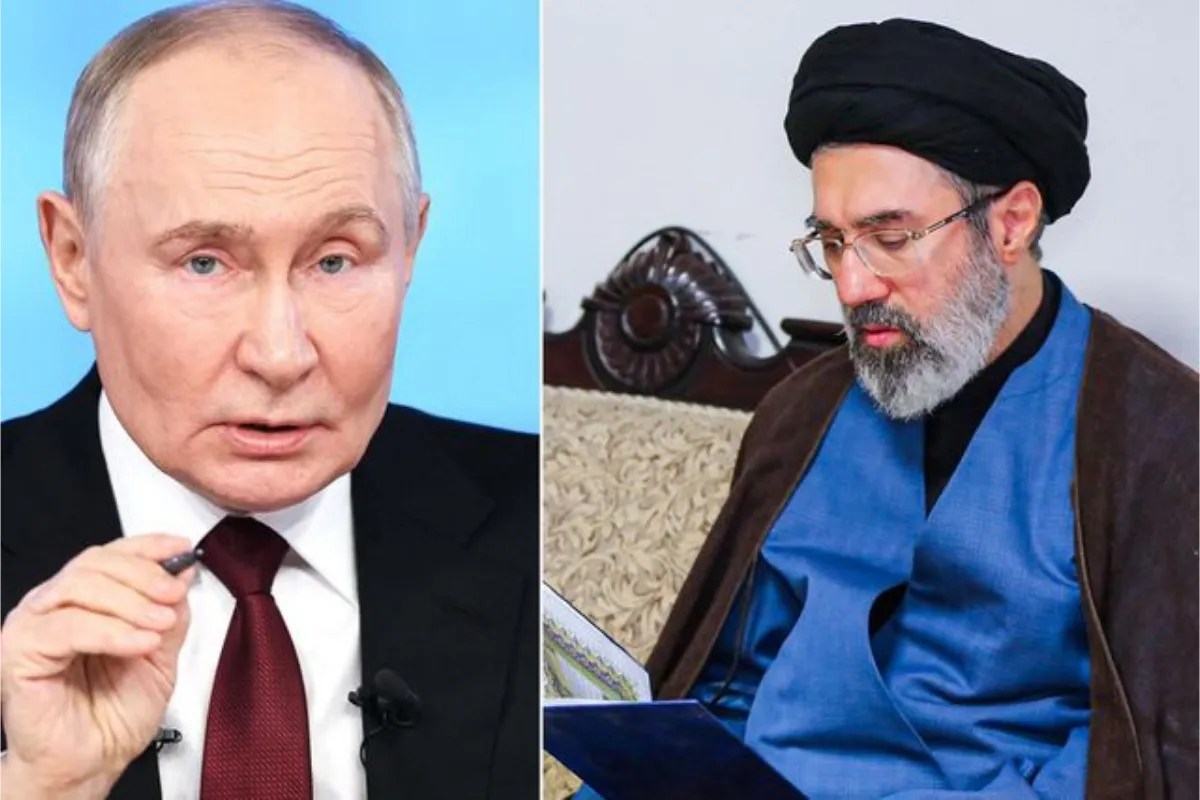
Ukrainian President Volodymyr Zelenskyy has publicly accused Moscow of assisting Tehran in escalating military operations across the Middle East, drawing a direct line between the ongoing war in Eastern Europe and expanding regional instability in West Asia. This strategic convergence between Russia and Iran marks a significant shift in international security, moving beyond isolated bilateral cooperation into an interconnected matrix of synchronized conflict. Observers watching the dual theaters note that military hardware, intelligence sharing, and technological adaptation are flowing across borders with unprecedented speed.
Decades of diplomatic maneuvering laid the groundwork for this alignment, but the wars of the 2020s accelerated it past all previous boundaries. When economic sanctions locked both nations out of Western financial systems, necessity forced a marriage of convenience. That partnership evolved into a military-industrial alliance that now directly affects geopolitical fault lines from the Black Sea to the Persian Gulf.
The Industrial Pipeline
Military supply chains do not respect geographic distance. When the Russian armed services required large quantities of loitering munitions for persistent strikes in Ukraine, they turned to Iranian defense manufacturers. Thousands of long-range attack drones crossed international transit routes, establishing a logistical artery that ran in both directions.
Once the hardware arrived on European battlefields, Iranian technicians and military advisers gained real-world testing data against Western air defense architectures. That feedback loop proved invaluable. In exchange, according to intelligence assessments shared by regional officials, Moscow began supplying advanced aviation technology, targeting data, and electronic warfare systems to Tehran.
The transaction is no longer merely commercial. It is a joint operational laboratory where tactics developed in the trenches of Donetsk are studied in the command centers of the Islamic Revolutionary Guard Corps.
Intelligence Sharing and Asymmetric Doctrine
Modern warfare relies heavily on signals interception, satellite reconnaissance, and electronic suppression. Historically, intelligence capabilities varied wildly among regional actors, leaving middle powers at a distinct disadvantage against superpower surveillance grids.
By pooling resources, Russia and Iran have sought to blunt the intelligence advantages traditionally held by Western coalitions. Advanced sensor feeds from Russian aerial assets operating over European airspace have reportedly assisted Iranian proxies in mapping adversary positions. Meanwhile, Iranian naval tactics in narrow straits provide tactical lessons for Russian naval commanders operating in constrained maritime zones.
This exchange of operational doctrine changes how regional conflicts scale. Small militias equipped with cheap drones now operate with a level of coordination once restricted to state-of-the-art military forces. The barrier to entry for strategic disruption has dropped drastically.
The Economic Shield
Sanctions compliance is a game of shifting flagships and shadow tankers. To sustain their military industrial complexes, both states constructed an alternative financial ecosystem designed to bypass Western currency dominance.
Oil shipments move through darkened transponders across maritime chokepoints. Insurance is handled through domestic state-backed syndicates rather than international maritime groups. Currency settlements increasingly bypass the US dollar entirely, utilizing bilateral trade mechanisms that obscure the origin of funds.
This financial insulation buys time. It ensures that neither government faces immediate domestic collapse due to external economic pressure, allowing sustained military spending even as inflation bites into civilian populations.
Strategic Implications for Global Stability
The merging of these two conflict zones creates a nightmare scenario for defense planners in Washington, Brussels, and regional capitals. A crisis in the Middle East diverts critical air defense munitions away from European partners. Conversely, pressure on Russia in Eastern Europe alters the calculus of what military hardware Moscow can spare for its foreign allies.
Decoupling these theaters is no longer possible. Policymakers must accept that every weapon system deployed in one zone directly influences the defensive readiness of the other. The architecture of global security has fractured into an adversarial bloc where regional flashpoints serve larger, systemic ambitions.
As the lines between localized defense and international coalition warfare continue to blur, the margin for diplomatic error narrows. The machinery built in the shadows is now operating in plain sight.