Security at military installations relies on a fragile hierarchy of assumptions. Personnel patrol perimeter fences, monitors scan dark horizons, and automated sensors hum quietly in the background, all designed to create an aura of impenetrable defense. Yet, military bases are sprawling, complex entities operating adjacent to civilian life, creating inevitable friction points where routine observation meets high-stakes security.
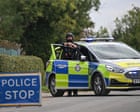
Recent events at Royal Air Force facilities exposed these vulnerabilities when a late-night civilian drive and an urgent emergency call intersected to trigger terrorism arrests. While public attention fixated on the flashing blue lights and the swift response of counter-terrorism units, the incident laid bare a deeper operational reality. The modern defense infrastructure faces profound challenges not merely from sophisticated state-sponsored cyber operations or coordinated paramilitary cells, but from the messy, unpredictable collision of mundane human behavior and heightened threat environments.
Security analysts often talk about defense-in-depth as if it were a mathematical equation. Put enough barbed wire, biometric checkpoints, and armed patrols around an asset, and safety follows automatically. Decades of reporting on defense installations tell a different story. Human error, structural blind spots, and the sheer physical expanse of these bases mean that routine civilian presence often skirts dangerously close to restricted zones without immediate detection. When an ordinary citizen notices suspicious activity near a sensitive perimeter, the chain of events that follows is rarely smooth. It is governed by panic, fragmented communication between local constabularies and military police, and the paralyzing fear of a missed threat.
The mechanics of base security are anchored in deterrence and rapid containment. RAF installations across the United Kingdom and allied territories operate under stringent threat levels, requiring constant vigilance from both Ministry of Defence police and local civilian forces. But perimeter security is frequently compromised by geography. Public roads, coastal paths, and commercial flight paths often abut sensitive installations, rendering total isolation impossible. A vehicle lingering in a layby, a drone hovering near a fuel depot, or a civilian taking photographs from a public right-of-way can instantly transform into a critical incident.
When a witness dials emergency services to report potential reconnaissance or hostile intent, the threshold for intervention drops to zero. Law enforcement cannot afford to gamble on intuition. The cost of dismissing a genuine threat as a false alarm carries catastrophic political and human consequences. Consequently, police forces deploy overwhelming force on the strength of a single civilian observation. This dynamic creates a secondary risk profile: the weaponization of public anxiety. In an era marked by heightened threat awareness, civilian populations are primed to view ordinary activities through a security lens, leading to an increase in ambiguous reports that strain investigative resources and escalate tensions unnecessarily.
Investigating the aftermath of these arrests reveals a systemic struggle to balance transparency with operational security. Defense ministries routinely default to defensive communications strategies, offering sparse details that inadvertently fuel speculation. This information vacuum serves no one. It breeds distrust within local communities who live in the shadow of these facilities and leaves journalists to piece together timelines from fragmented police statements and anonymous leaks.
Examining the wider landscape of defense infrastructure protection shows that technology alone cannot fix the perimeter problem. Advanced thermal imaging, acoustic sensors, and radar arrays are only as effective as the analysts monitoring them and the ground units tasked with verification. False positives consume valuable response time, while genuine anomalies can slip through the cracks of a fatigued watch shift. The reliance on civilian vigilance as an auxiliary layer of defense introduces an element of chaos that doctrine struggles to accommodate.
Military installations will continue to occupy contested physical spaces where national security imperatives collide with public access. The arrests triggered by that midnight emergency call are not an isolated anomaly, but a symptom of a permanent state of nervous tension surrounding critical assets. Until defense planners reconcile the physical reality of porous perimeters with the psychological weight of modern threat perceptions, these installations will remain precariously balanced between fortress and flashpoint.