Retail discounts rarely arrive without a motive. When a major manufacturer slashes the price of a flagship hardware line by triple digits, the casual observer assumes it is a routine holiday promotion or a clearance sweep for an incoming replacement model. But seasoned analysts who track the consumer floor care sector understand that a steep markdown on a self-cleaning vacuum points to a much larger shift in market pressure, manufacturing margins, and consumer patience.
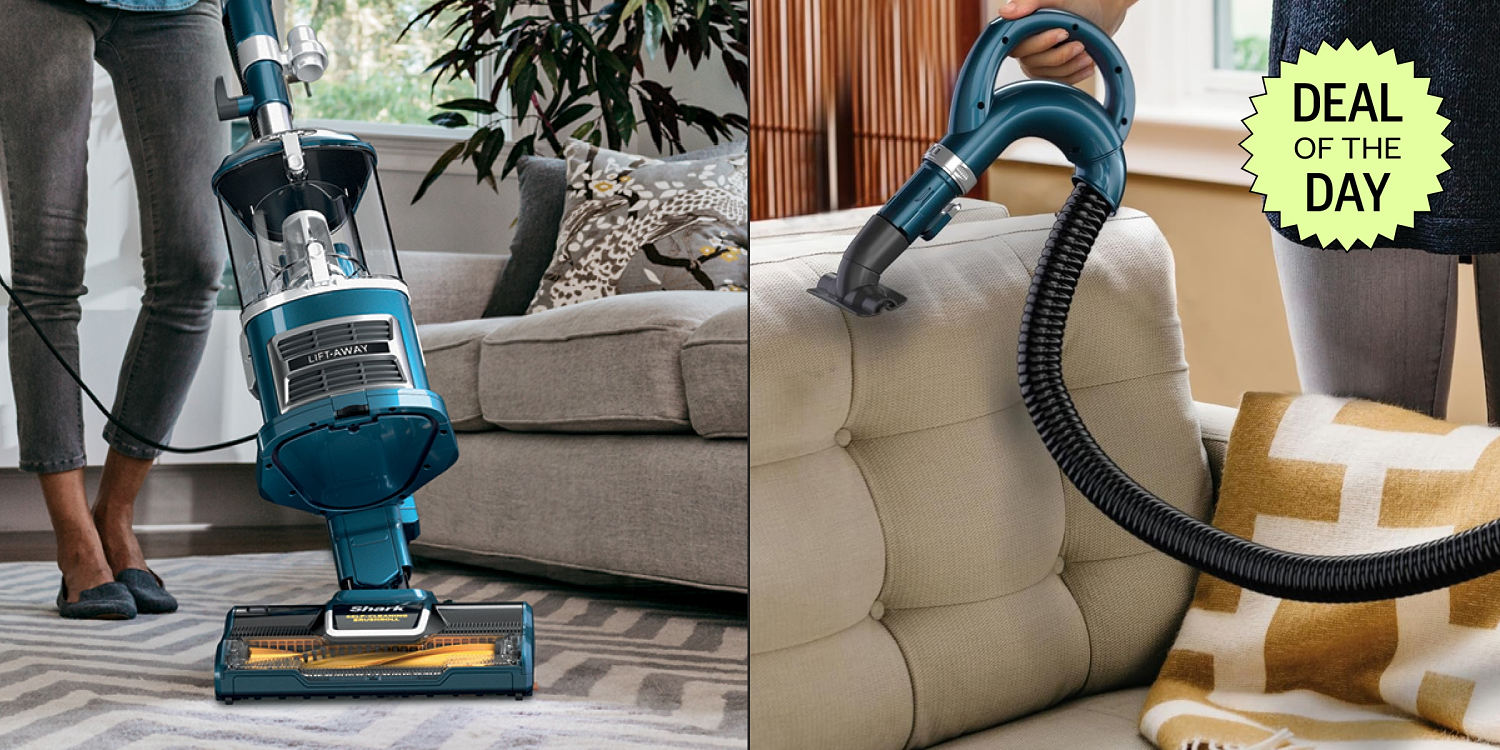
Shark recently discounted one of its most prominent self-cleaning vacuum models by $130, reigniting viral praise across social platforms where buyers affectionately joke that the machine "really sucks." Beneath the internet humor, however, lies a fiercely competitive engineering war. This price cut is not an act of seasonal charity. It is a calculated offensive in a crowded marketplace where automated hair-detangling technology has transformed from a luxury differentiator into an absolute baseline requirement for survival.
To understand why this specific discount matters, we have to look past the marketing banner and examine how floor care appliances have evolved over the past decade.
The Engineering Reality Behind Hair Wrap Elimination
For years, the primary mechanical failure point of any residential upright or cordless vacuum was not the motor, the suction manifold, or the filtration system. It was the brush roll. Human hair, pet fur, and synthetic carpet fibers possess a stubborn tensile strength that allows them to wrap around cylindrical rotating bars with microscopic precision. Within weeks of regular use, a standard vacuum brush roll transforms into a dense, felted cocoon of hair that chokes motor efficiency, overheats bearings, and forces users to crouch on the floor with a pair of kitchen scissors to slice away the mess.
When manufacturers introduced self-cleaning brush rolls, industry veterans recognized it as the first genuine quality-of-life breakthrough since the widespread adoption of cyclonic filtration. Shark approached this mechanical headache by deploying integrated comb teeth and active removal blades designed to intercept hair before it could bind to the spindle.
Yet, building an active self-cleaning mechanism into a consumer-grade appliance introduces severe engineering compromises. Adding mechanical guards, tighter tolerances, and specialized comb assemblies increases production complexity. It adds weight. It introduces potential acoustic whine. Most importantly, it raises the unit economics of manufacturing.
When a company like Shark can afford to absorb a $130 price drop on a self-cleaning vacuum, it reveals that the underlying component costs have matured, or that the competitive pressure from rival brands like Dyson, Tineco, and Roborock has forced a margin compression. They are no longer selling an exotic novelty; they are fighting for dominance in a commoditized battleground.
Parsing the Hype Versus the Hardware
Viral marketing thrives on hyperbole. When a product trend goes viral on social media, consumers are often swept up in the emotional satisfaction of finding an appliance that solves an annoying daily chore. But investigative analysis requires us to strip away the viral applause and evaluate how these machines perform under genuine duress.
A self-cleaning vacuum is only as good as its suction retention over time. Many budget alternatives look impressive on unboxing day, yet their internal airflow dynamics degrade rapidly once fine particulate matter bypasses the primary cyclone and begins coating the pre-motor filters. Shark’s architecture relies heavily on sealed HEPA filtration combined with multi-cyclonic separation to keep suction stable.
When the price drops by $130, prospective buyers should ask a fundamental question: Is this margin reduction driven by manufacturing efficiencies, or is it an inventory correction ahead of a hardware revision?
In consumer electronics and home appliances, deep discounts on mature models frequently precede a product refresh cycle. Manufacturers clear out warehouse floor space to make room for the next generation of iterations—perhaps featuring enhanced battery densities, smarter optical navigation sensors, or even quieter acoustic profiles. If you are shopping for a home appliance, buying the outgoing model at a steep discount often represents the smartest financial play, provided you accept that you are buying the zenith of a mature technology rather than the bleeding edge of a new one.
The Consumer Shift Toward Zero-Maintenance Appliances
The broader cultural appetite for automated convenience has reshaped product development entirely. Consumers are no longer willing to perform routine maintenance on the tools they buy to perform routine maintenance. We have entered an era of appliance fatigue. We expect our robot vacuums to empty themselves into base stations, our air purifiers to run autonomously for a year before filter changes, and our upright vacuums to manage their own debris without human intervention.
When a vacuum cleaner boasts about self-cleaning capabilities, it taps directly into this psychological exhaustion. The appeal is not merely that the floor gets clean; it is that the vacuum itself refuses to become another chore on your weekend to-do list.
The $130 markdown on Shark’s self-cleaning lineup accelerates this cultural expectation. By lowering the financial barrier to entry, these brands are actively training consumers to reject high-maintenance hardware. Once a household experiences a vacuum that does not require weekly manual hair extraction from the roller bar, returning to legacy designs becomes entirely unthinkable.
Weighing the Long-Term Cost of Ownership
Purchasing decisions in the floor care market are frequently distorted by upfront sticker prices. A cheap vacuum that fails after fourteen months of heavy pet hair accumulation is far more expensive than a premium unit that runs reliably for a decade.
When evaluating a heavily discounted machine, look beyond the immediate savings and consider structural longevity. Examine the availability of replacement filters, the warranty terms, and the modularity of the components. Can the battery pack be replaced by the user, or is the entire handle assembly destined for an electronic waste facility when the lithium-ion cells eventually degrade?
Shark’s hardware generally scores well on consumer repair accessibility compared to ultra-sealed luxury competitors, but every discount forces a trade-off. Lower manufacturing costs can sometimes translate to lighter plastics in non-critical structural areas. If you live in a multi-level home and frequently lug an upright machine up and down hardwood stairs, material density matters immensely.
The current price drop makes these machines exceptionally attractive, but buyers should approach the purchase with their eyes wide open regarding what the hardware can and cannot achieve. No vacuum on the market completely eliminates household dust, and no self-cleaning roller is entirely immune to extreme tangles involving industrial sewing thread or ultra-fine wire.
The discount is real, the performance is substantiated by millions of real-world households, and the shift toward maintenance-free floor care is irreversible. If you have been waiting for the economic friction to clear before upgrading your cleaning arsenal, the market has finally given you an opening. Just remember to clean the secondary filters on schedule, because no engineering marvel can protect a machine from the consequences of complete neglect.