Silence.
That is what greets you when a titan of the Italian Republic disappears without a farewell note, leaving behind a void so heavy that even the loudest voices in Rome suddenly drop to a whisper.
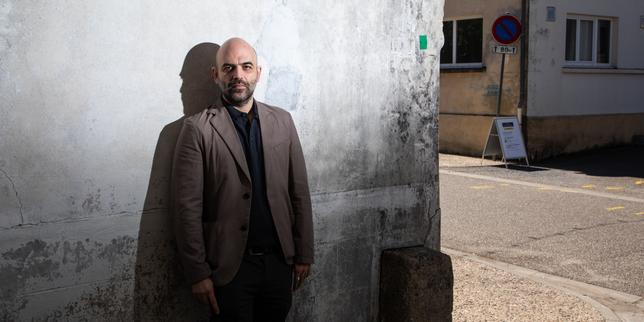
Roberto Saviano knows a thing or two about silence, and he knows even more about the terrifying price of breaking it. For nearly twenty years, ever since his exposé Gomorrah stripped the Camorra of its romanticized shadows and laid its bloody accounting bare before the world, Saviano has lived inside a moving cage of armored glass and rotating bodyguards. So when news broke of the suicide of Gianni De Gennaro—the former head of Italy’s national police, the architect of modern anti-mafia intelligence, and the man who once stood at the very apex of the state’s security apparatus—Saviano’s reaction was not merely the polite sorrow of a public intellectual. It was a tremor of genuine shock.
To understand why a writer who has spent two decades staring down death threats from Naples to New York would be shaken to his core by the death of a career bureaucrat and police chief, you have to look past the sterile obituaries. You have to step inside the claustrophobic psychology of a nation at war with its own shadow.
The Architecture of an Unbreakable Man
For decades, Gianni De Gennaro was the closest thing the Italian state had to an immovable object.
Born in Reggio Calabria in 1948, he rose through the ranks during the Years of Lead and the bloodiest chapters of the Sicilian Mafia’s war against the state. He was not a flamboyant television prosecutor or a politician hunting for cameras. He was a technician of power. He worked alongside Giovanni Falcone, the legendary anti-mafia magistrate whose assassination in 1992 remains the open wound of modern Italy. Together, they helped build the investigative frameworks that finally pierced the armor of Cosa Nostra.
De Gennaro became the head of the DIA, Italy’s Anti-Mafia Investigation Directorate. Later, he took command of the entire Polizia di Stato, then led the country’s intelligence services, and eventually chaired Leonardo, the aerospace and defense giant. If Italy had a central nervous system for national security, De Gennaro spent thirty years wiring it.
He looked the part, too. Sharp-featured, impeccably tailored, speaking in the measured, deliberate cadence of a man who weighed every syllable as if it might one day be read back in a courtroom. To the public, he was the ultimate institutional survivor—a man who had navigated the treacherous waters of Italian politics, survived the catastrophic fallout of the 2001 G8 summit in Genoa, weathered endless parliamentary inquiries, and emerged intact.
Which is precisely why the manner of his death hit the country like a physical blow.
When the people who spend their lives holding up the ceiling suddenly let go, everyone underneath starts looking up at the cracks.
A View from the Armored Car
Imagine, for a moment, a hypothetical evening in Rome, a few years ago. Let us call it a composite of a thousand nights lived under state protection—a scenario grounded in the documented realities of Italy’s scorta system.
Picture a journalist sitting in the back seat of a reinforced sedan idling outside a dimly lit apartment block in Trastevere. The engine hums softly, a low vibration you feel in your teeth. Outside, tourists laugh over glasses of Montepulciano, completely oblivious to the fact that two men with concealed submachine guns are scanning the rooftops above them. For the man in the back seat, the state is not an abstract concept found in civics textbooks. The state is the thickness of the ballistic glass next to his cheek. The state is the radio chatter crackling faintly from the front passenger seat.
And at the top of the chain of command that designed that invisible cocoon sat men like Gianni De Gennaro.
Roberto Saviano has spent his adult life inside that cocoon. In his reflections following De Gennaro’s suicide, Saviano captured a paradox that outsiders rarely grasp: you can despise the failures of Italian institutions, you can fiercely criticize the dark episodes of police brutality or political compromise, and still recognize the terrifying weight carried by the men who stood on the front lines against organized crime.
Saviano did not offer a sanitized hagiography. He could not, and he would not. Any honest account of De Gennaro’s career has to reckon with the bloody streets of Genoa in July 2001, when anti-globalization protests descended into chaos, culminating in the fatal shooting of Carlo Giuliani and the infamous midnight raid on the Diaz school—an operation the European Court of Human Rights later classified as torture. De Gennaro was chief of police during those days, and the legal and moral shadows of Genoa trailed him for the rest of his life, even after courts ultimately acquitted him of charges that he had induced false testimony.
Yet Saviano’s shock pierced straight through those political divides. Why? Because Saviano understands what happens to the human mind when it becomes a vault for secrets no ordinary citizen was ever meant to carry.
The Weight of the Unspoken
Think of a deep-sea diver working thousands of feet below the surface. Down there, the water pressure is immense, crushing, relentless. As long as the diver stays inside the pressurized suit, they survive. They move slowly, deliberately, performing complex repairs in pitch darkness while tons of ocean press against every square inch of metal.
Now imagine what happens when that diver finally comes back to the surface, takes off the helmet, and discovers they can no longer breathe regular air.
This is the unspoken reality of high-level anti-mafia and intelligence work in Italy. For thirty or forty years, a man like De Gennaro lived inside a pressure chamber. Every handshake carried a calculation. Every phone call could be compromised. He knew who had betrayed whom in the dark years of the 1990s. He knew the names of informants who had vanished into vats of acid, the compromises struck in smoke-filled ministries, the thin, fragile line separating democratic order from total criminal capture.
When you spend a lifetime being the repository of a nation’s darkest truths, retirement does not feel like freedom. It feels like decompression sickness.
In Italy, public figures who dedicate their lives to fighting the mafia are often treated with a strange, exhausting ambivalence. While they hold power, they are either feared as untouchable mandarins or attacked as partisan operators. The moment they step down, the phone stops ringing. The institutional armor is stripped away, leaving an aging man alone in a quiet apartment with nothing but his memories and the relentless echo of ghosts.
We look at suicide through the lens of personal despair, searching frantically for a medical diagnosis, a sudden scandal, a financial ruin, or a private tragedy. Sometimes there is a single trigger. More often, especially among men trained never to show a crack in their composure, it is the cumulative weight of decades spent absorbing shockwaves without ever being allowed to flinch.
What Saviano Saw in the Mirror
There is a reason Roberto Saviano’s voice carries such visceral urgency when he speaks about the psychological toll of the anti-mafia struggle.
Living under permanent police protection changes the architecture of your soul. You do not spontaneously walk into a bakery on a Sunday morning. You do not take a train without a team clearing the platform. You watch your relationships wither under the strain of security protocols, and worse, you watch your own country slowly grow bored of your survival. In the beginning, you are a hero; ten years later, people ask why the taxpayers are still paying for your armored cars.
Saviano has written openly about the depression, the isolation, and the moments when the walls close in so tightly that survival itself feels like a life sentence. So when he learned that Gianni De Gennaro—the ultimate insider, the man who commanded the very apparatus designed to keep people like Saviano alive—had chosen to end his own life, the shock was existential.
If the architect of the fortress could not bear the weight of the stones, what does that say about the fortress?
Consider what happens next in the collective psyche of a country already cynical about its institutions. When a figure of De Gennaro’s stature dies by suicide, rumor mills immediately churn out conspiracy theories. In Italy, dietrologia—the national habit of assuming there is always a hidden plot behind every public event—is practically a blood sport. Whispers begin: What did he know? Was someone threatening him? Was a new investigation closing in?
Saviano’s reaction cuts directly across that noise. By framing De Gennaro’s death as a profound human and institutional shock, he forces us to confront a far more uncomfortable truth than a thriller-novel conspiracy: that the human cost of defending a state from within can quietly destroy even the strongest among us.
The Myth of the Invulnerable Institution
We like to believe that our systems are machines made of steel and statute, operating smoothly regardless of the fragile human beings inside them. We look at police chiefs, intelligence directors, judges, and investigative reporters and see uniforms, titles, and authority. We rarely see the insomnia. We rarely see the quiet erosion of trust in humanity that happens when your daily job is cataloging the worst things human beings do to one another.
History offers a grim ledger of this phenomenon. Across the world, prosecutors who dismantle cartels, intelligence officers who prevent terror attacks, and journalists who expose war crimes often display an almost superhuman resilience while the crisis is raging. Adrenaline and duty act as a splint. It is only years later, when the immediate battle subsides and the silence returns, that the fracture finally gives way.
In De Gennaro’s case, his entire identity was fused with the Italian state. From his early days working alongside Falcone and Nicola Mancuso to his stewardship of the secret services and his chairmanship at Leonardo, he was the quintessential servitore dello Stato—a servant of the state.
That phrase carries a heavy, almost tragic resonance in Italian history. To be a servitore dello Stato in a country where the state has so often been infiltrated, undermined, or abandoned by its own political class is to live in a state of permanent tension. You are asked to uphold the law in a system where powerful actors routinely bend it. You are asked to keep secrets in a capital where leaks are currency.
And when the curtain finally falls on your public life, there is no ritual for laying down that burden. No debriefing can erase forty years of hypervigilance.
Beyond the Headlines
If you strip away the titles—former Chief of Police, former Intelligence Director, former DIA head—what remains at the center of this tragedy is a seventy-something man standing alone in a room, deciding that the weight had finally exceeded his capacity to carry it.
That is the part that refuses to fit neatly into a news bulletin.
Roberto Saviano’s response resonated across Italy because he refused to flatten the story into either a cold biographical summary or a political weapon. Having spent half his life caught between the brutality of the clans and the labyrinthine bureaucracy of the Italian state, Saviano recognized the sheer, terrifying vulnerability hiding behind the mask of institutional power.
We spend so much energy arguing over whether our leaders and institutions are heroes or villains that we forget they are mortal. We forget that beneath the badges, the decrees, and the armored convoys, there is only a human nervous system—a finite vessel trying to hold back an ocean.
In Rome, the flags lower, the official condolences are read into the parliamentary record, and the machinery of the Republic keeps grinding forward as if nothing has changed. Yet somewhere in the quiet back seats of armored cars idling outside darkened buildings, the men and women who still carry the state’s secrets are staring out through thick, reinforced glass, suddenly aware of just how thin that glass really is.


