Sarah sat in the driveway of her suburban home, her fingers gripping a steering wheel that felt entirely unfamiliar. Behind her, a rear-facing child safety seat held her fourteen-month-old son, Leo, who was currently wailing at a pitch that could shatter crystal. It was November. The rain was hitting the windshield in sheets. Sarah looked at the massive digital display glowing in the center of her dashboard, trying to figure out how to defrost the front window without turning off the cabin heat, a task that required navigating through three sub-menus while her hands shook from exhaustion.
She was driving a modern electric SUV. She had bought into the promise of a quiet, emissions-free future that would make her daily commute and family logistics easier. Instead, she felt like an uninvited guest in a tech company’s rolling laboratory.
Every morning, millions of drivers face this exact friction. The transition to electric vehicles was marketed as a simple swap of fuel for electrons, but the reality has been an ideological war over what an automobile should actually be. On one side stands the minimalist orthodoxy, which insists that a car is merely an iPad on wheels, a software platform that happens to move through space. On the other side is the traditionalist defense, trying desperately to preserve the muscle memory of the twentieth century while stuffing batteries under the floorboards.
The tension between these two philosophies is no longer theoretical. It has materialized on the showroom floors.
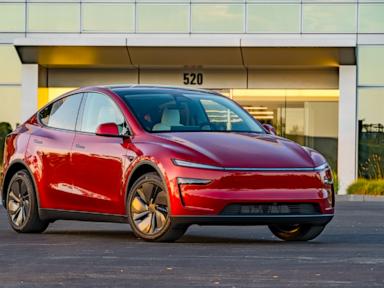
Consider the baseline. For years, the default answer for anyone seeking an electric family vehicle was the Tesla Model Y. It was the safe bet, the market ruler, the vehicle that redefined American driveways. Toyota, the company that practically invented the mass-market hybrid, watched from the sidelines, stumbling out of the gate with its initial electric offerings. The early attempts were sluggish, confusingly named, and limited in range. They felt like compliance cars built by a committee that wished electricity had never been discovered.
But something shifted. The current year model lines show a sudden, dramatic narrowing of the gap. Toyota dropped the alphabet-soup nomenclature of the old bZ4X, streamlining the vehicle simply as the Toyota bZ, and heavily overhauled the engineering. Suddenly, the quiet giant of the automotive world started fighting back on pricing, efficiency, and real-world usability.
The question is no longer whether an legacy automaker can build an electric vehicle. The question is whether the tech-first approach to building cars has finally pushed the average driver too far.
Let us look at the financial math first, because that is where the human anxiety usually begins. The base Tesla Model Y Rear-Wheel Drive enters the market at $41,630. To get the features most families actually want—the extended range, the added power, the feeling that you didn't buy the rental-car fleet version—you have to step up to the Premium All-Wheel Drive variant. That pushed the sticker price to $51,630.
Toyota took a different path. The reworked bZ starts at $36,495. Even when you climb to the top-tier bZ Limited with all-wheel drive, the price lands at $46,895. That is a $4,735 difference against a comparably equipped Tesla. For a family balancing a mortgage, daycare costs, and grocery bills, that is not an abstract corporate metric. It is four months of groceries. It is a vacation. It is the margin between breathing room and financial anxiety.
Yet, a lower price means nothing if the vehicle leaves you stranded on the shoulder of an interstate in a blizzard. This is where the old Toyota failed miserably, and where the new version brings a quiet vengeance.
During independent road testing by vehicle evaluators at Edmunds, the front-wheel-drive bZ, which carries an official EPA range estimate of 314 miles, actually covered 331 miles on a single charge. It outperformed its own official paperwork. The Model Y Premium Rear-Wheel Drive still holds the paper crown with an EPA-estimated 357 miles, but the real-world closing of this gap changes the psychological calculus of ownership.
Range anxiety used to be a sharp, constant panic. Now, it has degraded into a minor scheduling inconvenience. Both vehicles can pull into a public DC fast-charging station and add roughly 100 miles of range in fifteen minutes. Tesla still commands an edge here because its Supercharger network is woven into the highway system with unparalleled reliability, but the physical battery capability of the Toyota is no longer a liability.
The real divergence, the true human conflict, happens when you close the door and shift into drive.
The Model Y is an athletic machine. It accelerates with a violent, linear urgency that can make your stomach drop. It corners flat, tracking through turns like a sports sedan. For a driver who loves the mechanical drama of a fast car, it is addictive. But that performance requires a compromise. The suspension is stiff. It communicates every crack, pothole, and expansion joint directly into the spines of the passengers. On a smooth California highway, it feels like the future. On a frost-heaved Midwestern avenue, it can feel punishing.
The bZ flips this priority entirely. Toyota engineered the chassis for isolation. It glides over bumps with a soft, compliant dignity that treats the road as an adversary to be ignored rather than conquered. In the old model, this softness came with a penalty of severe sluggishness. The new version fixes the deficit. In single-motor, front-wheel-drive testing, the bZ actually beat the base Model Y from zero to sixty miles per hour. It provides the sudden torque people love about electric propulsion, but packages it inside a cocoon of traditional comfort.
Then there is the cabin experience, which is where the philosophical divide turns into a daily argument.
Step into the Model Y, and you are greeted by an empty room. There are no gauges behind the steering wheel. There are no physical buttons for the mirrors, the air vents, or the glovebox. Everything is mediated through a single, brilliant, hyper-responsive center screen. It is elegant, but it requires your eyes. To adjust the windshield wipers during a sudden downpour, you must look away from the road and tap a glass panel.
The Toyota bZ treats the interior as an evolution, not a revolution. It features a massive 14.1-inch touchscreen that responds quickly, but it retains physical toggles for climate control. It keeps buttons where your fingers expect them to be.
More importantly for many families, Toyota includes wireless Apple CarPlay and Android Auto. Tesla refuses to support these systems, preferring to lock users into its own proprietary ecosystem. When you are a parent trying to manage a navigation route, a Spotify podcast for yourself, and a white-noise track for a sleeping toddler, the ability to seamlessly mirror the phone you already own isn't just a tech feature. It is a sanity preservation system.
Tesla wins the utilitarian argument on sheer volume. The architecture of the Model Y allows for deeper cargo wells, more rear legroom, and a cabin that feels structurally larger for carrying strollers, luggage, and bulk grocery runs. It feels like a vehicle designed from a clean sheet of paper to maximize every cubic inch of interior air. The Toyota is tighter, particularly in the back seat, sacrificing some cargo flexibility for its traditional proportions.
The safety tech also draws a sharp line in the sand. Tesla’s Autopilot and its Supervised Full Self-Driving system are marvels of computational ambition, handling lane changes, highway interchanges, and city streets with a eerie capability that feels like magic when it works. Toyota’s driver assistance features are more modest, offering hands-free operation only during low-speed highway traffic jams.
But magic can be exhausting. Monitoring an aggressive autonomous system requires a specific type of hyper-vigilant mental energy. The Toyota system doesn't try to drive for you; it merely helps you drive, acting as an unobtrusive safety net rather than a digital chauffeur.
What we are witnessing is the normalization of the electric car. The era of the early adopter, the tech enthusiast who is willing to tolerate software bugs, stiff rides, and eccentric ergonomics for the privilege of living on the bleeding edge, is drawing to a close. The market is moving toward buyers who do not want an ideology. They just want a car that works, that doesn't cost an extra four thousand dollars for a tech brand name, and that doesn't make them relearn how to adjust a side mirror while driving at highway speeds.
The Tesla Model Y remains a monumental achievement, a masterclass in packaging, efficiency, and infrastructure integration. It is the vehicle for those who want the automobile reinvented.
But the revamped Toyota bZ represents a quieter, perhaps more significant victory. It proves that the traditional virtues of car building—ride comfort, predictable ergonomics, value, and physical familiarity—can be successfully translated into the electric age without losing their soul. It is a machine built for the driver who wants to go electric without giving up the comfort of the world they already know.
The rain continues to fall on Sarah’s driveway. She finds the defroster button on the Toyota dashboard by muscle memory alone, without looking down. The glass clears. The baby stops crying, soothed by the quiet hum of an electric cabin that feels exactly like home. She shifts into reverse, backs out into the street, and drives away, completely forgetting that she is driving the future.