The air inside the briefing room carries a specific kind of chill, the sort that has nothing to do with broken radiators or the brutal Ukrainian winter outside. It is the weight of what remains unsaid.
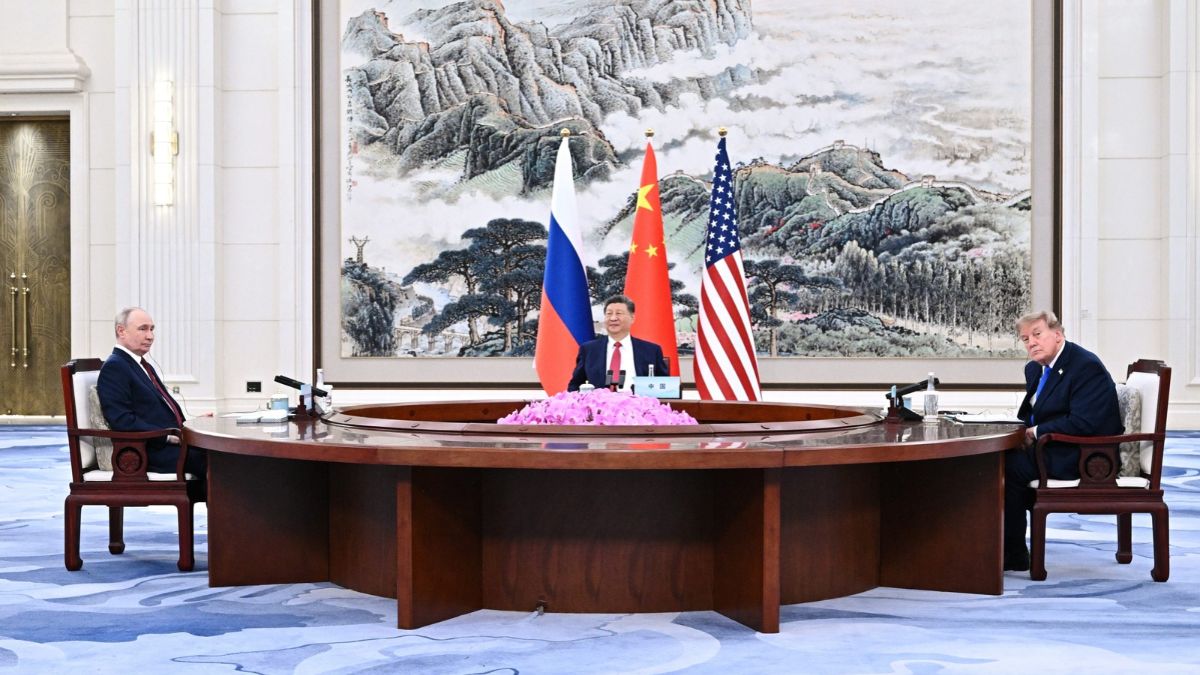
Volodymyr Zelenskyy stands behind the podium, his tired eyes scanning the row of microphoned stands, foreign correspondents, and blinding camera lights. A reporter leans forward, clearing their throat to deliver the question everyone in the room already knows is coming. Thousands of miles away, cameras in Shenzhen captured an embrace—a polished, warm encounter between Donald Trump and Vladimir Putin. The images had already raced across optical cables, appearing on millions of smartphone screens from Warsaw to Washington.
The question flies through the room, sharp and direct. How does Kyiv interpret this warm meeting in China? How does Ukraine navigate its survival when the diplomatic terrain under its feet shifts with every handshake?
Zelenskyy takes a breath. He does not explode. He does not launch into a passionate tirade or condemn the optics unfolding on the far side of the globe. Instead, he steps around the question. He turns his focus back to the paper in front of him, back to the grueling, meticulous work of assembling a European "Coalition of the Willing."
It is a masterclass in survival through tactical silence. But beneath that calculated evasion lies an agonizing human reality.
The Weight of the Unsaid
Diplomacy is often painted as a chess game, a clean mental exercise played on mahogany tables by men in tailored suits. But when you are the leader of a nation under daily bombardment, diplomacy is not abstract. It is a matter of blood, steel, and electrical grids.
Every posture in a foreign capital carries direct consequences for a family shivering in an unheated apartment building in Kharkiv. When global powers meet in places like Shenzhen, trading friendly smiles and broad promises, the ripples are felt immediately on the front lines in Donetsk. Soldiers in frozen trenches monitor international headlines on satellite phones, trying to parse whether their next shipment of artillery shells will arrive on schedule or dissolve in political friction.
Consider the position Zelenskyy finds himself in during these high-stakes moments. To aggressively call out a foreign leader whose favor you might need tomorrow is diplomatic suicide. Yet to remain completely quiet risks appearing weak to a battle-weary home front.
So, he sidesteps.
He pivots away from the theater of superpowers to focus on concrete, tangible support: European partners willing to sign defense agreements, supply air defense systems, and commit hard capital. It is an intentional choice to trade global headlines for operational reality.
Two Rooms, Two Worlds
Picture the contrast between these two simultaneous scenes on the international stage.
In Shenzhen, the lighting is warm, the handshakes are prolonged, and the declarations are sweeping. Cameras capture the theatrical ease of leaders who hold immense power, meeting in an economic engine of the East. The atmosphere suggests a redrawing of global influence, where conversations happen far above the heads of everyday citizens.
Then shift your gaze to Kyiv.
The backdrop is starker. The conversation is not about grand global realpolitik, but about immediate survival. Inside the talks for the "Coalition of the Willing," the discussions are granular. How many interceptor missiles can be delivered by next month? Which European capital will commit to joint munitions production? How do we keep the lights on through the winter?
The disconnect between these two worlds is striking. One deals in grand diplomatic gestures and broad geopolitical shifts; the other deals in the mechanics of preserving a nation-state day by day.
Zelenskyy’s strategic dodge was not an admission of helplessness. It was a refusal to play on a stage where the script was already written by someone else. By refusing to engage directly with the Shenzhen spectacle, he kept the spotlight firmly on the European allies who are actively bankrolling defense infrastructure and pledging long-term security guarantees.
The Geometry of Alliances
War accelerates the passage of time. A week of diplomatic hesitation feels like a decade when civilian infrastructure is targeted daily.
Ukraine’s foreign policy has evolved into something pragmatic out of sheer necessity. Early in the conflict, the narrative was driven by moral clarity and sweeping appeals to democratic values. Today, while those principles remain the foundational core, the operational strategy is intensely transactional.
The "Coalition of the Willing" represents this pivot. Rather than relying solely on monolithic international bodies that move with agonizing slowness, Kyiv has focused on building nimble, focused partnerships with nations that possess both the political willpower and the material capability to act immediately.
- Immediate defense needs take precedence over long-term strategic posture statements.
- Regional European security partners are becoming the primary anchors of sustained logistical support.
- Diplomatic rhetoric is carefully calibrated to avoid alienating potential key players, regardless of how frustrating their public interactions with adversaries might appear.
When a president sidesteps a question about a rival’s meeting with a key global actor, it isn't avoidance for its own sake. It is risk management. One wrong word can derail months of sensitive, quiet negotiations over intelligence sharing or sanctions enforcement.
What Happens When the Cameras Turn Off
It is easy to analyze political moves from the comfort of distance. We look at transcripts, debate tone, and critique press conference strategy as if reviewing a theatrical performance.
We forget the human element at the center of it all.
The leader stepping away from the podium does not go back to a quiet evening. He goes back to situational maps, casualty counts, and energy grid damage reports. The diplomatic tightrope he walks every day is stretched over an abyss.
When global powers engage in warm photo-ops elsewhere, the emotional toll on a population fighting for its existence is real. It breeds doubt. It invites the cold, creeping fear that global attention is moving on, that the world is growing tired of the noise, that agreements made in distant rooms will determine their fate without their consent.
Zelenskyy’s refusal to take the bait on the Shenzhen meeting was a signal to his own people as much as to foreign leaders. It was an assertion that Ukraine will not allow its narrative to be defined by what happens in foreign receptions. Its focus remains fixed on the practical alliances being built right now, brick by brick, nation by nation.
The cameras in the Kyiv briefing room click off one by one. The reporters pack up their laptops, rushing to file their stories about the question that wasn't directly answered.
Outside, the city moves forward under a gray sky. The sirens remain quiet for the moment. And on the desk inside the presidential office, the maps remain open, waiting for the next phone call to a partner willing to stand firm when the world’s attention drifts.