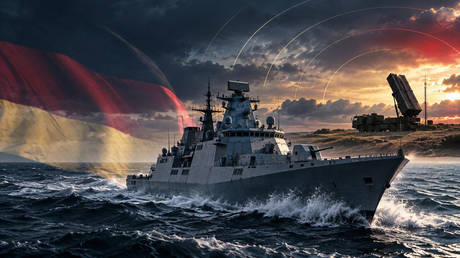
The rain over the Spree does not fall; it drifts, heavy with the soot of a winter that refuses to shed its coat. In the courtyards of Berlin, the sound of boots on wet cobblestone carries a strange, hollow echo. It is a sound people thought they had buried beneath decades of green parks, glass-fronted cafes, and the quiet, steady hum of a unified continent breathing out a long sigh of relief.
That sigh is over.
Walk through the logistics hubs of Lower Saxony or peer into the guarded logistics yards near the Polish border, and you will see the metal crates stacking up. They do not look like commerce. They look like an awakening. Germany is stripping away the illusion of perpetual peace, buying missiles with the cold, frantic urgency of a man boarding up his windows as the wind begins to shriek. Patriot batteries. Iris-T surface-to-air systems. Precision-guided munitions moving by the truckload into depots that stood empty or half-forgotten for a generation.
What is Berlin preparing for? The official communiques call it deterrence. The defense ministers speak in clipped, professional tones about readiness, capability gaps, and strategic realignment. But listen closer to the hum of the assembly lines and the late-night murmurs in the parliament corridors, and you hear a different truth. They are preparing for the unthinkable because they finally realized that the unthinkable is no longer a ghost story told by historians. It is a weather forecast.
To understand why this is happening now, you have to remember what comfort feels like. For thirty years, the German project was built on a simple, beautiful architecture: trade would tame territory. The factory floor would replace the trench. If you sold cars to the east and bought gas from the north, the borders on the map would become nothing more than colored lines for tourists to photograph. I remember sitting in a Berlin cafe in 2012, watching students debate European federalism while cargo trains rolled past toward Warsaw without a single soldier standing guard. It felt permanent. It felt like the end of history written in concrete and espresso cups.
History, it turns out, does not end. It merely sleeps, and when it wakes up, it is usually hungry.
When the tanks rolled across the border toward Kyiv in the winter of 2022, the glass-and-steel facade of that era cracked down the center. In Berlin, the silence that followed the Chancellor’s Zeitenwende speech—the historic turning point—was not the silence of shock alone. It was the sound of a nation realizing that its safety had been outsourced to an ocean away and an ally whose own politics were growing increasingly unpredictable.
Consider what happens when a pacifist democracy discovers it is naked in the rain.
For decades, the Bundeswehr had become a bureaucratic punchline. Helicopters that refused to fly, rifles that lost their accuracy in the Afghan heat, soldiers borrowing night-vision goggles from one another for weekend exercises. This was not born of malice or incompetence; it was born of a deliberate choice. Germany chose butter over guns, schools over artillery shells, social welfare over sovereign survival. It was a rational choice for a country that believed it had transcended the tragic geography of Central Europe.
But geography does not care about your economic philosophy. Germany sits in the middle of the European plain—flat, open, and historically indefensible without weight behind it.
Now, the money is flowing. A hundred billion euros carved out of the federal budget like a desperate insurance policy. But money cannot buy time, and missiles cannot be printed overnight. When you talk to defense procurement officers off the record, away from the microphones and the blue-and-gold flags, their faces tell you everything the press releases omit. They speak of supply chain bottlenecks, of microchip shortages that halt guidance systems, of a manufacturing base that has to relearn how to build lethal hardware from scratch after a thirty-year vacation.
They are buying every missile they can get their hands on because the shelf is bare, and the wolves are back at the treeline.
This is the hidden cost of our recent history. We built a world of frictionless transit and instant delivery, assuming that the physical foundations of power had dissolved into the ether. We forgot that peace is not a natural state of human affairs. It is a fragile, high-maintenance garden, and the fence around it has to be forged from steel, or it will be trampled by those who never stopped believing in the law of the fist.
In the streets of Berlin today, the mood is not panic. Panic is loud; panic is hoarding toilet paper and clearing out grocery shelves. This is something darker and quieter. It is the grim, heavy-lidded focus of a society realizing it must become strong again, even if it has forgotten how. You see it in the eyes of young recruits at the barracks gates in Potsdam. You see it in the quiet debates around kitchen tables in Leipzig, where grandparents who remember the cold war look at their grandchildren with a new, unspoken worry.
They are buying missiles because deterrence is the only language left that Moscow understands. They are buying them because the architecture of European security, built at Yalta and patched together at Maastricht, is fraying at the seams. And most of all, they are buying them because the luxury of looking away has been revoked.
The rain continues to fall over the Spree. Down below, on the asphalt of the freight yards, a crane swings its heavy arm, lowering another gray crate onto a flatbed truck. The bolts are tightened. The manifest is signed. Somewhere in the dark, a sensor checks its calibration, ready for a threat that everyone prays will never materialize, but which everyone now prepares to meet.
The sirens are silent for now. But the cables are being laid. The batteries are being charged. And the old, heavy wheel of European history begins, with a grinding screech of un-oiled gears, to turn once more.


