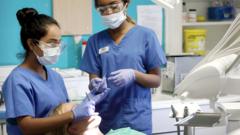
The air inside the emergency department didn’t just feel warm. It felt heavy, thick, and metallic, like breathing through wet wool.
Dr. Elena Vancea, a senior physician at a metropolitan hospital in southern Europe, recalls a specific Tuesday last July when the thermometer outside hit 43 degrees Celsius. Inside, the infrastructure was buckling. Air conditioning units, designed for an era when summers were merely balmy, whirred in a high-pitched, desperate panic before shutting down entirely in the west wing.
Geriatric patients arrived in a steady, quiet stream. They weren't bleeding. They weren't screaming. That is the deception of extreme heat. It kills silently, stealing cognitive function and drying out organs before a person even realizes they are in danger.
Consider a hypothetical patient based on the exact profile of those who flooded European clinics last summer: an eighty-two-year-old man named Mateo. He lives on the top floor of an older brick apartment complex without climate control. He didn't want to use his small electric fan because he feared the electricity bill. By the time his daughter checked on him, Mateo was confused, calling her by his sister's name. His skin was dry and hot to the touch.
When Mateo arrived at Elena's ward, his internal body temperature was 40.5 degrees Celsius. In medical terms, his body was cooking from the inside out.
For decades, European hospitals operated under the assumption that winter was the season of crisis. Winter brought the flu, fractured bones from icy sidewalks, and respiratory failure. Summer was supposed to be a period of recovery, a time for staff to take vacations and for budgets to stabilize.
That reality is gone. Summer is now the danger zone.
The Anatomy of a Modern Heat Emergency
To understand why a heatwave paralyzes a hospital, we must look at how the human body interacts with its environment. Think of the heart as a central heating and cooling pump. When external temperatures skyrocket, the brain orders the heart to pump blood furiously toward the skin, trying to radiate heat away from the core.
It is a desperate survival mechanism.
If the air outside is hotter than the body itself, this mechanism fails. The heart pumps faster and harder, but the heat remains trapped. For a young, healthy individual, this causes sweating and fatigue. For an elderly patient with a compromised cardiovascular system, it causes a catastrophic crash. The heart simply tires out.
During the notorious European heatwave of 2003, more than 70,000 people died across the continent. It was a wake-up call that many institutions answered with temporary fixes. They bought portable fans. They stocked up on ice packs.
But those band-aids are no longer enough. The spikes are becoming prolonged plateaus. A three-day heatwave is manageable; a three-week heat dome shatters systems.
When multiple climate tracking agencies confirmed that recent summers broke global temperature records, European healthcare administrators realized they were fighting a war with outdated weapons. Hospitals built in the nineteenth or twentieth centuries were designed to trap heat, keeping patients warm during bitter winters. Now, those thick stone walls and massive glass windows act like greenhouses, trapping lethal thermal energy inside wards filled with vulnerable people.
Changing the Blueprint of Care
Walk into a progressive clinic in northern France or southern Germany today, and the changes are subtle but profound. Architecture is becoming the first line of clinical defense.
Engineers are retrofitting older facilities with external solar blinds and reflective coatings on roofs. Some hospitals are installing green roofs—literal gardens atop concrete structures—to absorb sunlight and lower internal temperatures naturally. It is a shift from active cooling, which drains massive amounts of electricity and risks blackouts, to passive thermal management.
But structural changes take years. The immediate battle is fought through protocols.
Elena’s hospital implemented what they call a "Thermal Triage" system. In previous years, a patient presenting with confusion might wait hours in the seating area while doctors prioritized obvious trauma. Today, code-red heat protocols dictate that any elderly patient arriving during a heat alert gets an immediate core temperature check.
If the reading is high, the treatment begins before diagnostic blood tests even return from the lab.
The treatment itself is low-tech but highly coordinated. Staff strip the patient, wrap them in wet sheets, and blast them with industrial fans to simulate massive sweat evaporation. They administer cooled intravenous fluids directly into the bloodstream.
It is intense, physical work for the nurses, who are themselves sweating through their scrubs.
The Hidden Staffing Crisis
We often talk about hospital capacity in terms of beds and ventilators. We rarely talk about the human beings who staff them.
During a heatwave, the workload doubles just as the physical stamina of the medical team plummets. Working a twelve-hour shift in a facility where the cooling system is failing takes a severe toll. Decisions slow down. Irritability rises.
A nurse managing six patients in a standard ward must now constantly monitor fluid charts, change damp bed linens, and coax dehydrated individuals to drink water. Many elderly patients lose their thirst reflex entirely, meaning they will sit quietly and dehydrate to a critical point unless a staff member actively intervenes every hour.
The math is brutal. More care required per patient, fewer staff members capable of sustaining the pace, and an influx of new admissions at the front door.
To counter this, forward-thinking networks are rewriting their scheduling books. They are treating heatwaves exactly like a winter flu surge or a mass casualty event. Elective surgeries are postponed to free up beds. Administrative staff are reassigned to distribute water and ice across the wards. Shifts are shortened, and mandatory hydration breaks are enforced for doctors and nurses.
It is an acknowledgment of a uncomfortable truth: you cannot save lives if the lifesavers are fainting in the hallways.
The Community Connection
The most critical lesson European hospitals learned from recent summers is that the real solution doesn't start in the emergency room. It starts in the neighborhood.
By the time a patient like Mateo reaches an ambulance, the medical system has already inherited a failure of social infrastructure. If Mateo had been visited by a community health worker two days earlier, or if his building had a cool communal space, he would never have needed an ICU bed.
Hospitals are now breaking down the traditional walls between clinical medicine and public health. In several districts across Spain and Italy, hospital databases are linked with municipal social services. When the weather forecast predicts a sustained spike above 38 degrees, automated alerts trigger home visits to high-risk individuals.
They check the indoor temperature. They ensure the resident has access to fluids. They evaluate if the person needs to be moved to a temporary cooling shelter before their organs begin to fail.
This proactive approach is expensive, logistically complex, and requires immense inter-agency cooperation. It forces doctors to think about housing quality, poverty, and urban isolation. But compared to the cost of a multi-day stay in an intensive care unit, community intervention is both economically logical and profoundly humane.
The Next Horizon
The challenge is far from solved. Climate projections indicate that the summers of the next decade will make current record-breaking temperatures look mild.
There is an eerie uncertainty in the medical community. Can the grid hold? If a major city experiences a simultaneous heatwave and a massive electrical blackout, hospitals will have to rely on diesel generators. Those generators can run life-support systems, but they rarely have the capacity to run central air conditioning for an entire facility.
That is the scenario that keeps administrators awake at night. A hospital turned into an oven, with no escape for the bedbound.
Preparation is a race against a clock that is ticking faster every year. It requires moving away from the mindset that weather is a temporary inconvenience and accepting that the baseline of human health has shifted.
Back in the emergency department, Elena checks the forecast for the upcoming week. Another red warning icon appears on her screen. Five consecutive days of extreme heat are moving across the Mediterranean.
She walks to the supply closet, ensures the cooling blankets are stocked, and adjusts her own water bottle on her desk. The ward is quiet for now. But the heat is coming, and the building is ready to fight back.