The morning air used to taste like exhaust.
For decades, that metallic, choking bite was simply the background music of waking up. We turned the key, listened to the rhythmic shudder of an internal combustion engine coughing to life, and accepted the tax we paid for motion. A few drops of fossil fuel burned here, a plume of smoke caught in the neighborhood streetlights there. It was normal. It was background noise.
Then, the math broke.
Meet David. (This is a hypothetical scenario, though his kitchen table mirrors thousands across the suburbs.) David is a forty-two-year-old accountant who drives forty-five minutes each way to his office. Last year, he started keeping a separate folder in his kitchen drawer for fuel receipts. By winter, that folder felt heavy. Not physically, of course—just paper. But every time he pulled into a service station and watched the digital numbers spin past his pay rate like a slot machine on a losing streak, a quiet panic set in.
He wasn't mad about climate change. He was mad about his bank account.
He was watching fifty-dollar bills evaporate into thin air twice a week just to sit in traffic on the ring road. The math no longer added up to a life that made sense. And David, like a growing legion of drivers who couldn't care less about saving polar bears, finally did what generations before him did when a tool became obsolete: he looked for a better one.
Something shifted.
Across the country, the tipping point arrived not with a roar, but with a hum. For the first time in modern history, new electric vehicle sales officially outpaced traditional petrol cars. Not in some futuristic Scandinavian utopia, but right here, in the dusty heat of local suburbs and choked city lanes. Drivers finally stopped asking if electric cars were a passing fad and started asking why they ever waited so long to make the switch.
To understand why this happened, you have to look past the showroom brochures and examine human behavior. We are creatures of habit until habit becomes financially painful.
Think of it like swapping a landline for a smartphone. At first, the old way feels reliable because you know its quirks. You know how to jiggle the receiver; you know how to ignore the static. But the moment the bill for maintaining that broken system exceeds the cost of upgrading, nostalgia dies instantly.
Fuel costs became that static.
Global markets jittered, supply chains strained, and pump prices became an exercise in psychological torture. Every geopolitical headline translated directly into an extra twenty dollars at the servo. Meanwhile, sitting quietly in millions of garages was an infrastructure we already built: the domestic wall socket.
Electricity is boring. It doesn't spike wildly because a tanker got stuck in a canal halfway across the world. It flows through copper wires, predictable and domestic, charging overnight while you sleep. When drivers realized they could wake up every morning with a full "tank" for a fraction of the cost of standing outside in the wind holding a greasy fuel nozzle, the psychological barrier cracked.
Range anxiety—that persistent ghost story whispered by skeptics about cars dying in the middle of nowhere—began to starve for lack of evidence. People like David talked to neighbors who owned EVs. They learned a simple truth: ninety percent of daily driving fits comfortably within a fraction of a single charge. The car charges while parked, just like a mobile phone. You don't visit a public charging station every day any more than you visit a petrol station to top up your smartphone battery over lunch.
The transition wasn't driven by government mandates alone, nor was it purely an awakening of environmental conscience. It was driven by the undeniable gravity of household economics. When a technology saves you thousands of dollars a year while offering instant torque, a quieter cabin, and zero trips to the oil-change mechanic, adoption stops being a political statement.
It becomes common sense.
We are standing at the messy, fascinating midpoint of an industrial pivot. Traditional auto executives are scrambling, legacy infrastructure is being retrofitted, and old habits are dying hard in parking lots across the nation. But the momentum has its own weight now.
Look out your window tonight.
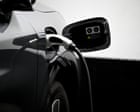
Somewhere down the street, beneath a porch light, a cable runs from a brick wall into the flank of a silent, parked car. There is no smoke. There is no vibration. There is only the invisible, steady transfer of energy, quietly rewriting the way we move through the world.
The exhaust pipe is becoming a relic of the past, leaving behind a cleaner morning and a horizon we can finally see through.