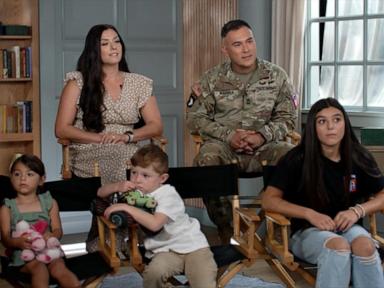
America's military families face a quiet crisis that flag-waving ceremonies and superficial corporate appreciation campaigns fail to address. While public rhetoric constantly praises their sacrifice, the structural systems designed to support these families are fracturing under the weight of frequent relocations, chronic spouse unemployment, and an inaccessible mental health infrastructure. True support requires dismantling bureaucratic barriers rather than just offering public applause. Transitioning from active duty to civilian life exposes deep gaps in housing security and emotional support networks, leaving thousands of families to navigate a complex maze of underfunded federal programs alone.
The Financial Toll of Constant Relocation
Frequent moves destroy the career progression of military spouses. Every two to three years, the Department of Defense orders a Permanent Change of Station. For a working professional, this routine disruption means resetting the job search clock, abandoning seniority, and paying for new professional licenses in different states. You might also find this similar coverage interesting: Inside the International Institution Crisis Nobody Is Talking About.
The numbers paint a bleak picture of this economic instability. Military spouse unemployment has hovered around 20 percent for over a decade, a figure that far outpaces the national civilian average. This is not a problem of skill or ambition. It is a structural flaw. Companies are hesitant to hire applicants who have a predictable expiration date stamped on their residency.
This creates a severe income deficit for households that increasingly need two salaries to survive. When a family loses half its earning potential every few years, debt accumulates. The Defense Department’s own surveys indicate that financial stress is a primary driver of overall dissatisfaction among married service members, often pushing highly trained personnel to exit the ranks entirely. As extensively documented in detailed articles by The Washington Post, the results are notable.
The Interstate Licensing Trap
Licensing boards move at a glacial pace. A dental hygienist, school teacher, or accountant certified in Texas cannot simply show up in Virginia and start working. They must endure months of paperwork, background checks, and administrative fees to obtain a new state-level credential.
[State 1 Credential] ➔ [PCS Move] ➔ [Months of Bureaucracy & Fees] ➔ [State 2 Credential]
While interstate compacts aim to ease this transition, implementation remains uneven across the country. By the time a spouse receives official clearance to practice their profession, the clock is already ticking down toward their next mandatory relocation. The financial damage is already done.
The Hidden Mental Health Bottleneck
The psychological burden extends far beyond the active-duty member. Children change schools up to nine times between kindergarten and high school graduation, forcing them to constantly rebuild social circles and adapt to varied academic standards. This continuous upheaval breeds anxiety, depression, and behavioral challenges that require professional intervention.
Yet, finding care within the military health system is an exercise in frustration. The TriCare network suffers from severe provider shortages, particularly in rural or isolated installation areas. Families face month-long waiting lists for pediatric therapists and family counselors.
Increased Family Stress ➔ High Demand for Therapy ➔ Shortage of TriCare Providers ➔ Months on Waiting Lists
When a child exhibits signs of severe emotional distress, a parent cannot afford to wait a quarter of a year for an intake appointment. Many families resort to paying out-of-pocket for civilian therapists who do not accept military insurance. This decision forces a brutal choice between financial security and psychological well-being. The system turns away the very people it promises to protect.
The Privatized Housing Deception
Safe, affordable housing is a fundamental pillar of family stability. However, the Department of Defense’s decision to outsource base housing to private real estate conglomerates has yielded disastrous results for decades. Across the nation, military families report living in substandard conditions marked by toxic mold, lead paint, pest infestations, and structural neglect.
Private housing contractors operate with minimal oversight and guaranteed revenue streams through basic housing allowances. When a family reports a maintenance emergency, responses are routinely delayed or poorly executed. The power dynamic is completely skewed against the tenant. A young family hesitant to rock the boat feared administrative retaliation or negative marks on the service member's record.
The Failure of Regulatory Oversight
Congress has passed multiple iterations of a Military Housing Tenant Bill of Rights, yet enforcement mechanisms lack real teeth. Private developers frequently exploit legal loopholes to withhold maintenance records or dispute complaints. Without independent inspectors empowering tenants to withhold rent without penalty, the systemic neglect of base housing will persist.
The Long Road to Civilian Reintegration
The crisis does not end when service members hang up the uniform. The transition to civilian life represents a total cultural and economic shock for the entire household. Suddenly, the structured environment of base life disappears, replaced by the fragmentation of civilian communities.
The Transition Assistance Program provides brief briefings on resume writing and veteran benefits, but completely misses the broader social isolation that families experience. Neighbors in civilian suburbs rarely understand the realities of deployments or the lingering effects of operational stress. The sudden loss of a built-in community leaves spouses and children feeling profoundly alienated.
Veterans affairs programs focus heavily on the individual veteran, leaving the family unit to pick up the pieces of broken relationships and unaddressed trauma. Without comprehensive support structures that treat the family as an interconnected system, the cycle of instability continues long after the final discharge papers are signed. True celebration demands systemic reform, policy accountability, and a genuine commitment to fixing these broken institutions.