Saltwater does not care about flags. It eats through iron just the same whether the hull belongs to a superpower or a smuggler. Down there, five hundred miles from the nearest familiar coastline, the world is reduced to a monochromatic hum of sonar pings, engine roars, and the heavy, crushing weight of an ocean that wants to pull everything down into the dark.
Consider what happens when a machine with no heartbeat becomes the most valuable asset in a theater of war.
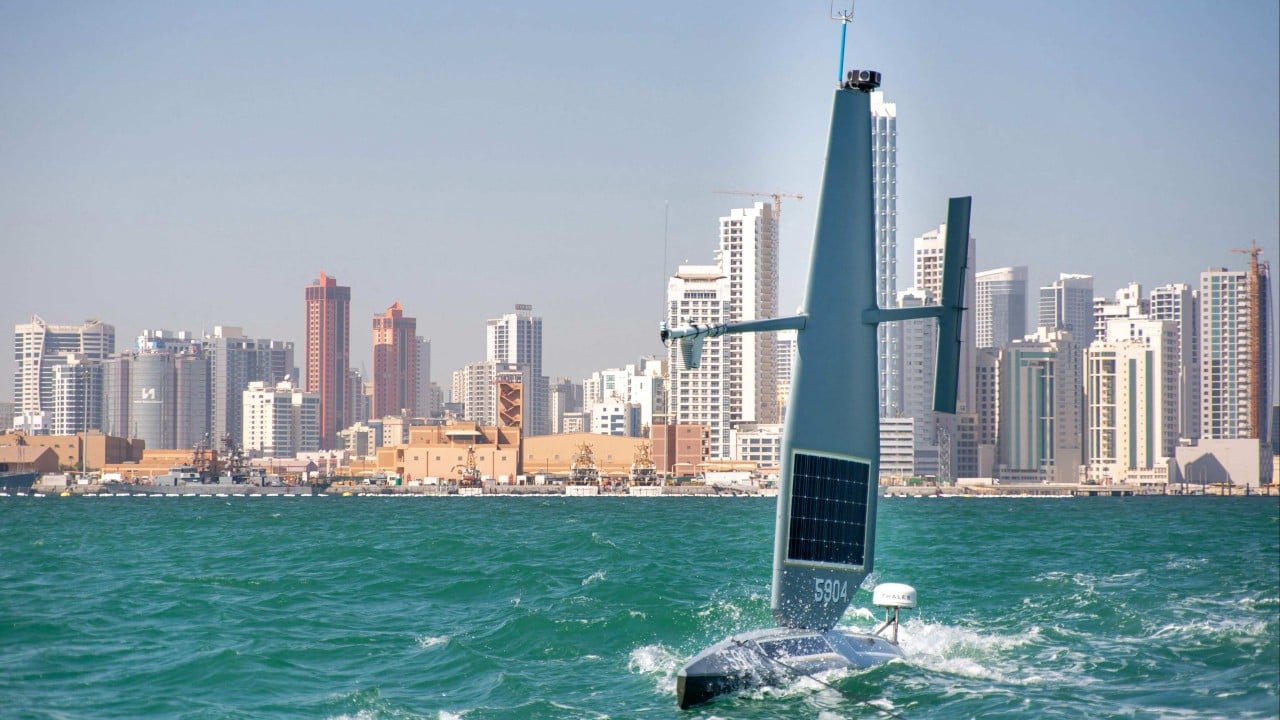
For months, the United States Navy had been testing a different kind of sailor. It does not sleep. It does not drink coffee, or write letters home, or wonder what is waiting for it when the deployment ends. It is a sleek, uncrewed surface vessel—a sea drone—skimming across the whitecaps of the Middle Eastern waterways, gathering data, mapping the hidden contours of shipping lanes, and quietly shifting the mathematics of naval dominance. To a modern military, these autonomous vessels are eyes that never blink. To a rival force watching from a contested coastline, they are an intolerable intrusion. A metallic ghost mapping secrets they want kept in the deep.
Midnight on the water is not black. It is a bruised, shimmering silver under a half-moon.
Picture a cramped bridge on a fast patrol boat belonging to Iran’s Islamic Revolutionary Guard Corps. The air smells of burning diesel, cheap tobacco, and the thick, humid sweat of men working in cramped quarters. The radar screen flickers with a green pulse. A blip. Small, unflagging, steady.
They had seen it before. That drifting silhouette. To the crew on that patrol boat, the unmanned drone was not just a piece of hardware drifting on international waters; it was an open window into their backyard, an unblinking surveillance eye peering down from a metallic sky made of silicon and code. Orders would have been shouted over the roar of twin engines. Hands would have grabbed tow lines. The logic of the maneuver was simple, brutal, and old as maritime conflict itself: take it. Drag it behind the wake, pull it into a shadowed cove, reverse-engineer the optics, harvest the processors, and turn the enemy’s own technology against them.
Sea theft is as old as the first hollowed-out log that carried cargo across a Mediterranean bay. Only the tools have changed.
The patrol boat surged forward, cutting the swell, white foam boiling off its bow. The crew closed the distance on the drifting American drone, a vessel designated to operate in plain sight under international maritime law, yet vulnerable precisely because it lacks a human crew to brandish a rifle or fire a warning shot. They hooked it. They secured the lines. They began to tow it away, believing for a brief, breathless stretch of minutes that the ocean still belonged to those who dared to grab it first.
They forgot about the sky. And they forgot about the speed of modern intervention.
Miles away, aboard the guided-missile destroyer USS Nitze and hovering in the humid night air above, the digital nervous system of a global superpower registered the theft in milliseconds. Sensors blinked red. An uncrewed surface vessel does not fight back, but its handlers do. Within minutes, the calculus of the encounter shifted violently. A Navy patrol coastal ship, the USS Cyclone, sliced through the water toward the coordinates, while an MH-60S Seahawk helicopter detached from its moorings and roared into the upper air, its rotor blades chopping the heavy night atmosphere into violent rhythm.
Noise. Rotorwash. Searchlights stabbing through the salt spray like white lances.
Imagine the sheer disorientation on the deck of that Iranian patrol boat as the sea suddenly erupted into light. The helicopter dropped low, its downwash flattening the waves into a slick, frantic sheen, painting the desperate crew in harsh, blinding illumination. There was no radio negotiation. There were no diplomatic cables sent across a red telephone. There was only the raw, undeniable physics of overwhelming force arriving on the horizon.
Faced with the roar of a low-flying naval helicopter and the closing gray silhouette of an armed American warship, the calculus on the stolen drone changed instantly. The tow lines were cast loose. The prize was abandoned to the waves.
The official military reports filed later would use the cold, sterile language of bureaucracy: The U.S. Navy prevented an Iranian naval vessel from capturing an uncrewed surface vessel... naval forces operating in the U.S. 5th Fleet region responded... two Iranian Revolutionary Guard Corps Navy vessels attempted to tow...
Statistics are comforting because they keep the blood off the page. But war, even when fought with drones and digital links, remains a deeply human endeavor driven by desperation, calculated risks, and the sudden, terrifying realization that you have misjudged your opponent's reaction time.
Why does a drone bobbing in the Persian Gulf matter to anyone sitting thousands of miles away in an air-conditioned room?
Because the battles of tomorrow will not be fought over territorial soil alone. They will be fought over data, autonomy, and the invisible architecture that connects the modern world. Ninety percent of global commerce moves by sea. The narrow choke points like the Strait of Hormuz are the jugular veins of the global economy. When a nation deploys sea drones to patrol these waters, it is attempting to secure the lifelines of international trade using machines that remove human casualties from the immediate equation.
Yet, removing the human from the cockpit does not remove the human stakes. It merely shifts them. It creates a gray zone of conflict—a space where adversaries test each other’s boundaries with ropes, hooks, and fast boats, probing for weaknesses in an automated defense network. If a drone can be stolen today without consequence, tomorrow a larger asset will be challenged. The line between peace and open conflict is held together by deterrence, and deterrence is maintained by the willingness to show up with a helicopter and a warship at three o'clock in the morning to say: Not here. Not now.
The United States military later released the grainy, high-contrast video of the encounter. Millions watched the silent, black-and-white footage of the patrol boat securing the tow line, followed by the blinding white sweep of the helicopter lights descending from above. It played like a thriller on phone screens across the globe, consumed between sips of morning coffee and late-night scrolls.
Then the app closed. The phone locked. The screen went black.
And out there, in the dark water of the Middle East, the ocean continued its eternal, indifferent roll. Another drone drifted silently on the surface, its sensors humming, watching the horizon for the next shadow that decides to reach out and touch what it shouldn't.