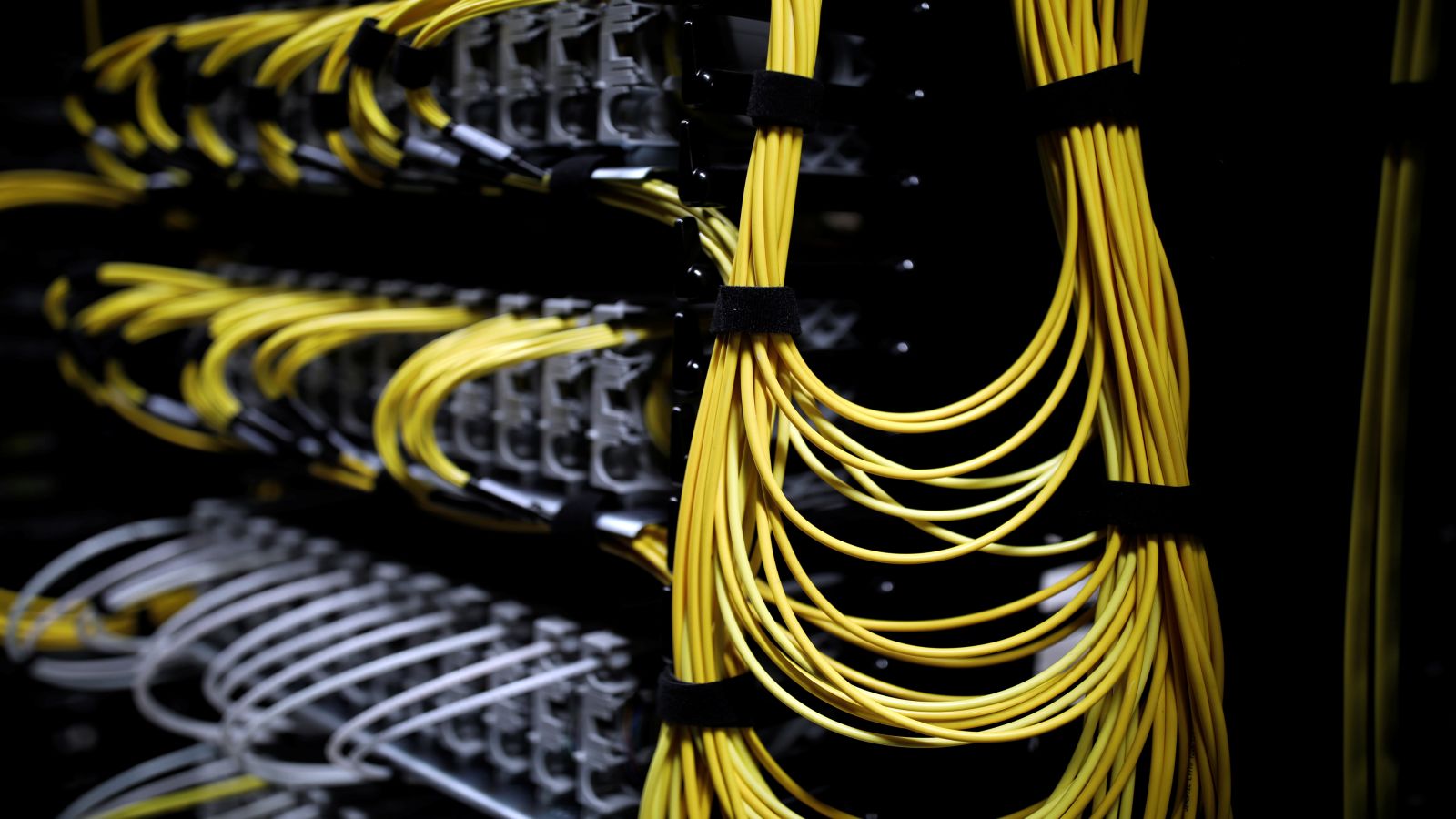
Huawei is attempting to rewrite the rules of the global technology landscape by detaching itself completely from the Western semiconductor ecosystem. At the World Artificial Intelligence Conference in Shanghai, the company unveiled its Atlas 950 SuperPoD computing cluster alongside its highly anticipated native HarmonyOS NEXT AI agent ecosystem. This double-pronged announcement answers the industry’s most pressing question. Can a heavily sanctioned enterprise build a sovereign AI infrastructure from the silicon up? By fusing massive hardware clusters with software that rejects Android compatibility entirely, the company is betting its survival on a vertical integration strategy that mirrors Apple's ecosystem model but operates under wartime economic constraints.
The Raw Math of the Atlas 950 SuperPoD
Western export controls were explicitly designed to choke off China's access to high-end AI training hardware. The assumption was simple. Without Nvidia's latest architecture, training large language models at scale becomes economically and technically impossible.
The Atlas 950 SuperPoD is a direct response to that assumption. Instead of trying to match the raw single-die performance of forbidden Western silicon, engineering teams focused on system-level architecture. The platform scales up to 8,192 Ascend accelerators in a single deployment.
+-----------------------------------------------------------+
|               ATLAS 950 SUPERPOD ARCHITECTURE             |
+-----------------------------------------------------------+
|  [8,192 Ascend Accelerators] Interconnected via HCCS      |
|  Unified Memory Pool -> Eliminates PCIe Interconnect Bottlenecks |
+-----------------------------------------------------------+
                             |
                             v
+-----------------------------------------------------------+
|  [CANN 8.0 Software Stack]                                |
|  Direct CUDA Translation Layer -> Zero-Overhead Migration|
+-----------------------------------------------------------+
                             |
                             v
+-----------------------------------------------------------+
|  [Trillion-Parameter Model Training & Inference]         |
+-----------------------------------------------------------+
To make this massive array behave like a single, cohesive logical machine, engineers deployed a globally unified memory architecture. In traditional clusters, data transfer between individual server nodes creates severe bottlenecks. By using proprietary high-speed fabric interconnects, this setup allows thousands of processors to share memory states with minimal latency.
Internal metrics suggest that while an individual Ascend processor lags behind top-tier Western components, the clustered performance changes the math entirely. In inference workloads, the multi-node architecture delivers a threefold performance increase compared to lower-spec export-compliant alternatives, at a fraction of the operational cost.
The Air-Cooled Realities of Data Center Power
Massive computing clusters generate immense thermal loads. The industry trend leans heavily toward complex liquid-cooling infrastructure, which requires specialized data center retrofitting and drives up capital expenditures.
The Atlas 850E, a sibling variant demonstrated alongside the flagship cluster, uses advanced air-cooling mechanisms designed for standard server rooms. Maintaining high throughput and low latency for agentic inference without requiring liquid infrastructure is an intentional operational choice. It allows enterprise clients in sectors like banking, telecommunications, and power grids to deploy localized AI infrastructure into existing facilities without rebuilding their physical plants from scratch.
This hardware push relies heavily on the Compute Architecture for Neural Networks software stack. The latest iteration focuses on compatibility with third-party training acceleration libraries and popular open-source frameworks. This is an explicit attempt to lure developers away from Nvidia's dominant CUDA ecosystem by minimizing the friction of code migration.
Eliminating the Android DNA
Simultaneously, the consumer facing side of this strategy is landing on retail shelves. The architecture of the new flagship mobile devices represents a clean break from the past. For years, mobile operating systems in the region relied on the open-source foundations of Android.
HarmonyOS NEXT strips that heritage away completely. It does not run Android application packages. It does not use the Linux kernel.
Instead, it relies on a proprietary microkernel architecture designed to handle distributed computing across multiple device types. By eliminating the overhead of the Android runtime environment, system performance efficiency improved by 40%. This architecture allows the operating system to allocate hardware resources dynamically based on the immediacy of the task.
+-------------------------------------------------------+
|                 HARMONYOS NEXT ARCHITECTURE           |
+-------------------------------------------------------+
|  [Native Microkernel] -> Eliminates Linux/Android Base |
+-------------------------------------------------------+
|  [Pangu Large Language Model] Embedded At System Level |
+-------------------------------------------------------+
|  [Celia Intelligence Layer] Continuous Screen Context  |
+-------------------------------------------------------+
The System Level AI Agent
The virtual assistant, Celia, is no longer an application running on top of an operating system. It is hardwired into the platform interface.
A permanent interaction bar at the bottom of the display serves as an entry point for system-wide data manipulation. Users can drag images, unformatted text blocks, or complex documents directly into this zone. Because the Pangu foundational model is embedded directly within the OS architecture, the assistant processes these inputs locally without relying constantly on cloud round-trips.
This integration manifests in three distinct operational areas.
- Contextual Scene Perception: The device monitors on-screen data and physical sensor inputs to anticipate user actions across 23 distinct environmental scenarios.
- Cross-Device Task Continuity: Because the microkernel handles networking natively, a data analysis task initiated via the assistant on a handheld device transfers instantly to a nearby tablet or display when the user changes locations.
- Local Privacy Filtering: Applications are barred from accessing core communication logs or full asset libraries. Instead, the OS uses local inference to serve specific data points to apps on a one-time, strictly controlled basis.
The Fractured Supply Chain Risk
This entire ecosystem is a fragile engineering achievement. The strategy assumes that domestic semiconductor fabricators can consistently produce these sophisticated processors in high volumes.
Production yield rates remain a closely guarded industrial secret. During major product reveals, executive presentations meticulously highlight software performance gains and architectural design triumphs while omitting explicit details about the underlying silicon fabrication process. This silence speaks volumes about the razor-thin margins of error in domestic manufacturing.
If local fabrication plants cannot maintain stable yields, the rollout of both the enterprise computing clusters and consumer hardware will stall. The enterprise market requires predictable, high-volume hardware deliveries to justify migrating away from established global software standards.
The Integration Gamble
The true test of this parallel tech ecosystem lies in the developer community. Forcing software engineers to write native code for a completely new operating system while simultaneously asking enterprise developers to optimize their models for a non-CUDA hardware stack is a monumental ask.
The strategy relies on a closed-loop economic reality. By offering integrated hardware that runs native, high-performance software, the ecosystem aims to create an internal market insulated from geopolitical pressures. It is an expensive, high-risk attempt to prove that system-level architectural innovation can overcome raw manufacturing limitations.