Every single time the wind shifts across the Malacca Strait and turns Singapore’s skyline into an apocalyptic grey soup, the foreign policy pundits trot out the exact same tired praise. They applaud Singapore’s "quiet diplomacy." They commend the restraint. They frame back-channel ministerial visits to Jakarta as masterclasses in Southeast Asian statecraft.
They are completely wrong.
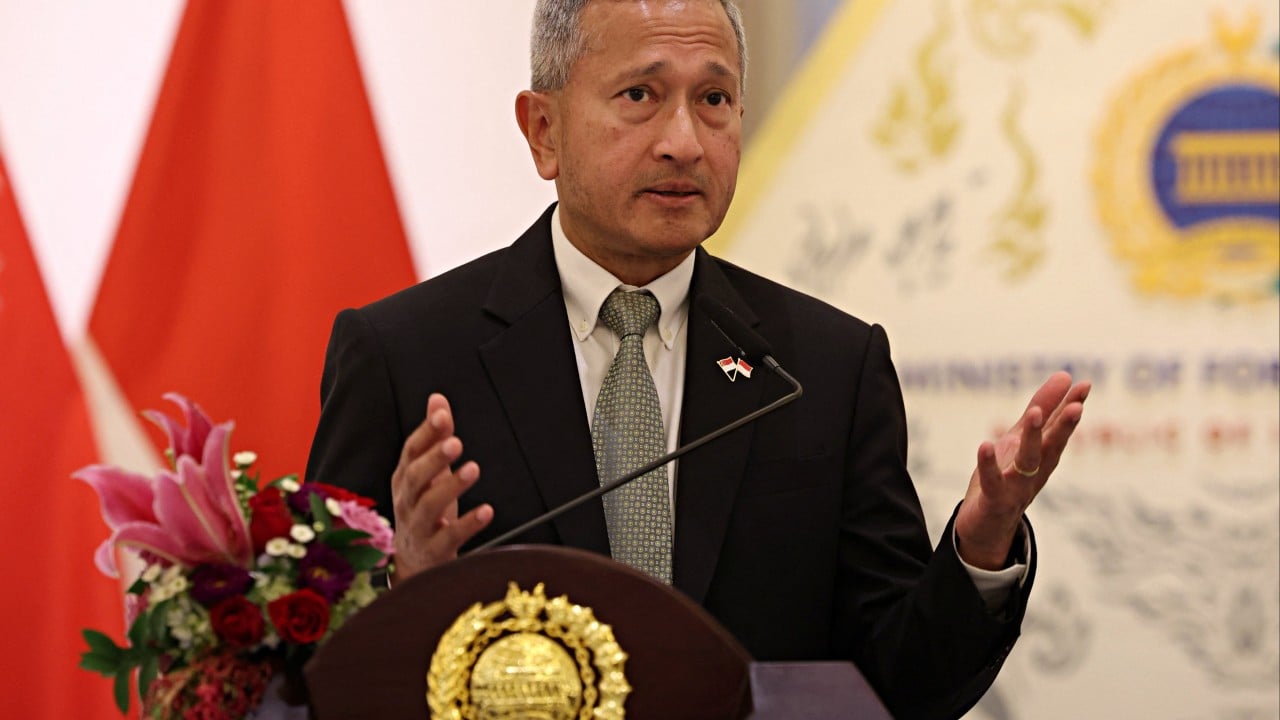
What passes for "quiet diplomacy" in the ASEAN region isn't a sophisticated geopolitical maneuver. It is a polite, expensive capitulation to systemic regulatory failure. When a Singaporean minister makes a "surprise" trip to Indonesia amid rising hotspot counts and choking air, the mainstream press treats it like a tactical triumph. In reality, it is an admission that decades of multilateral treaties, domestic laws, and corporate sustainability pledges have failed to stop the annual burning of peatlands in Sumatra and Kalimantan.
If you want to understand why Southeast Asia still chokes on transboundary haze in the mid-2020s, stop looking at the diplomatic handshakes. Start looking at the balance sheets, the sovereign immunity shields, and the structural cowardice baked into the "ASEAN Way."
The Myth of the Gentle Nudge
The conventional wisdom goes like this: public shaming triggers nationalist backlash in Jakarta, so Singapore must whisper behind closed doors to get results. On the surface, that sounds pragmatic. If you back a proud neighbor into a corner, they dig their heels in.
Here is the flaw in that logic. Whispering only works when the person you are whispering to actually controls the room.
In the context of Indonesian land clearing, Jakarta is not a monolith pulling a single lever to start or stop fires. The reality on the ground in Riau, Jambi, and South Sumatra is a sprawling, decentralized web of local patronage, overlapping land concessions, smallholders operating on razor-thin margins, and mid-tier palm oil and pulpwood suppliers hiding behind labyrinthine shell companies.
When a Singaporean minister flies in for a quiet chat with counterparts in Jakarta, they are negotiating with central officials who frequently lack the granular enforcement capacity—or local political incentive—to police remote peatlands during an El Niño dry spell. You cannot solve a decentralized economic incentive problem with centralized diplomatic politeness.
I have watched regional supply chain auditors spend millions of dollars mapping concession boundaries in Sumatra, only to discover that the moment a fire breaks out, the land title magically dissolves into a dispute between a local cooperative, a provincial official, and a Jakarta-based holding company. Quiet diplomacy doesn't untangle that knot. It just keeps the bilateral photo-ops pleasant while the PM2.5 readings climb past 200.
Why the Transboundary Haze Pollution Act Is a Paper Tiger
To understand how toothless this quiet approach truly is, look at Singapore’s own Transboundary Haze Pollution Act (THPA) of 2014. When Parliament passed it, the law was hailed as a revolutionary legal weapon. For the first time, Singapore asserted extraterritorial jurisdiction, claiming the right to fine both local and foreign companies up to S$2 million if their operations contributed to unhealthy air in the city-state.
Over a decade later, how many major convictions have stuck? Effectively zero.
The law ran straight into a brick wall of sovereign reality. To prosecute an Indonesian company under the THPA, Singaporean authorities need concession maps, corporate ownership registries, and witness testimony from inside Indonesia. Jakarta flatly refused to hand over official concession data, citing national sovereignty and domestic privacy laws. Worse, Indonesian officials routinely accused Singapore of overstepping its legal bounds.
So Singapore pivoted back to "quiet diplomacy." Instead of enforcing its own landmark legislation, it shelved the legal hammer and went back to offering technical assistance, satellite data, and polite bilateral dialogues.
Let’s call that what it is: deterrence failure. If you pass an extraterritorial law and then refuse to enforce it because you are afraid of offending your neighbor's diplomatic sensibilities, you haven't created a deterrent. You have advertised your own hesitation. Corporate executives sitting in air-conditioned offices in Singapore, Kuala Lumpur, and Jakarta know the math. The cost of clearing land with fire—roughly US$10 to US$20 per hectare—is microscopic compared to mechanical clearing, which can cost upwards of US$1,000 per hectare. When the risk of extraterritorial prosecution drops to near zero, fire remains the rational economic choice.
Follow the Capital, Not the Diplomats
If mainstream commentators actually understood how agribusiness operates in Southeast Asia, they wouldn't be tracking ministerial flight logs. They would be tracking commercial credit lines and corporate registries.
Singapore is not a passive victim of geography in this crisis. It is the financial nerve center of the region. Many of the largest palm oil, pulp, and paper conglomerates operating in Indonesia maintain their corporate headquarters, treasury operations, or primary banking relationships right in Marina Bay and Raffles Place.
Think about that asymmetry. Singapore holds massive financial leverage over the exact supply chains driving the deforestation and peatland drainage that cause the haze. Yet, under the banner of quiet diplomacy, the state avoids weaponizing its own financial regulatory apparatus.
Imagine a scenario where the Monetary Authority of Singapore (MAS) treats transboundary haze-linked deforestation with the exact same regulatory ferocity it applies to anti-money laundering (AML) violations. Picture what happens if major Singaporean banks are legally required to freeze credit facilities, recall loans, and sever correspondent banking ties with any parent group whose tier-two or tier-three suppliers are linked to NASA FIRMS thermal anomalies.
The fires would drop by 80 percent before the next dry season even peaked.
Why doesn't that happen? Because aggressive financial enforcement threatens Singapore’s status as a friction-free, business-friendly capital hub. It risks capital flight to competing financial centers and triggers messy corporate litigation. Quiet diplomacy is infinitely more comfortable for the financial establishment. It allows politicians to look active on the evening news without disrupting a single syndicate loan or commodity trading desk.
Dismantling the "ASEAN Way" Delusion
Whenever someone points out the failure of regional haze governance, defenders immediately invoke the ASEAN Agreement on Transboundary Haze Pollution, signed in 2002 and finally ratified by Indonesia in 2014. They argue that non-interference and consensus-building—the sacred pillars of the "ASEAN Way"—are the only things keeping Southeast Asia stable.
That argument conflates geopolitical peace with regulatory paralysis.
Non-interference makes sense when you are preventing border skirmishes or keeping Cold War superpowers out of regional politics. It is completely broken when applied to shared atmospheric commons. Air does not respect sovereign borders. When peatland fires in Kalimantan release hundreds of millions of tons of carbon dioxide and toxic particulate matter, that is not a domestic Indonesian affair. It is a cross-border externalization of pollution onto tens of millions of citizens in Singapore, Malaysia, and Brunei.
By hiding behind the ASEAN Way and celebrating "quiet diplomacy," regional leaders have created a moral hazard. They have normalized an arrangement where one nation externalizes the environmental cost of its agricultural expansion, while its neighbors absorb the healthcare bills, lost productivity, and cancelled flights—and thank them for the opportunity to hold a bilateral summit about it.
What Everyone Gets Wrong About Indonesian Politics
Let’s address the most common counter-argument from the diplomatic establishment: "If Singapore gets aggressive, Jakarta will retaliate on water treaties, airspace management, or defense cooperation."
This is a real risk. Anyone pretending otherwise is naive. Singapore is a tiny island nation dependent on neighbors for critical resources and regional goodwill. Pushing Jakarta too hard carries genuine diplomatic blowback, from stalled Flight Information Region (FIR) agreements to nationalist boycotts of Singaporean consumer brands.
However, treating the choice as a binary between "public screaming matches" and "toothless quiet diplomacy" is a massive failure of strategic imagination.
Indonesian leadership is not blind to the domestic cost of the haze. During catastrophic haze years, the worst suffering doesn't happen in Orchard Road; it happens in Pekanbaru and Palangkaraya, where millions of Indonesian citizens breathe hazardous air for months, schools shut down, and acute respiratory infections spike. Furthermore, Jakarta faces intense international pressure over its climate commitments and European Union Deforestation Regulation (EUDR) compliance, which threatens its palm oil exports to Western markets.
Jakarta actually needs leverage against its own rogue concession holders and local political bosses. When Singapore plays the quiet, accommodating neighbor, it removes the external pressure that reform-minded officials in Jakarta could otherwise use to justify crackdowns at home.
Think about how international trade negotiations work. When a government wants to force painful domestic reforms on entrenched oligarchs, it points to an external threat—an impending tariff, a financial blacklist, an international lawsuit—and tells its domestic players: "We have no choice; the foreigners are forcing our hand." By neutralizing its own legal and financial threats in the name of quiet diplomacy, Singapore inadvertently protects the exact Indonesian vested interests that Jakarta’s reformers are trying to rein in.
The Real Playbook That Would Actually Work
If Singapore wants to stop treating the symptoms every dry season and actually dismantle the haze economy, it needs to abandon the illusion that polite ministerial visits change behavior on the ground. It requires shifting from diplomatic theater to hard market mechanics.
1. Weaponize Supply Chain Traceability Laws
Forget chasing ghost companies through Indonesian courts under the THPA. Instead, mandate strict liability for any commodity trader, consumer goods manufacturer, or financial institution operating in Singapore that sources from unverified or fire-linked concessions. Shift the burden of proof entirely onto the corporations. If a palm oil refiner in Singapore cannot prove via independent satellite verification that its crude palm oil came from zero-burn concessions, hit them with immediate import bans and punitive tax penalties at the port of entry.
2. Turn the Singapore Exchange (SGX) Into an Enforcement Arm
Sustainability reporting on the SGX has historically been treated like a corporate PR exercise—glossy PDFs filled with vague commitments and zero teeth. Make environmental, social, and governance (ESG) disclosures legally binding with personal liability for directors. If a listed agribusiness firm claims "zero-burning" policies while fires burn on its subsidiary or supplier land, delist them or suspend trading. Capital markets react to delisting threats in hours; diplomats take decades to draft a communiqué.
3. Subsidize Peatland Rewetting Directly Through Carbon Markets
You cannot tell a smallholder farmer in Sumatra to stop clearing land with fire if you don't offer a superior cash alternative. Instead of funding generic bilateral workshops, Singapore should channel its massive sovereign wealth and emerging carbon credit frameworks directly into high-integrity peatland restoration projects in Sumatra and Kalimantan. Pay local communities and provincial governments more to keep peatlands wet and intact than they could ever make draining them for acacia or oil palm. Make conservation profitable at the village level, not just fashionable at regional summits.
4. Publish Real-Time Attribution Data
Stop waiting for diplomatic clearance to name and shame. Singapore has access to world-class geospatial intelligence and commercial satellite networks. Partner with independent academic and environmental watchdogs to publish real-time, publicly accessible maps linking active thermal hotspots directly to corporate ownership trees and their downstream buyers. Let global institutional investors and Western consumer brands see exactly which companies are burning peatlands in real time. Global market exclusion hurts far worse than a Singaporean court summons ever could.
Stop Applauding the Smoke Screen
The next time you read a glowing headline about a Singaporean minister’s "quiet diplomacy" in Jakarta, look closely at what is actually being accomplished. Look for binding enforcement mechanisms. Look for frozen credit lines. Look for revoked concessions. Look for altered economic incentives on the ground in Sumatra.
You won't find them. You will find carefully worded joint statements about "enhancing cooperation," "sharing best practices," and "monitoring weather patterns."
Diplomacy is supposed to be a tool for achieving concrete national security and public health outcomes. When it becomes an end in itself—when maintaining a polite tone matters more than protecting the air your citizens breathe—it is no longer strategy. It is just performance art conducted in a haze.