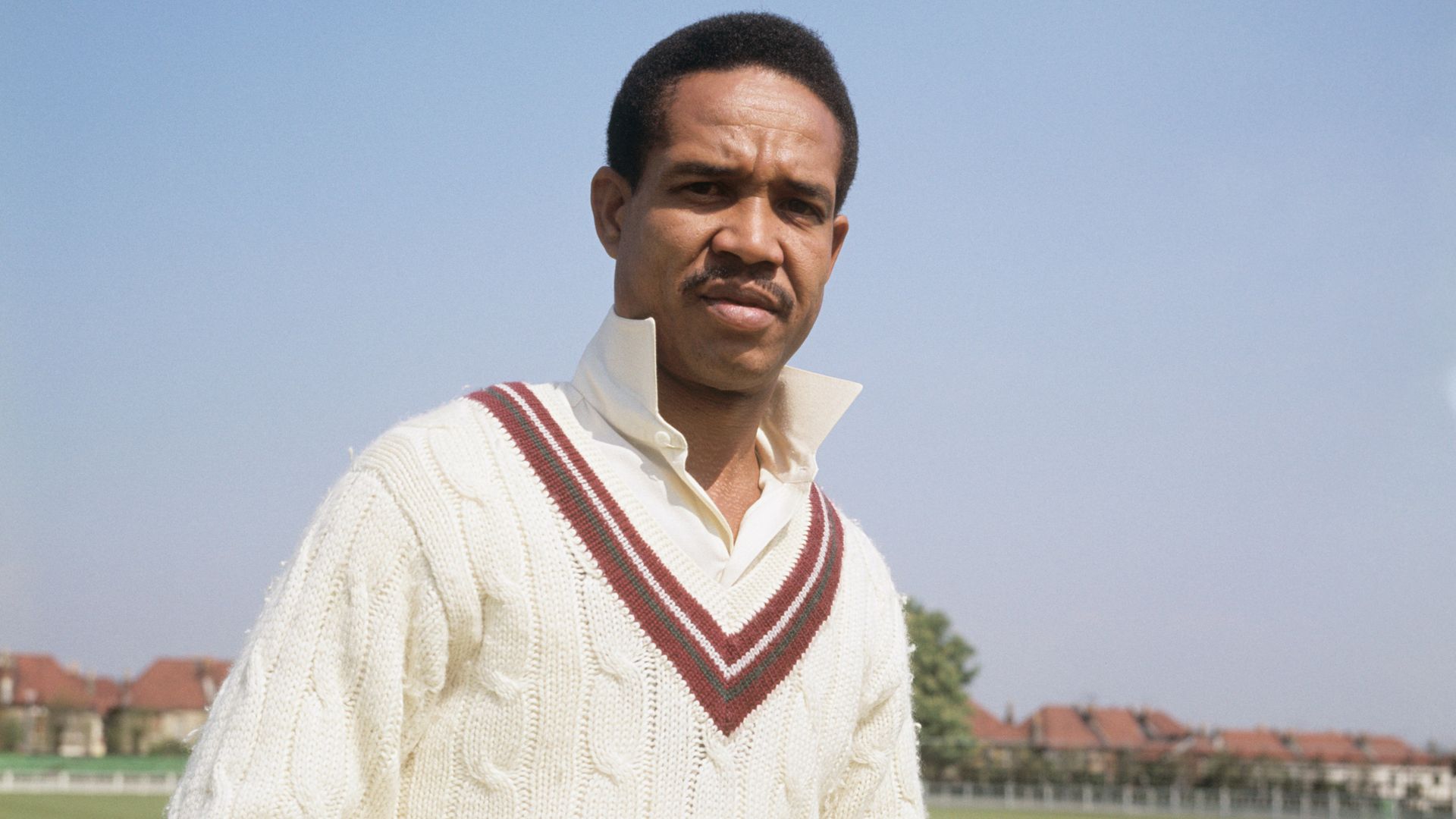
The news hit the cricketing world like a heavy bouncer to the chest. Sir Garry Sobers, the definitive icon of West Indies cricket and arguably the most complete athlete to ever lace up a pair of spikes, passed away at the age of 89. For anyone who understands the history of the sport, this isn't just the loss of a former player. It is the closing of a golden book.
He was a man who redefined what one human being could achieve on a field. Today, sports scientists try to engineer the perfect athlete using data and specialized training regimens. Garry Sobers did it naturally in the 1950s and 60s, playing with a flair and a raw, unmatched joy that you just can't teach.
He was the ultimate multi-tool player before the phrase even existed. He didn't just participate in every facet of the game; he dominated them all. If you needed a batsman to anchor an innings for two days, he could do it. If you needed a genuine fast bowler to terrify the opposition under the afternoon sun, he would bend his back and deliver. Need a slow left-arm orthodox spinner to strangle the run rate on a crumbling day-five pitch? He had that in his arsenal too. Add some of the sharpest reflexes the slip cordon has ever witnessed, and you get a cricketer who looked like he was invented by a fiction writer.
The Genius of the Boy from Bay Land
To understand the mythos of Sir Garry Sobers, you have to look at how he entered this world. Born in Bridgetown, Barbados, in 1936, he arrived with an anatomical anomaly that feels almost prophetic. He had an extra finger on each hand. In a display of the casual grit that defined his entire life, he didn't wait for expensive medical intervention. As a young boy, he used catgut and a sharp knife to remove them himself. That tells you everything you need to know about his mindset.
His childhood wasn't easy. His father, Shamont, was a merchant seaman whose ship was torpedoed and sunk by German forces during World War II. Garry was just five years old. His mother, Thelma, was left to raise six children entirely on her own in a tough environment. They had food in their bellies and clean shoes, but luxury was a foreign concept.
This hardship bred an incredible adaptability. Young Garry played what he called "Lilliputian cricket" on the streets and beaches of Barbados. The wickets were tiny, the spaces were cramped, and the ball was often whatever they could find. If you didn't possess lightning-fast footwork and immaculate hand-eye coordination, you didn't survive those street games. He developed a way of reading the ball earlier than anyone else, a trait that later left legends like Sir Donald Bradman and Fred Trueman in absolute awe.
Making a Mockery of Test Cricket Statistics
When Sobers made his Test debut for the West Indies in 1954 at the tender age of 17, he was picked primarily as a bowler who batted down at number nine. Think about that for a moment. The man who would go on to score 8,032 Test runs at an average of 57.78 started as a tail-ender.
His ascent up the batting order was swift and violent. By 1958, against a potent Pakistan bowling attack in Kingston, Jamaica, a 21-year-old Sobers hammered a monumental 365 not out. It broke the individual Test scoring record and held firm for 36 long years until another West Indian icon, Brian Lara, finally eclipsed it in 1994.
What makes his numbers so startling is the context. Modern players benefit from heavily padded protective gear, flat pitches tailored for broadcasting entertainment, and bats that turn mistimed edges into maximums. Sobers did his damage against frighteningly fast bowling on uncovered wickets, wearing nothing more than a thin cap and basic leather gloves. Yet, his career Test average puts almost every modern specialist batsman to absolute shame.
He wasn't a accumulator who bored the crowd to tears either. He was a predator at the crease. He walked out with a high backlift, balanced beautifully on his toes, and punished anything slightly off-line. His cuts were lethal, his drives were majestic, and he carried a swagger that defined the identity of Caribbean cricket for generations to come.
That Iconic Over in Swansea
You can't discuss the life of Sir Garry Sobers without talking about August 31, 1968. Playing as the captain for Nottinghamshire against Glamorgan, Sobers decided to accelerate the game. The bowler charging in was Malcolm Nash.
What followed was the first instance of a batsman hitting six consecutive sixes in a single over of first-class cricket. It was a display of pure, clean, synchronized hitting. The ball flew over the terraces, into the streets, and cemented itself into the collective memory of sports fans worldwide.
Yet, true to form, Sobers didn't care about personal glory. He later remarked that hitting six sixes wasn't actually "good cricket" because it looked like slogging. He only did it because his team needed quick runs to force a victory. He valued the collective result over individual milestones every single day of his career. That is a lesson today’s stat-obsessed sports culture badly needs to relearn.
Complicated Times and a Complex Man
It is easy to look back at the past through a lens of pure nostalgia, but Sobers lived through incredibly turbulent political times. In 1970, he accepted an invitation to play cricket in Rhodesia, which was then under a strict apartheid regime.
The backlash was swift and unforgiving. Back home in the Caribbean, fans and political figures were furious, with many demanding he be stripped of the West Indies captaincy. Sobers, who always saw himself purely as a sportsman rather than a politician, admitted he had misjudged the deep feelings of his people. He apologized openly. Decades later, when the apartheid system dissolved, he met Nelson Mandela, who told Sobers that he and Don Bradman were his sporting heroes.
Sobers was never shy about pointing out the systemic racism and discrimination he faced throughout his career, whether playing in England or dealing with the colonial holdovers in Barbados cricket structures. He fought those battles with his performances on the pitch, forcing the establishment to respect his brilliance.
How to Honor the Legend Today
We shouldn't just mourn the passing of Sir Garry Sobers; we need to actively study how he played the game. If you are a young cricketer, coach, or standard sports fan, don't just look at his statistics on a screen.
Find old archival footage of his batting stance. Watch how he balanced his weight, how he used his feet to come down the track against spin, and how he transitioned effortlessly from a fast bowling action to a subtle, wrist-spinning delivery in the same afternoon. He proved that specialization is a trap. True sporting greatness comes from understanding every single element of your craft.
We will never see another cricketer who checks every single box the way Garry Sobers did. He was a National Hero of Barbados, a knight of the realm, and the ultimate yardstick for athletic perfection. The innings is over, but the textbook he wrote remains for anyone willing to read it.