The morning air in Chiba Prefecture usually smells of salt, wet cedar, and the faint, comforting roast of green tea from neighborhood kitchens. Dawn arrives with a measured, polite blue light that coaxes commuters toward the station platforms.
On this particular morning, the blue did not come.
Instead, the sky dropped lower, bruised and heavy, pressing down against the roof tiles until the world turned the color of wet slate.
Water has a memory. It remembers every ancient riverbed we paved over, every drainage ditch we narrowed to fit another row of concrete suburban homes, every hill we carved into terraces. When the clouds finally tore open east of Tokyo, dumping sheets of torrential rain that defied meteorological averages, that memory woke up.
Rain on this scale is not merely weather. It is a physical weight.
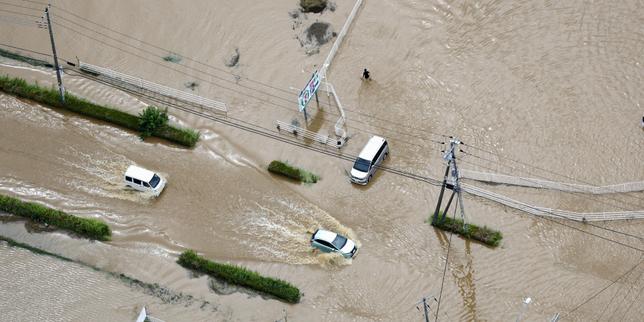
Stand outside for three seconds in a downpour like that, and you are no longer dry. You are submerged. The sound obliterates thought. It is a roaring white noise that swallows the roar of the commuter trains, the chatter of schoolchildren, and the frantic clicking of traffic lights. Within hours, quiet neighborhood streets transformed into churning brown canals.
Four lives vanished into that brown water.
We read numbers on a screen. Four dead. Dozens rescued. Millions under evacuation warnings. The numbers are clean. They fit neatly into a morning news bulletin. They allow us to file the tragedy away under natural disaster and move on to our coffee.
Reality is messier.
Consider what happens when a basement apartment floods in twenty minutes. Imagine the sudden panic as the floorboards give way to pressure from below, the electricity flickering and dying, leaving total darkness punctuated only by the strobe flash of lightning through muddy water.
I know that darkness. I have stood ankle-deep in the wreckage of a flooded home, holding a flashlight that flickers out, smelling the distinct, metallic stench of soaked drywall, sewage, and mud. Your brain refuses to accept the math. You look at your living room, at the photographs floating near the kitchen table, and you wonder how something so ordinary as rain could turn your entire life into debris.
Meteorologists will talk about stationary rainbands and warm, moisture-laden air colliding with cold fronts. They will point to satellite imagery showing giant, curling arms of white vapor choking the Japanese coastline. They are right. The science is absolute.
But science does not capture the terror of an elderly couple trapped on the second floor of a wooden house, watching the water climb the stairs one deliberate step at a time. It does not measure the exhaustion of rescue workers wading through chest-high currents in the dead of night, using ropes and inflatable rafts to pull strangers from the jaws of a swollen river.
Japan is a land sculpted by water and fire. Earthquake drills are etched into the muscle memory of every toddler who grows up tracing the fault lines on schoolroom maps. Typhoons are seasonal visitors, tracked with military precision on television screens days before they make landfall.
Yet, there is a growing, quiet dread among those who live here. The storms are changing.
They are heavier. They stall longer. They drop months of rain in the span of a single afternoon, overwhelming infrastructure designed for an era of climate stability that no longer exists.
East of Tokyo, the dikes held in some places and wept in others. Where they broke, the water moved with terrifying speed. Cars became floating metal coffins. Rice paddies morphed into vast, inland lakes that swallowed road signs and swallowed power poles.
By afternoon, the rain stopped.
That is the cruelest part of these disasters. The sky clears. The sun comes out, bright and mocking, reflecting off acres of standing water. The birds return.
Silence descends, but it is not a peaceful silence. It is the silence of shock.
People walk out into the mud with push brooms and plastic buckets. They do not talk. They drag waterlogged tatami mats out onto the pavement. They strip away ruined drywall with their bare hands. They look for lost belongings in the muck.
Four families in Chiba and the surrounding eastern districts will never hear their loved ones laugh again. Their grief is newly minted, raw, and completely private, hidden behind the shuttered doors of homes that smell of damp earth and loss.
The water will eventually recede. The roads will be cleared of mud, the asphalt patched, the statistics logged into government archives as another entry in a growing ledger of extreme weather events.
Until the next storm gathers over the Pacific, waiting for the wind to shift.