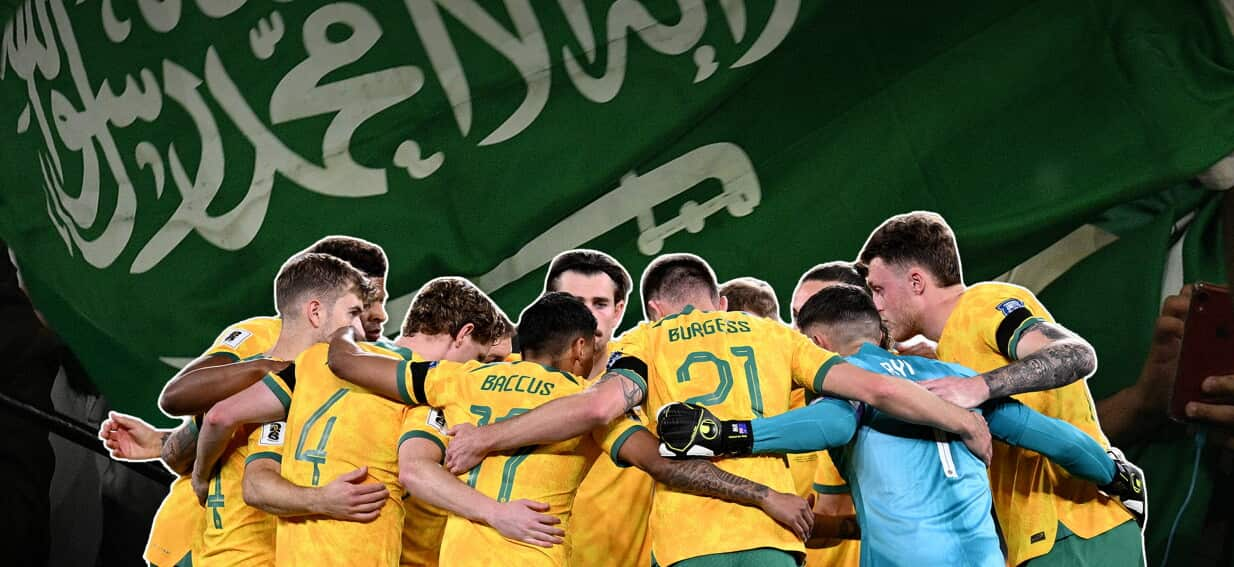
Football Australia is pushing ahead with the Socceroos' November international window in the Middle East even after attacks struck Riyadh's airport and forced the AFC Asian Cup in Saudi Arabia to be postponed until December 2027. That decision rests on a stark operational split: governing bodies paused the major continental tournament in Saudi Arabia, yet national teams still need competitive fixtures, commercial obligations still bind federations, and Football Australia shifted its Jordan friendly from Amman to Doha rather than abandoning the window altogether.
Anyone who has covered international football across contested regions knows how quickly diplomatic assurances collide with locker-room reality. Headlines often frame a fixture going ahead as simple defiance or blind optimism. In practice, it is a calculation made out of aviation advisories, player union pressure, contract timelines, and venue logistics.
The Split Between Tournament Cancellation and Window Fixtures
When violence hit Riyadh and disrupted King Khalid International Airport in October 2026, the shockwaves hit football planning immediately. Flight suspensions by major carriers and casualties in the Saudi capital turned a routine Asian Cup countdown into an emergency assessment. By early November, the Asian Football Confederation postponed the tournament—originally set for January and February 2027 in Saudi Arabia—pushing it back to December 2027.
Postponing a multi-week championship is one thing. Canceling a short international window is another.
A full tournament requires weeks of multi-city movement, mass supporter travel, fan zones, and sprawling team bases across a host nation. A two-match November camp is more compact, yet it still forces federations to weigh every mile of transit. Football Australia initially slated the Socceroos to face Qatar in Doha and Jordan in Amman. After security concerns escalated—including a fatal attack outside the Sri Lankan Embassy in Amman on November 5—the Jordan match was moved to Doha.
Moving a single match to a consolidated hub shows how federations try to salvage preparation without pretending conditions are normal. A venue shift reduces cross-border travel and concentrates security protocols in one city. Still, playing anywhere in the region after airport attacks in Riyadh leaves little room for casual assumptions.
Why Football Australia Kept the Camp Alive
For head coach Tony Popovic, November represents a rare block of time on the pitch. As Popovic noted around the camp, it serves as the final gathering for four months.
International coaches live on thin margins. Club seasons dictate squad availability, European and domestic leagues hold strict release windows, and training minutes with the national group are scarce. Losing a November window means months without tactical rehearsal, squad integration, or evaluating fringe players under match pressure.
There is also a contract and career dimension hanging over the dugout. Popovic signed a short-term extension leading toward the Asian Cup cycle, and delaying that tournament until late 2027 alters the calendar around his tenure and future decisions. Players feel that pressure too. Veteran winger Awer Mabil spoke publicly about the honor of answering a call-up while trusting the federation to manage security rather than placing players in a reckless position.
When an airport closes and flights stall, security stops being a back-office memo and becomes the first question every player asks before packing a bag.
Professional Footballers Australia pressed Football Australia to rethink the Amman leg once regional risks mounted. That push mattered. Player unions in modern football carry real moral and practical leverage when safety is questioned, especially after earlier Middle East travel required intensive briefings—such as when Australia's youth setup traveled to Saudi Arabia for the U-17 Asian Cup in May 2026.
What Risk Assessment Actually Means on the Ground
Federations routinely say they are conducting risk assessments. To anyone outside the boardroom, that phrase can sound like boilerplate cover.
In reality, a credible security review breaks down into concrete operational checkpoints:
- Airspace and flight routing: Checking whether commercial corridors are open, whether carriers are suspending routes, and how teams enter and exit a host country without stranded connections.
- Hub consolidation: Reducing exposure by keeping a squad in a single location—such as shifting Jordan to Doha—rather than flying between multiple capitals.
- Movement corridors: Controlling routes between the team hotel, training pitches, and stadium so convoys face predictable, vetted paths rather than open public congestion.
- Contingency triggers: Defining ahead of time what specific escalation forces an immediate cancellation, flight out, or venue change.
None of those measures eliminate risk completely. Geopolitical volatility does not respect kickoff times, and no sporting body controls regional airspace or rogue attacks. Acknowledging that limitation is essential to reading these decisions honestly: going ahead with a fixture in a tense region is a managed gamble, not a guarantee of zero danger.
The Counter-Argument Nobody Should Brush Aside
There is a fair, blunt counter-argument to staging matches in the Gulf while regional conflict and airport strikes remain in the news. Critics ask a simple question: why play there at all when neutral venues or home soil in Australia exist?
Hosting games at home brings obvious benefits. It avoids long-haul regional tension, reconnects the Socceroos with Australian supporters, and removes security anxieties around foreign transit. Even shifting a fixture to a neutral or safer site can lower the temperature around a camp.
At the same time, football politics and logistics complicate a clean walk-away. Fixtures are locked in months in advance with broadcasters, commercial partners, and opposing associations. Unilaterally scrapping or relocating matches on short notice can trigger financial friction, diplomatic strain within Asian football, or fixture voids that leave a squad without opposition.
Consider a hypothetical example to see the trade-off clearly. Suppose a federation cancels a scheduled overseas friendly two weeks out because of regional unrest, leaving no replacement opponent available. The squad stays safe at home, which is non-negotiable if real threat levels spike—yet the coaching staff loses high-intensity international minutes against regional rivals, and commercial commitments take a hit. Every federation balances those competing costs differently depending on intelligence briefings and government guidance.
Broader Fallout for Australian and Asian Football
The ripple effects of the Riyadh attacks and the Asian Cup delay reach well beyond a single international break.
| Factor | Immediate Impact | Wider Consequence |
|---|---|---|
| 2027 AFC Asian Cup | Postponed from early 2027 to December 2027 | Resets continental calendar, squad peaks, and federation planning |
| Socceroos November Camp | Jordan match moved from Amman to Doha | Preserves match minutes while tightening geographic exposure |
| Coaching and Squad Cycles | Longer gap before the delayed tournament | Complicates contract horizons and player form tracking |
| Player Welfare and Unions | Heightened scrutiny on travel choices | Greater voice for players on safety protocols and venue changes |
For Australian football, stability has always been hard-won. Moving the Jordan fixture to Doha solved an immediate flashpoint in Amman, yet the broader picture remains unsettled while conflict affects Saudi Arabia and neighboring states.
Deciding to play on after airport attacks is not about ignoring danger. It is about how tightly a federation can ring-fence a short camp when the stakes of standing down—lost preparation, fractured schedules, and forfeited commitments—are weighed against intelligence on the ground. Until regional stability holds without interruption, every Middle East fixture on the Socceroos' calendar will carry an asterisk that no final whistle can erase.