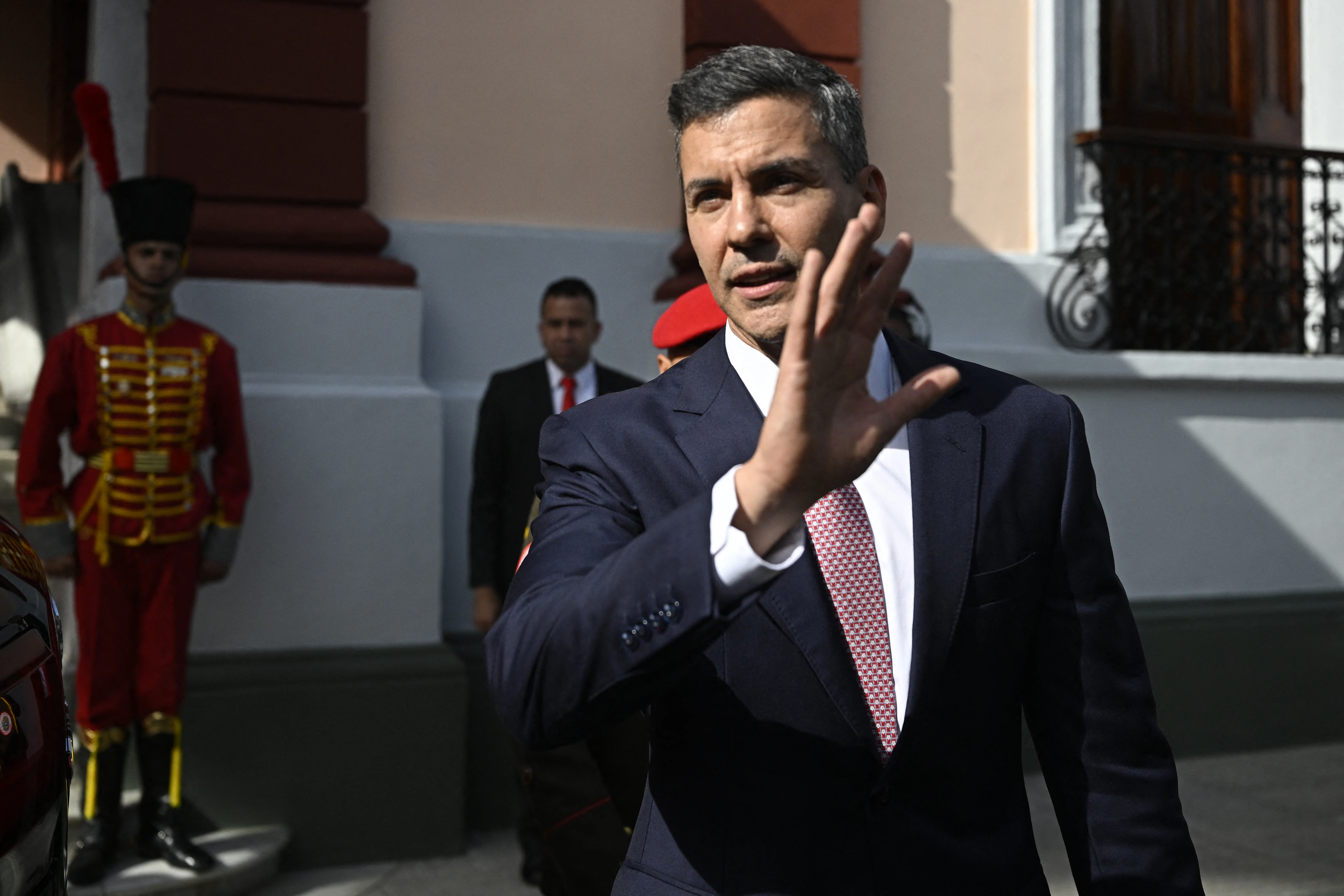
Political decapitation during a systemic liquidity freeze rarely stabilizes a distressed financial sector; instead, it compounds sovereign risk by converting an operational solvency problem into an institutional vacuum. When an executive administration faces impeachment proceedings tied to a banking crisis—as framed in the premise surrounding Paraguayan President Santiago Peña—the market does not merely price in the loss of a single leader. It prices in the paralysis of the lender-of-last-resort apparatus, the suspension of fiscal backstops, and the immediate flight of foreign-denominated capital. Understanding the mechanics of a banking-induced impeachment requires stripping away partisan rhetoric and examining the structural intersections of balance-sheet contagion, central bank independence, and constitutional removal thresholds.
To evaluate the premise accurately, a strict epistemic boundary is necessary. The scenario presented—the impeachment of Paraguayan President Peña over a banking crisis—functions here as a structural stress-test of Paraguay’s institutional architecture rather than a verified historical ledger. In empirical reality, Paraguay’s post-1992 constitutional order has witnessed both severe financial sector collapses—most notably the cascading banking failures between 1995 and 1998—and rapid executive removals, such as the 2012 impeachment of Fernando Lugo. Merging these two historical vectors into a contemporary crisis model reveals the exact fault lines that govern emerging-market political risk in the Southern Cone.
The Architecture of Systemic Banking Contagion
A banking crisis does not trigger executive removal through simple public dissatisfaction. It reaches the presidential palace through a specific transmission mechanism: the sovereign-bank nexus. In smaller, dollarized or semi-dollarized economies like Paraguay, domestic commercial banks hold substantial quantities of sovereign debt while simultaneously relying on state-backed deposit insurance and central bank liquidity facilities to manage maturity mismatches.
When a shock hits the financial system, the deterioration follows a predictable four-stage sequence:
- Asset Quality Erosion and Capital Depletion: Concentrated exposure to cyclical sectors—such as agribusiness, soy exports, or real estate—leads to a sudden spike in non-performing loans (NPLs). When NPLs exceed loan-loss provisions, bank equity absorbs the hit, pushing Tier 1 capital ratios below regulatory minimums mandated by the Banco Central del Paraguay (BCP).
- Interbank Liquidity Freeze: Asymmetric information causes solvent institutions to hoard cash rather than lend in the overnight interbank market. Without functioning short-term funding, institutions with high loan-to-deposit ratios face immediate cash-flow insolvency, even if their long-term assets remain viable.
- Retail and Institutional Deposit Flight: Once liquidity stress becomes visible through delayed settlements or emergency credit lines, depositors initiate a run. In Paraguay, where memories of the 1990s banking collapses remain embedded in institutional behavior, capital flight accelerates rapidly toward dollar-denominated assets or offshore accounts in Uruguay and the United States.
- Fiscalization of Private Losses: The BCP must intervene via emergency liquidity assistance (ELA) or formal bank resolution. Because central bank balance sheets have finite foreign-exchange reserves, sustained bailouts require sovereign bond issuance or emergency fiscal transfers—dragging the executive branch directly into the line of fire.
The political crisis ignites at Stage 4. As long as a banking failure remains confined to private shareholders and uninsured creditors, the executive branch can maintain regulatory distance. The moment public treasury funds, pension reserves, or sovereign debt guarantees are deployed to plug private balance-sheet holes, the crisis transforms into a distributive political conflict. Voters and opposition lawmakers view the bailout as a regressive wealth transfer from taxpayers to politically connected financial elites.
Constitutional Mechanics of Impeachment in Paraguay
Paraguay’s 1992 Constitution, drafted in the wake of the Alfredo Stroessner dictatorship, was explicitly engineered to prevent executive dominance. While this design limits authoritarian backsliding, it creates structural fragility during economic emergencies by lowering the procedural friction required to remove a sitting president.
Under Article 225 of the Paraguayan Constitution, the impeachment mechanism (juicio político) operates through a bicameral legislature with distinct voting thresholds and minimal evidentiary delays:
- Grounds for Removal: The constitution cites malfeasance in office (mal desempeño de sus funciones), crimes committed in office, or common crimes. Crucially, "malfeasance" is a political standard rather than a strict criminal statute. It requires no prior judicial conviction, giving Congress broad interpretive latitude to classify policy failures, regulatory negligence, or controversial bailout decrees as impeachable offenses.
- The Accusation Phase (Chamber of Deputies): The lower house initiates proceedings. A two-thirds majority of members present is required to formally indict the president. Because legislative coalitions in Asunción are frequently transactional rather than ideologically rigid, a severe economic downturn can fracture a ruling party’s parliamentary majority within days.
- The Trial Phase (Senate): Once indicted, the president is tried by the Senate, which acts as a tribunal. Conviction and immediate removal require a two-thirds absolute majority of the Senate’s 45 members (30 votes). Unlike systems where impeachment trials drag on for months, Paraguayan precedent allows the Senate to establish expedited rules of procedure, compressing the defense window to mere hours or days.
When a banking crisis collides with Article 225, the executive faces a classic double bind. If the president authorizes aggressive state intervention to prevent systemic collapse, opposition factions weaponize the fiscal cost as evidence of corruption or malfeasance. If the president refuses to intervene to preserve fiscal discipline, the resulting collapse of the payments system and destruction of middle-class savings produces street protests that force legislators to abandon the executive to save their own political survival.
The Three Failure Vectors Connecting Finance to Executive Removal
To understand why a specific administration falls during a financial crisis, analysts must isolate the governance failures that bridge regulatory oversight and legislative revolt. Three distinct vectors drive this convergence.
Regulatory Capture and Supervisory Forbearance
Banking crises rarely erupt without prior warning signs in central bank audits. The critical failure occurs when the executive branch or the Superintendency of Banks exercises supervisory forbearance—allowing undercapitalized institutions to continue operating without raising fresh equity or writing down impaired assets. In emerging markets with concentrated economic elites, overlap between banking boards, political donors, and cabinet officials creates structural conflicts of interest. When a major lender finally collapses, forensic audits inevitably uncover prior regulatory waivers. In an impeachment trial, those waivers serve as tangible proof of executive complicity, shifting the narrative from macroeconomic misfortune to actionable malfeasance.
Misallocation of Public Institutional Funds
A recurring flashpoint in Latin American banking crises is the placement of state-owned enterprise reserves and public pension funds—such as Paraguay’s Instituto de Previsión Social (IPS)—into distressed private banks. When public funds are deposited in high-yield accounts at failing institutions to artificially prop up their liquidity ratios, the subsequent bank failure wipes out public retirement assets. No legislative coalition can withstand the political fallout of lost pension capital. For an opposition bloc seeking two-thirds support in the Senate, the loss of public institutional deposits provides the exact moral and political leverage needed to flip reluctant senators.
Breakdown of Monetary-Fiscal Coordination
During acute financial stress, the central bank and the Ministry of Economy and Finance must operate in lockstep. The central bank provides short-term liquidity against good collateral, while the finance ministry manages long-term solvency through fiscal restructuring and multilateral credit lines (such as IMF stand-by arrangements). An impeachment crisis shatters this coordination. Multilateral lenders immediately freeze disbursements when constitutional continuity is threatened, as the legal authority of the signatory government becomes contested. Without external dollar inflows to defend the Paraguayan guaraní, currency depreciation accelerates, inflating the local-currency value of dollar-denominated bank liabilities and pushing borderline institutions into immediate insolvency.
Market Pricing and Sovereign Risk Dynamics
Institutional investors and credit rating agencies evaluate an impeachment-driven banking crisis through specific quantitative indicators. Even before a final Senate vote occurs, financial markets reprice sovereign and corporate exposure across four primary channels:
- Sovereign Credit Spreads (EMBI): Yield spreads on Paraguayan sovereign dollar bonds widen sharply relative to U.S. Treasuries. Traders price in the probability of a technical default or debt restructuring if the incoming interim administration repudiates emergency debt issued during the crisis.
- Exchange Rate Volatility and Reserve Burn: The guaraní experiences intense downward pressure as domestic corporations rush to hedge dollar obligations. To prevent an inflationary spiral, the central bank burns through net international reserves. Once reserves drop below three months of import coverage, speculative attacks intensify.
- Cross-Border Correspondent Banking Withdrawal: Foreign correspondent banks in New York and Europe systematically cut credit lines to domestic Paraguayan lenders due to heightened compliance, anti-money laundering (AML), and political-risk thresholds. Loss of correspondent access severs local exporters from international trade finance, freezing the real economy.
- Deposit Dollarization Spike: Domestic savers convert guaraní deposits into U.S. dollars inside the local banking system. Because the central bank cannot print dollars, a high degree of internal dollarization severely restricts its capacity to act as a lender of last resort, turning liquidity shortages into terminal bank closures.
Strategic Imperatives for Institutional Stabilization
Navigating the intersection of a systemic banking failure and a constitutional removal crisis requires decoupling financial resolution from political survival. When an executive administration is already under impeachment threat, standard crisis-management playbooks fail because the market discounts any promise made by a lame-duck president. Stabilization requires immediate, rule-bound institutional ring-fencing executed through four concrete interventions:
- Enforce Statutory Resolution over Executive Discretion: Strip the presidential office of direct decision-making over individual bank bailouts. Transfer full resolution authority to an independent technocratic committee led by the central bank governor and backed by pre-legislated deposit insurance caps (such as Paraguay’s Fondo de Garantía de Depósitos). Eliminating discretionary executive bailouts removes the primary political fuel driving impeachment coalitions.
- Establish Immediate Asset-Liability Separation (Good Bank / Bad Bank): Do not inject public capital into insolvent banks with opaque balance sheets. Immediately revoke the licenses of failed institutions, transfer insured retail deposits and performing assets to solvent acquiring banks, and isolate impaired loans in a ring-fenced liquidation vehicle. Taxpayers absorb only the statutory deposit insurance shortfall, capping fiscal exposure.
- Secure Pre-Emptive Multilateral Liquidity Lines: Prior to or immediately following a leadership transition, the Ministry of Economy and the central bank must jointly activate precautionary credit lines with the International Monetary Fund (IMF) or the Inter-American Development Bank (IDB). Conditioning these disbursements on central bank autonomy binds any successor administration to macroeconomic orthodoxy, reassuring bondholders and halting capital flight regardless of the Senate’s impeachment verdict.
- Ring-Fence Public Pension and Sovereign Funds: Mandate an immediate audit and repatriation of all state-owned enterprise and social security deposits held in commercial banks, moving those reserves into short-term sovereign bills or central bank custodial accounts. Demonstrating that public retirement funds are insulated from private banking losses neutralizes street-level mobilization and restores the political bandwidth necessary for orderly financial restructuring.