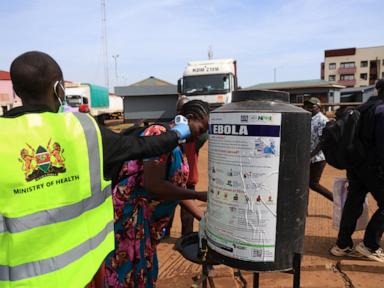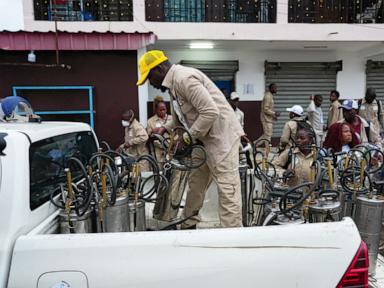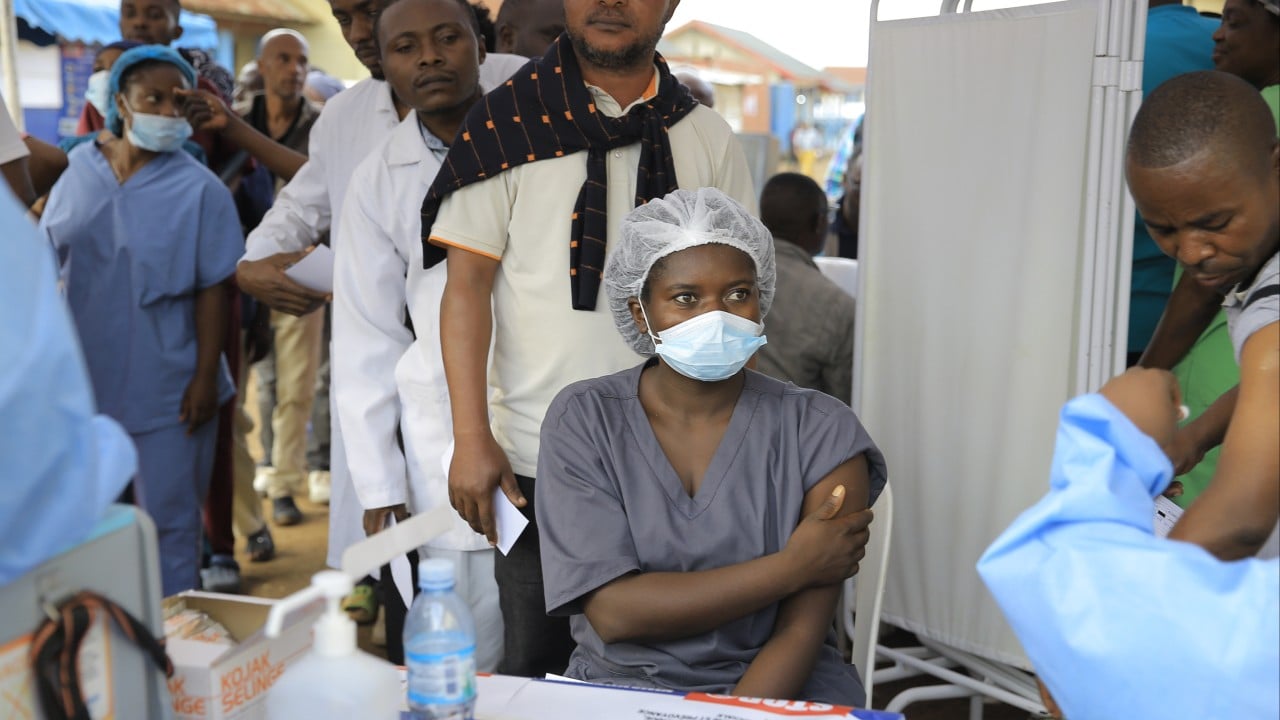
Standard outbreak reporting treats a provincial count as a static scoreboard, yet the expansion of Bundibugyo virus disease across eight provinces in the Democratic Republic of the Congo (DRC) exposes a structural race between human mobility and containment velocity. By mid-November 2026, confirmed cases in the DRC exceeded 11,300 with more than 5,500 deaths across Ituri, Nord-Kivu, Sud-Kivu, Tshopo, Haut-Uélé, Bas-Uélé, Sud-Ubangi, and Nord-Ubangi, while imported cases and linked clusters tested surveillance systems in Uganda, Kenya, and Nigeria. A superficial reading of an eighth-province milestone misses the operational mechanics driving this trajectory: human travel along corridor networks, armed disruptions that sever contact tracing, and a lack of licensed Bundibugyo-specific vaccines.
Deconstructing Competitor Logic and Core Analytical Gaps
Headline-driven coverage of a fast-moving epidemic typically compresses complex epidemiological dynamics into three recurring tropes: treating administrative borders as epidemiological barriers, framing case counts purely as national totals, and attributing slow containment to generic infrastructure weakness.
In practice, provincial lines in the DRC rarely align with actual social mixing, trade routes, or displacement corridors. Epidemiological reconstructions of the outbreak indicate that human travel played a central role in carrying transmission outward from Ituri into neighboring and distant provinces. Reporting that stops at "eight provinces affected" conflates wide geographic reach with uniform active transmission, even as early epicenters see slowing activity while newer pockets flare.
To turn raw surveillance figures into an operational picture, analysts need a structured framework built on four mechanisms:
- Mobility-driven jump transmission: Infected individuals traveling before isolation seed chains far beyond the initial cluster.
- Detection and care lag: Roughly two in every three confirmed deaths occurring outside treatment centers signals late case recognition and barriers to timely admission.
- Countermeasure constraints: The absence of an approved vaccine specifically licensed for the Bundibugyo species forces reliance on clinical trial protocols, supportive care, and classical public health containment rather than plug-and-play mass immunization.
- Security-induced observability loss: Armed attacks on communities and health facilities destroy physical assets and scatter exposed contacts across displacement destinations, turning known chains into blind spots.
The Cost Function of Delayed Isolation and Security Shocks
Every day a symptomatic or incubating carrier moves through a transport hub or household network multiplies the downstream cost of containment. Epidemiologically, transmission slows when the effective reproduction number falls below one through rapid case finding, isolation, safe burials, and contact monitoring. Operationally, each link in that chain carries a rising marginal cost as prevalence climbs and security deteriorates.
Known Facts vs. Educated Hypotheses
Separating verified surveillance findings from analytical inference keeps response decisions grounded in reality:
- Known epidemiological and operational facts: The outbreak involves Bundibugyo virus disease in the DRC, has surpassed 11,000 confirmed cases and 5,500 deaths by mid-November 2026 across eight provinces, and has generated cross-border and travel-linked events in neighboring and distant countries. Children bear a disproportionate share of the burden, accounting for more than a quarter of confirmed cases and one-third of deaths, with seven in ten confirmed cases among children under five ending in death. In North Kivu, an attack on Cantine-Aloya in November 2026 killed dozens of civilians including health workers, damaged facilities, and left over 1,000 contacts lost to follow-up.
- Educated operational hypotheses: High out-of-facility mortality alongside elevated pediatric fatality likely reflects a compound interaction between care-seeking delays, limited specialized pediatric fluid and electrolyte capacity, and caregiver exposure risks inside households. Furthermore, when violent displacement scatters contacts, unmonitored incubation windows create a high probability of delayed secondary clusters in receiving communities that lack pre-positioned triage teams.
Why Case Totals Alone Mislead Resource Allocation
A provincial tally hides sharp variance across health zones. One health zone may be approaching the end of a 21-day contact monitoring cycle while an adjacent corridor experiences active community chains. Allocating treatment beds, diagnostic kits, and rapid-response teams evenly across a province wastes scarce supplies in cooling zones while starving active transmission nodes.
Consider a district border town along a major transit route: if travelers present with fever and gastrointestinal symptoms at local clinics without immediate triage and isolation, a single missed presentation can expose triage staff, family caregivers, and fellow passengers before laboratory confirmation returns. Expanding laboratory and treatment capacity improves outcomes only when paired with fast referral transport and community trust; a treatment unit sitting hours away over insecure roads cannot prevent out-of-hospital deaths on its own.
Cross-Border Spillover and Countermeasure Realities
Cross-border spread is a predictable function of regional connectivity rather than a failure of bilateral goodwill. People cross borders for commerce, family ties, and healthcare, which is why imported cases and small linked clusters emerged outside the DRC even as surveillance tightened.
The Trap of Blanket Travel Restrictions
When an outbreak expands rapidly, governments frequently reach for blanket border closures or sweeping flight bans. Public health leaders have warned that blunt travel restrictions can impede emergency response logistics and discourage transparent, rapid reporting of cases. Worse, porous land corridors remain permeable to foot and informal transit even when formal crossings tighten, pushing movement into unmonitored channels where health screening disappears.
Targeted exit and entry screening, rapid diagnostic readiness, and structured cross-border contact sharing do far more to intercept symptomatic travelers than indiscriminate bans. When an imported case is detected early—such as travel-associated cases identified in Kenya and Nigeria—rapid contact tracing and clinical isolation can contain onward spread before sustained community transmission takes hold.
Operating Without a Licensed Bundibugyo Vaccine
Unlike Ebola virus disease caused by the Zaire species, no vaccine is currently licensed specifically for Bundibugyo virus disease. Clinical trials for candidate vaccines and therapeutics are underway, and health authorities have examined broader use of existing tools alongside trial expansion, yet clinical trial protocols require strict ethical oversight, cold-chain integrity, and documentation that are harder to execute under active conflict.
That constraint forces a realistic calibration of expectations:
- Medical countermeasures are a scaling lever, not an instant shield: Trial rollout can protect high-risk contacts and frontline workers where access is secure, but it cannot replace rapid isolation and infection prevention and control.
- Supportive care saves lives when delivered early: Aggressive fluid, electrolyte, and symptom management—tailored carefully for vulnerable pediatric patients—remains central to reducing case fatality.
- Security volatility caps operational tempo: Even the best-designed logistics plan stalls if armed clashes force evacuation, burn supplies, or scatter frontline teams.
Field Execution Sequence for High-Velocity Containment
Containing a multi-province outbreak under security strain requires sequencing interventions so upstream transmission is choked off before downstream health facilities are overwhelmed.
- Map mobility and health-zone velocity daily: Rank health zones by active transmission trends, recent travel links from epicenters, and contact follow-up gaps rather than cumulative provincial counts alone.
- Deploy mobile triage and rapid isolation at transit choke points: Place screening, isolation bays, and safe transport links along key road, river, and border crossings where travelers from affected health zones converge.
- Reconstruct lost contact chains after security incidents: Pair community leaders, displacement site registries, and mobile health teams to locate missing contacts and patients following attacks or displacements, prioritizing 21-day symptom checks.
- Ring-fence pediatric and household exposure: Train frontline clinicians in pediatric fluid and nutrition management while equipping households with clear isolation guidance to cut secondary family spread and out-of-center deaths.
- Coordinate cross-border alert protocols without choking supply lines: Maintain rapid information exchange and clinical evacuation readiness across neighboring and regional partners while keeping medical cargo and responder corridors open.
Strategic Play for Containment Leadership
Prioritize health-zone triage, mobile isolation, and lost-contact recovery along primary transit and displacement corridors ahead of new facility construction, treating every unmonitored traveler and displaced contact as a potential seed for the next provincial jump. In an eight-province outbreak without a licensed Bundibugyo vaccine, speed at the point of first clinical contact—backed by security-resilient logistics and honest cross-border data sharing—is the decisive variable that separates contained flare-ups from prolonged regional transmission.