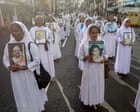
Justice moves painfully slowly on an island that has seen too much tragedy. When a Colombo high court handed down staggering multi-century prison terms to 15 men involved in the 2019 Sri Lanka Easter bombings, the immediate reaction across the country was a mix of relief and lingering emptiness. Each defendant received roughly 200 years behind bars, effectively guaranteeing they will die in a cell. But for the survivors and the families of the 269 people killed, a courtroom verdict delivered over seven years later feels more like a milestone in an endless marathon than a final chapter.
If you look past the shocking headline numbers, the trial exposes deep, systemic failures that allowed a cell of Islamic State-inspired radicals to turn packed churches and luxury hotels into slaughterhouses on April 21, 2019.
Inside the Verdict and the Numbers
Out of 24 initial defendants who stood trial after years of delays, political turmoil, and mounting public anger, 15 were found guilty. Nine others were acquitted and walked free, prompting tearful embraces outside the courthouse. The convicted individuals faced an unprecedented mountain of charges—spanning murder, conspiracy, and illegal weapons possession—accumulating hundreds of years of imprisonment with hard labor.
Yet, numbers like 200 or 240 years are symbolic. They ensure isolation, but they do not answer the fundamental question that has haunted Sri Lanka's Christian minority since the smoke cleared: Who was really pulling the strings?
The suicide bombers themselves perished in the blasts, including operatives linked to local extremist factions like National Thowheeth Jama'ath. While these 15 men played vital logistical and conspiratorial roles, church leaders and victims' advocates have argued consistently that the foot soldiers and local coordinators were part of a wider, more complex ecosystem.
The Intelligence Failure Factor
You cannot talk about the Easter Sunday attacks without confronting the staggering institutional negligence that preceded them. Foreign intelligence agencies—specifically from India—had handed explicit warnings to Sri Lankan authorities about impending attacks targeting prominent churches weeks before the tragedy.
Those warnings sat on desks. Bureaucratic inertia, political infighting, and sheer incompetence let the plot unfold unchecked.
Accountability has crept in through other legal channels, though painfully late. Earlier, courts handed down heavy penalties, including death sentences for criminal negligence against former top security officials who ignored actionable intelligence. Former president Maithripala Sirisena and other state authorities were also ordered by the Supreme Court to pay personal compensation to victims for failing to protect them.
When leaders ignore warnings, societies pay in blood. That is the harsh reality underlying the entire tragedy.
Healing Versus Closure
For survivors like Teresa Fernando, who suffered severe head injuries and carries physical and psychological scars, the legal system offers a measure of validation, but little restoration. Local clergy have pointed out that fundamentalism feeds on division, and true security requires actively dismantling the religious and political exploitation that enabled extremists to recruit vulnerable young men in the first place.
The Catholic Church in Sri Lanka continues to push for transparent international inquiries, convinced that the full picture of the conspiracy has still not been brought to light.
As the prison doors finally shut behind these 15 men, the country faces a choice. It can treat the verdict as a closed case and move on, or it can use the painful memory of that Easter morning to demand absolute transparency from its leaders, ensuring that national security is never again compromised by political games.