Cold.
That is the first thing you notice about the pavement in a quiet British suburb just after dusk—the damp, unyielding chill that rises through the soles of your trainers while you wait for a bus, or walk home from a friend’s house, or stand beneath the amber hum of an ordinary streetlight in Gloucester. You might also find this connected coverage insightful: Why Counting Airstrike Casualties Near Sanaa Completely Misses the Real War in Yemen.
For most of us, a suburban street is background noise. It is red-brick semis, clipped privet hedges, the distant rumble of a delivery van, and the muffled glow of living room televisions behind drawn curtains. You do not walk down a residential road in Gloucestershire expecting to hear the metallic rasp of a blade leaving a sheath. You do not expect a 17-year-old boy—someone young enough to still be worrying about college coursework or weekend shifts—to end up bleeding on the tarmac, rushed to hospital with injuries inflicted by a sword.
Yet that is precisely what happened. As discussed in recent reports by Reuters, the effects are notable.
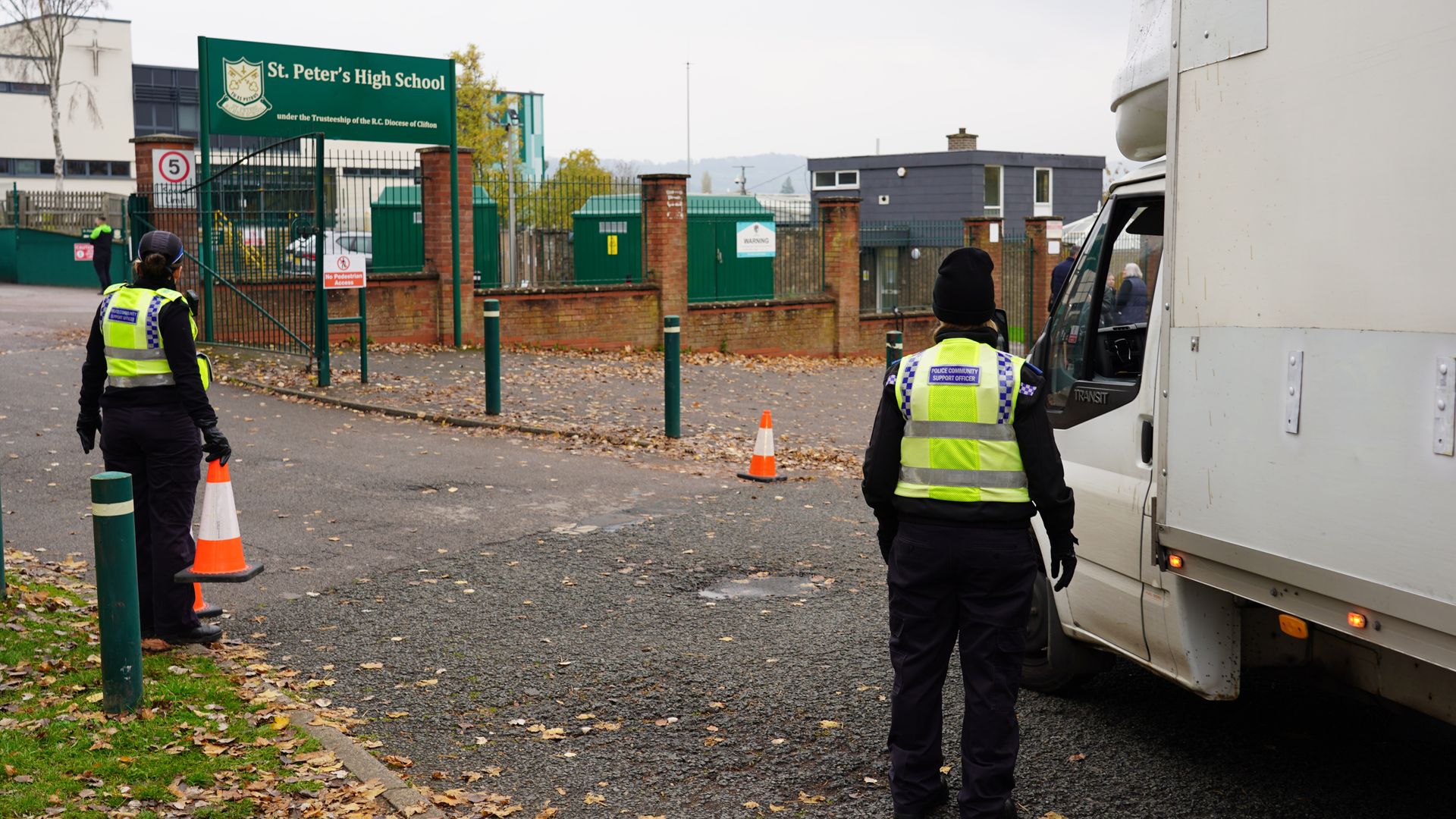
In the wake of the attack in Gloucester, Gloucestershire Constabulary moved quickly, arresting three teenagers in connection with the incident that left the 17-year-old injured. In the sterile language of a standard police press release, the event fits neatly into a three-line brief. A victim. An injury. Three arrests. Case moving forward.
We read the headline over morning coffee, wince briefly, and scroll on to the weather forecast or the football scores. We treat it as an isolated aberration—a sudden, inexplicable flare-up of teenage madness in an otherwise predictable cathedral city.
We are wrong to look away so quickly.
Because when a sword appears on a British street in the hands of adolescents, the headline isn't the end of the story. It is a symptom of a much deeper, quieter crisis unfolding across towns and cities that used to believe big-city violence stopped at the M5 motorway.
The Anatomy of an Ordinary Evening
To understand what a moment like this actually feels like, step away from the police blotter and step onto the pavement.
Picture a hypothetical teenager—let us call him Leo—walking home from a late afternoon hangout in a neighborhood not unlike the ones bordering central Gloucester. Leo is seventeen. His biggest concerns on a Tuesday evening are whether his phone battery will last until he gets home and whether his mum has left dinner in the oven. He knows the cracks in the paving stones. He knows which dogs bark behind which garden gates. Safety, for Leo, is not something he actively thinks about; it is simply the air he breathes.
Now introduce the disruption.
It rarely arrives like a scene from a cinema screen, with dramatic music and clear warnings. In reality, street violence is chaotic, fast, and terrifyingly mundane. Voices rise. Shadows detach themselves from the edge of a parked car or an alleyway. Within seconds, the rules of the civilized world evaporate, replaced by raw adrenaline and the glint of steel under sodium streetlamps.
When a weapon like a sword is introduced into a teenage confrontation, the physics of fear change instantly. A fistfight ends with a bruised jaw and a bruised ego. A blade—especially a long, heavy blade designed centuries ago for battlefield slaughter rather than modern streets—leaves no margin for error. One panicked swing, one misjudged lunge, and a life is permanently altered or extinguished before anyone even reaches for a phone to dial 999.
In the real Gloucester incident, the 17-year-old victim survived his injuries, and officers swiftly detained three teenagers on suspicion of involvement. Those are the hard, verified anchors of the case. Yet for the victim, his family sitting under the harsh fluorescent lights of a hospital waiting room, and the neighbors scrubbing their front steps the next morning while looking sideways at the police tape, the psychological aftershock does not vanish when the suspects are placed in custody.
Why Swords Are Appearing in Quiet Towns
Ask yourself a simple, uncomfortable question: where does a teenager get a sword?
You do not accidentally pick one up in a corner shop alongside a bottle of lucozade and a packet of crisps. For decades, British law has steadily tightened the net around bladed articles, banning butterfly knives, flick knives, zombie knives, and machetes. Yet time and again, criminologists and frontline police officers point to the same stubborn reality—enforcement struggles to keep pace with online marketplaces, loophole aesthetics, and the strange cultural contagion of weapon carrying.
Consider how the psychology of young offenders works. Having spent years reporting on youth justice and speaking with community outreach workers who spend their Friday nights walking estates in the rain, one truth emerges repeatedly: the vast majority of teenagers who carry blades do not wake up intending to become murderers.
They carry them because they are terrified.
It sounds like a contradiction, doesn't it? How can someone holding a sword be the one who is afraid? Think of it like an arms race between two nervous neighbors. One hears a rumor that the other has bought a guard dog, so he buys a taller fence. The first sees the fence and buys an alarm system. Soon, both are living inside fortresses, convinced the other is about to attack.
Among teenagers, social media acts as an accelerant on that exact anxiety. Postcode rivalries, perceived slights in group chats, and viral drill music videos create a distorted hall of mirrors where threat feels omnipresent. A 16-year-old sees a blade brandished on a screen, feels a surge of vulnerability on his own walk home, and convinces himself that carrying something bigger, heavier, and more intimidating is the only way to guarantee his own survival.
A sword, in the mind of an anxious adolescent, is the ultimate deterrent. It is theatrical. It projects power. It says, Do not touch me.
Until the moment panic takes over, and the deterrent becomes an instrument of carnage.
The Ripple Effect Through Gloucester
Gloucester is a city defined by contrasts—historic docks, a towering medieval cathedral that has stood for nearly a thousand years, and tight-knit working-class and suburban communities that pride themselves on looking out for one another. It is not a sprawling metropolis where millions of strangers pass without eye contact. In a city of Gloucester’s scale, everybody knows somebody who knows somebody.
When three teenagers are arrested after a 17-year-old is wounded with a sword, the shockwaves hit multiple households simultaneously.
First, there is the victim's circle. Parents suddenly find themselves checking the clock every five minutes when their children go out. Younger siblings ask questions at the breakfast table that no parent wants to answer. Friends who were walking alongside the victim carry a quiet, lingering hypervigilance—a tendency to glance over their shoulders whenever footsteps quicken behind them.
Second, there are the families of the arrested teenagers. Unless you have sat in a police station waiting for a duty solicitor at two in the morning, it is impossible to fully grasp the particular grief of a parent realizing their child has crossed a line that cannot be uncrossed. Most parents of teenagers caught up in knife and sword crime are not monsters raising monsters. They are shift workers, single mums, exhausted dads who thought their son was upstairs playing video games or out kicking a ball in the park.
Third, there is the community itself. Every time a violent incident breaks the peace of a residential street, an invisible tax is levied on public life. Parks empty out slightly earlier in the evening. Elderly residents double-check their deadbolts. Local businesses see foot traffic dip after dark. Trust—that fragile, invisible glue that allows strangers to share a pavement without fear—develops hairline fractures.
What the Statistics Hide—and What They Reveal
If you look strictly at national crime figures across England and Wales, you can easily drown in numbers. Official data from the Office for National Statistics and the Home Office regularly tracks hospital admissions for sharp object assaults, showing that while overall violent crime fluctuates, serious youth violence involving blades remains stubbornly entrenched outside London. In fact, over the past decade, police forces in provincial cities and county towns—from Gloucestershire to Wiltshire, from Warwickshire to Devon—have all reported sharp spikes in knife-enabled offenses involving under-18s.
Statistics, however, have a way of numbing us. A percentage increase on a government spreadsheet doesn't bleed. It doesn't scream. It doesn't require emergency stitches or leave a permanent scar across a teenager's arm or torso.
To see the real pattern, you have to look at how policing and youth services have changed over the last fifteen years. While populations grew and online radicalization—both political and criminal—became frictionless, the physical infrastructure that once kept teenagers anchored to their communities quietly eroded. Youth clubs closed. Detached youth workers—the trusted adults who knew every kid on the estate by name and could spot trouble brewing weeks before a blade ever appeared—were cut from council budgets.
Imagine a garden left untended for ten summers. You do not notice the weeds on day one, or even week four. By year ten, the brambles have choked out the roses, and everyone stands around wondering where the thorns came from.
Law enforcement can arrest suspects after the blood is spilled. Gloucestershire Police did their job rapidly in tracking down and arresting three teenagers following the attack. Courts can hand down sentences. Prisons can lock doors. Yet policing, by its very nature, arrives after the damage is done. A police siren is the sound of prevention having already failed.
The Hard Truth About Prevention
So what actually stops a teenager from picking up a sword?
It is tempting to reach for simple, punitive answers. Lock them up longer. Ban more weapons. Search more pockets. While tough sentencing and strict weapon laws play an indispensable role in taking dangerous individuals off the street, anyone who has worked inside the youth justice system knows that deterrence alone hits a wall when dealing with the adolescent brain.
Neuroscience has spent twenty years proving what every parent already suspects: the prefrontal cortex—the part of the human brain responsible for weighing long-term consequences, regulating impulse, and imagining the future—does not finish developing until a person reaches their mid-twenties. When a 15- or 16-year-old is flooded with fear, anger, or peer pressure, they are not calculating sentencing guidelines. They are reacting in milliseconds.
Real prevention happens hours, weeks, and months before a confrontation ever occurs.
It happens when schools have the resources to spot a boy who has suddenly gone quiet, started skipping classes, or begun hanging around older youths who flash cash and weapons online. It happens when communities fund safe spaces—boxing gyms, music studios, late-night sports leagues—where teenagers can burn off frustration, find mentors who command genuine respect, and build an identity that doesn't rely on fear.
And it happens at kitchen tables, in uncomfortable, unscripted conversations between adults and the young people in their lives. We often avoid talking to teenagers about street violence because we do not want to frighten them, or because we assume they already know better. Yet silence leaves a vacuum, and social media is more than happy to fill it.
The Echo on the Pavement
Walk down that same Gloucester street tomorrow morning, and you might struggle to see any trace of what happened. The rain will have washed the tarmac clean. The blue-and-white incident tape will be rolled up in the back of a police van. Commuters will hurry past toward the train station, heads down against the breeze, eyes fixed on their phones.
On the surface, order has been restored. Three teenagers are in custody; a 17-year-old is recovering; the machinery of the justice system is grinding forward as it is designed to do.
Yet beneath that quiet morning routine, a question hangs in the damp Gloucestershire air—a question that belongs to every parent, every teacher, every neighbor, and every policymaker in the country.
If a teenager can walk out of a front door carrying a sword on an ordinary evening in a quiet cathedral city, what are we missing behind the closed doors of the houses they just left behind?
Until we are brave enough to look past the police tape and answer that question, the cold on the pavement isn't going anywhere.