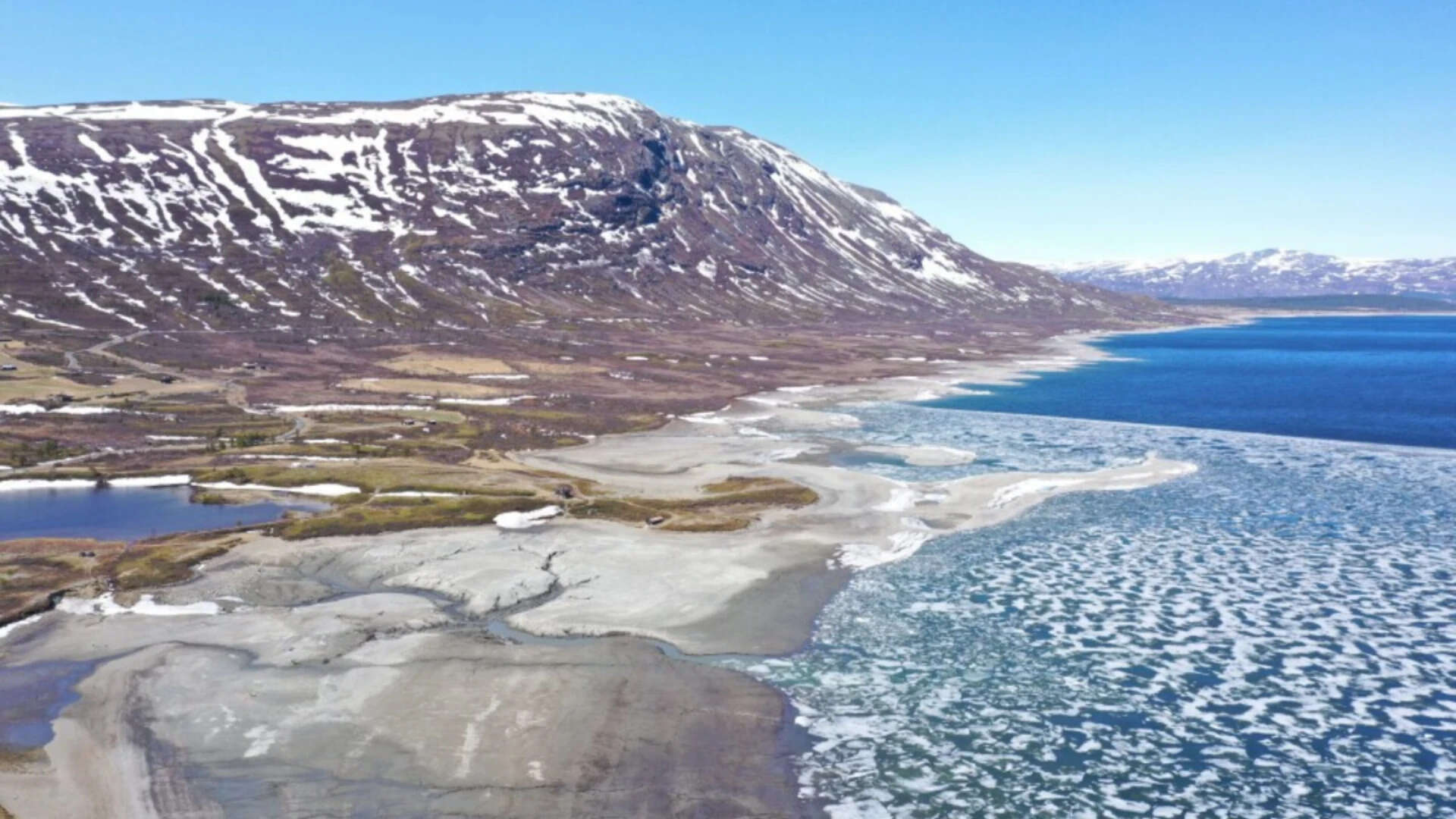
Thousands of years before modern stocking programs, ancient humans were already busy altering aquatic ecosystems. Stone Age hunters in Scandinavia were carrying live brown trout past steep waterfalls, stocking high-altitude lakes that had been completely barren of fish since the last Ice Age.
Recent genetic and archaeological research shows that hunter-gatherers living 7,000 years ago weren't just passively gathering what nature offered. They were actively managing wild resources. By lugging live fish uphill in makeshift containers, Mesolithic communities turned isolated mountain lakes into reliable food banks for their hunting trips.
This completely overturns how we think about ancient land use in northern Europe.
The Waterfall Barrier and the Human Solution
When glaciers retreated from the Scandinavian peninsula around 10,000 years ago, brown trout (Salmo trutta) migrated up the rivers. But they hit a wall. High, steep waterfalls prevented these fish from reaching the pristine lakes sitting higher in the mountains.
Left to natural forces, these upper lakes stayed fishless for millennia.
Then came the Mesolithic hunter-gatherers. Genetic analysis of trout populations across Norwegian mountain lakes reveals a pattern that natural migration can't explain. Fish living above impassable waterfalls share genetic markers with downstream populations, but they show clear signs of human-driven bottlenecks.
Someone took a small group of live fish from lower rivers, carried them past the roaring waterfalls, and dropped them into the upper lakes.
How did they carry live fish up steep mountain trails? Scientists suspect they used buckets made of birch bark, animal bladders, or sealed leather bags filled with cold water. It was hard work. A container filled with water and fish is heavy, and climbing slippery terrain past a waterfall takes serious effort. They didn't do it for fun. They did it because high-altitude hunting required predictable calories.
A Stone Age Insurance Policy
Why expend that much energy to move a few trout?
Life in the Mesolithic era was about managing risk. Hunters traveled high into the mountains during summer to stalk reindeer and gather seasonal resources. Hunting big game is unpredictable. You can track a herd for days and come away empty-handed.
Having lakes stocked with reproducing fish gave these hunting parties a guaranteed food supply. Catching trout with simple bone hooks, nets, or fish traps required way less energy than chasing reindeer across alpine terrain. It was essentially an ancient storage system. Once established, a self-sustaining trout population meant fresh food every summer, year after year, with zero maintenance required.
This early form of resource management shows a deep understanding of ecology. These people knew that if you put living fish into a healthy body of water, those fish would grow and multiply. They understood carry capacity and fish reproduction thousands of years before formal fisheries science existed.
Genetic Evidence Hiding in Modern Trout
For decades, local folklore suggested that ancient people moved fish around the mountains, but mainstream science often dismissed it as recent history from the Viking Age or medieval times. DNA testing changed everything.
Researchers mapping the genetic lineages of trout across hundreds of Norwegian lakes discovered unmistakable signatures:
- High genetic similarity between isolated high-altitude populations and specific downstream river systems.
- Low genetic diversity within upper-lake populations, characteristic of a "founder event" where a tiny group of individuals started the entire lineage.
- Molecular clock dating that points directly to the Mesolithic period, roughly 5,000 to 7,000 years ago.
If the fish had migrated on their own before the waterfalls formed, they would show much higher genetic diversity. If medieval farmers stocked them, the genetic timeline wouldn't stretch back seven millennia. The DNA doesn't lie.
Rethinking the Primitive Hunter Myth
We often fall into the trap of viewing ancient hunter-gatherers as nomadic survivors who simply wandered the wilderness, taking whatever happened to cross their path. That view is outdated.
Moving fish across geographical barriers shows a forward-thinking mindset. It proves these communities were intentionally shaping their environment to build long-term security. They were engineering the landscape long before farming took root in the region.
It raises interesting questions about how far back human impact on wild ecosystems really goes. We tend to think of ecological modification as a modern problem, or at least one that started with agriculture. But moving species across geographic obstacles started in the Stone Age.
What You Can Learn from Ancient Stocking
Understanding how long humans have manipulated ecosystems gives us a clearer picture of modern conservation challenges. Many of the trout populations swimming in high Norwegian lakes today are the direct descendants of fish carried up a mountain by someone wearing leather skin shoes seven thousand years ago.
If you want to dive deeper into how ancient humans shaped natural environments, check out the archaeological genetics research published by Norwegian universities like NTNU (Norwegian University of Science and Technology). Look into local fisheries management records if you fish alpine waters, as many wild populations carry surprisingly complex histories that blur the line between natural and introduced species.