Listen.
If you press your ear hard enough against the sandstone wall of a sixteenth-century tomb in Delhi, long after the traffic has thinned to a low, disgruntled hum, you can hear it. Not ghosts. Not the hollow echo of tourists shuffling across marble floors. You hear the quiet, stubborn rhythm of mortar drying in the midday heat, mixed with the precise, rhythmic tap of a chisel striking rock.
It sounds like a heartbeat.
We forget that history is not a book. A book stays quiet on a shelf, its pages yellowing in predictable silence until someone pulls it down. History is actually an ongoing argument between what we were and what we choose to keep. Most of the time, we are losing that argument. We watch old neighborhoods turn into glass towers. We watch narrow alleys, where centuries of gossip and trade once pooled, get paved over for wider roads that only manage to hold more traffic. We tell ourselves this is progress. We tell ourselves that efficiency requires amnesia.
Then you step into a restored garden where the water channels actually run again, exactly as they did when emperors walked them, and you realize something unsettling: we are starving for permanence.
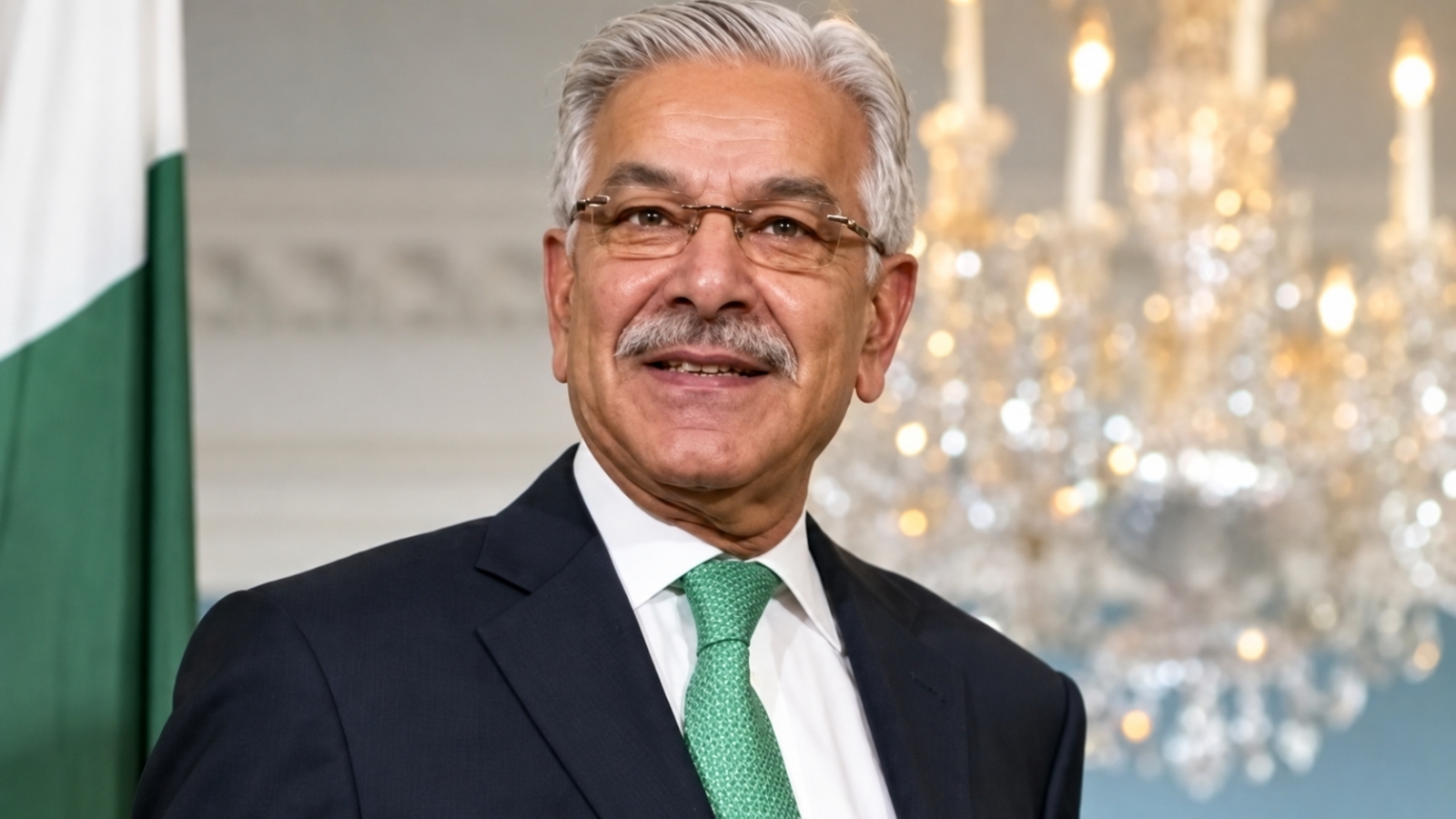
This tension—the relentless pressure of the modern world colliding with the fragile weight of our shared past—is rarely captured in diplomatic cables. When External Affairs Minister S. Jaishankar sat down with Prince Rahim Aga Khan V to discuss heritage preservation, the headlines reduced it to standard bureaucratic diplomacy. Two important men shaking hands in a bright room. Press releases spoke of bilateral cooperation, cultural ties, and mutual respect.
That is the skeleton of the event. But the flesh and blood of it are entirely different.
Consider what actually happens when an ancient city block is restored instead of bulldozed. Imagine, for a moment, an elderly resident living in the shadow of Humayun's Tomb or the Nizamuddin basti in Delhi. (This is a hypothetical composite based on dozens of documented urban renewal projects, but her reality is sharp enough to cut.) For decades, her neighborhood was viewed by city planners as a slum waiting for clearance. Open sewers leaked near shrines built by poets. Drainage was a cruel joke. The past was something she tripped over every morning on her way to the market.
When the Aga Khan Trust for Culture entered that space years ago, they did not just sweep in with academic notebooks and preservation grants. They did something much rarer. They fixed the water mains. They planted trees. They restored the stepwells so children could safely chase each other around stone edges that had sat dry for a century.
Heritage preservation, at its core, is not about worshipping dust. It is about dignity.
When Jaishankar and Prince Rahim talk about safeguarding cultural landmarks, they are talking about the invisible architecture that keeps a society from fracturing entirely. In a world moving at breakneck speed, where digital noise threatens to swallow our attention whole, physical anchors matter. They tell us we belong to a long chain of human effort. We did not invent love, grief, or architecture yesterday.
There is an old mason I once watched outside Cairo—another city where the Aga Khan network has spent decades painstakingly cleaning centuries of grime off historic facades. His hands were gnarled, the skin stained permanently with lime and sandstone dust. He looked at a crumbling archway the way a doctor looks at a patient in intensive care.
"If this falls," he told me, pointing a calloused finger at a carved floral motif that hadn't been touched since the Mamluk era, "we lose the proof that we knew how to make beautiful things that outlast us."
That is the stake here. It is not just about tourism revenue or looking good for international cultural bodies. It is about psychological survival. If everything around us is temporary, cheap, and easily replaced, we begin to treat our relationships and our communities the exact same way.
The partnership between India and the institutions guided by the Aga Khan family over the years—spanning the restoration of magnificent gardens, urban revitalization in dense historic districts, and the revival of traditional crafts—operates on a profound counter-cultural premise. It assumes that beauty is a public utility. It assumes that an artisan whose family has carved marble lattice screens for five generations is just as vital to a nation's security as a software engineer or a defense contractor.
Think about the sheer scale of the challenge. India is a country where history is not tucked away safely behind velvet ropes in climate-controlled museums. It bleeds into the streets. It is the tea stall built against a Mughal gateway. It is the children playing cricket in the courtyard of a dilapidated caravanserai. To preserve heritage here is not to freeze a moment in amber; it is to manage a living, breathing ecosystem where people are trying to make a living today while sleeping next to the ghosts of yesterday.
This is where diplomacy meets empathy. Jaishankar is known for his sharp, unyielding realism on the global stage—a man who treats geopolitics like a high-stakes chess match played with iron rules. Yet, sitting across from Prince Rahim, whose family has spent over a century investing private capital and deep philanthropic expertise into Islamic architecture, urban planning, and rural development across the globe, the conversation shifted from power to preservation.
Why? Because power without memory is just tyranny of the present.
When nations cooperate on culture, they are acknowledging a shared human vulnerability. Stone cracks. Timber rots. Bronze oxidizes. Without constant, loving intervention, our greatest achievements dissolve back into the earth. The work being done from Delhi to Cairo, from Zanzibar to Tajikistan, is an act of defiance against entropy.
We live in a culture that worships the new. Every smartphone update, every quarterly earnings report, every viral trend urges us to look forward, discard the old, and keep moving. But true civilization requires a backward glance. It requires us to look at what someone built with simple tools and sweat hundreds of years ago, knowing they would never live to see its final chapter, and say: I see you. I will maintain what you started.
The meeting between the Indian minister and the global heritage leader was marked by handshakes and diplomatic pleasantries, sure. But underneath those protocols lies a much deeper alliance. It is a quiet pact to protect the physical poetry of our ancestors from being paved over by the parking lots of tomorrow.
The next time you walk past an ancient wall in a crowded city, take a second. Ignore the honking horns and the delivery drivers weaving through traffic. Look at the mortar. Look at the way the stone catches the afternoon light, turning gold and bruised purple.
That wall is holding up more than a roof. It is holding up our anchor in the storm.