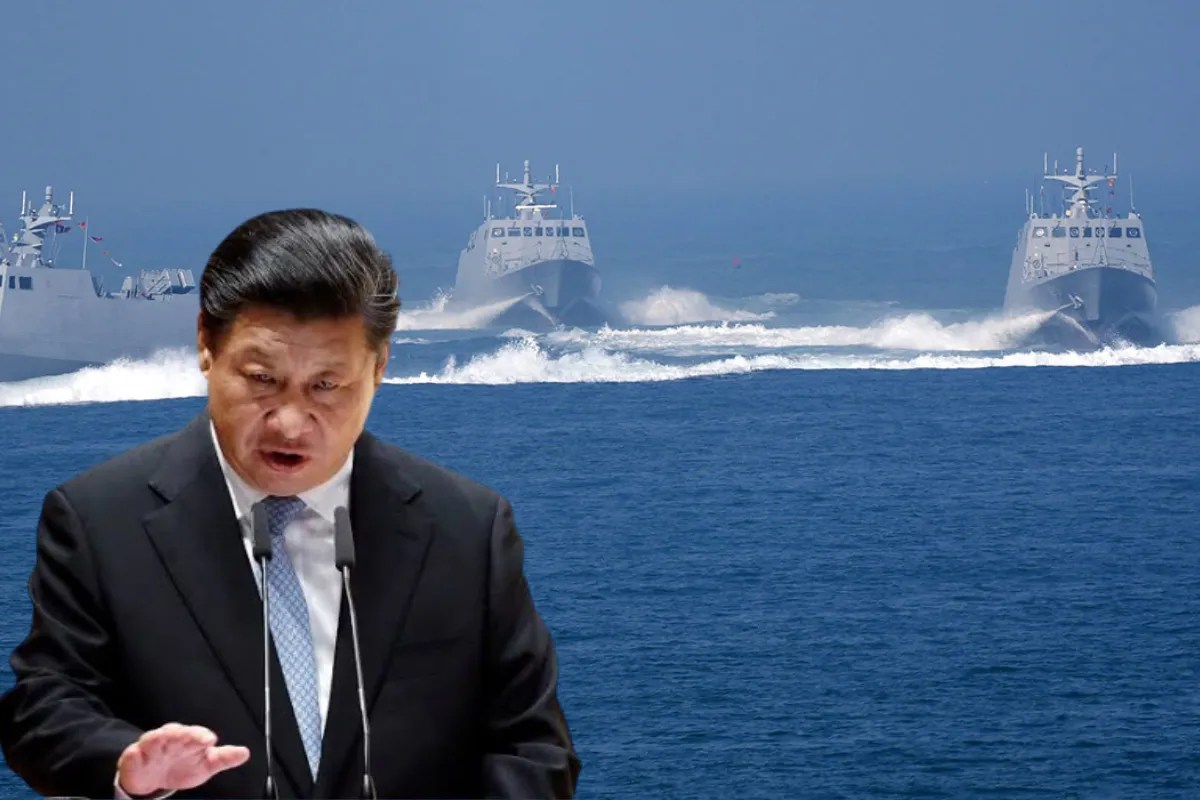
Diplomats love the sound of their own voices when standard trade routes start burning.
When attacks spike in West Asia and anti-ship missiles slice through commercial hulls, public officials rush to podiums to demand that international waters remain unimpeded. They issue grave warnings. They cite the United Nations Convention on the Law of the Sea like it’s a magic shield. They express solidarity with merchant seafarers while merchant ships take on sea water.
It is a performative routine. And it is completely detached from maritime reality.
Decrying weaponized choke points without altering the underlying economic and military incentives isn't strategy. It's theater. Calling for safe transit while relying on third-party naval coalitions to babysit private cargo turns sovereign supply chains into hostage situations.
If global powers want commercial traffic to move safely through contested waters, they need to stop making ethical appeals to non-state actors who do not care about international law.
The Myth Of Universal Free Transit
The political consensus rests on a comfortable lie: that free navigation is a self-sustaining international norm maintained by collective goodwill.
It never was.
Free navigation is an expensive commodity underwritten by raw naval dominance. For three decades, international trade operated on a historical anomaly. The global shipping industry grew accustomed to free security, assuming the ocean highways would always stay open because closing them violated abstract international rules.
That era is over.
When insurgent groups, regional proxies, and rogue states disrupt a tight maritime corridor like the Bab-el-Mandeb or the Strait of Hormuz, they do not care about legal declarations. They care about asymmetric leverage. A anti-ship cruise missile costing $100,000 can disrupt billions of dollars in commercial freight, spike global war-risk insurance premiums by 300%, and force giant container lines to reroute around Africa.
Standard Route (Suez)      : ~18 Days | Baseline Fuel | Standard Risk
Rerouted (Cape of Good Hope): ~28 Days | +30% Fuel Cost | High Operational Overhead
Issuing statements asking aggressors to honor freedom of navigation treats an asymmetric tactical victory as a misunderstanding. The aggressors know exactly what they are doing. They are using cheap munitions to force expensive responses. Appealing to global norms only signals that you have no direct answer to the math of modern coastal warfare.
Freedom Of Navigation Is A Bad Operational Metric
I have spent decades watching supply chain directors and defense analysts react to maritime shocks. The biggest mistake is treating every international waterway as a public park that simply needs more park rangers.
When states insist that all waterways must stay open for everyone at all times, they hand the operational initiative to anyone with a drone launcher. They commit themselves to patrolling millions of square miles of ocean, tasking multi-billion-dollar destroyers with shooting down $20,000 loitering munitions.
That balance is mathematically unsustainable.
Attacker: 100 Drones × $20,000      = $2,000,000 Total Cost
Defender: 100 Interceptors × $2,000,000 = $200,000,000 Total Cost
This dynamic drains naval inventories and inflates merchant risk without fixing the root cause. Protecting commercial shipping isn't about setting up endless convoy escorts or issuing stern diplomatic statements. It's about imposing direct, intolerable costs on the coastal bases, launch sites, and financial backers executing the strikes.
If a regional actor renders a choke point unsafe, international law won't clear the channel. Targeted counter-strike doctrine will.
The Flawed Logic Of Globalized Escorts
The popular alternative to diplomatic scolding is international naval coalitions. We see them formed every time a key strait turns into a shooting gallery. Ships from a dozen flags show up, establish communication protocols, and attempt to guard commercial fleets.
It sounds coordinated. In practice, it’s a logistics nightmare with severe built-in flaws.
- Rules of Engagement friction: Every nation in a coalition operates under different legal mandates. Some can strike launch platforms proactively; others can only fire back if their own hulls are targeted.
- The free-rider dilemma: Commercial vessels flag themselves in tax havens with zero naval power (Panama, Liberia, the Marshall Islands) and then expect Western or Asian navies to pick up the tab for their defense.
- Escalation paralysis: Coalition commanders often operate under tight political leashes, terrified that destroying an onshore radar array will spark a regional war.
The result is a defensive posture that gives attackers total control over when and where to strike.
When major nations refuse to arm their own merchant fleets or establish clear offensive red lines, they subsidize the precise disruption they claim to condemn.
Building Real Deterrence: Actionable Steps
Stop asking the international community to fix your trade vulnerability. If your economy depends on volatile maritime corridors, you need a strategy that assumes those corridors will break.
1. Mandate Direct Flag-State Accountability
If a commercial shipping line registers its fleet in a flag-of-convenience nation to evade taxes and regulations, it should not receive free military protection when crisis hits. Strategic trade nations must require vessels carrying critical national freight to re-flag under domestic registry, contribute directly to naval defense funds, or carry certified private security detachments capable of hard defense.
2. Shift From Escorts To Kinetic Denial
Naval forces must stop playing target practice in coastal waters. Protecting shipping lanes requires shifting from active defense (intercepting missiles over merchant ships) to point-of-origin destruction. If a coastal site launches against commercial traffic, the response cannot be a diplomatic statement; it must be the immediate neutralization of the coastal infrastructure enabling the strike.
3. Build Redundant Regional Land Bridges
Relying entirely on narrow sea lanes is an operational failure. Energy and cargo transit must be diversified into land-based pipeline networks, rail corridors, and deep-water ports situated outside vulnerable choke points. If closing a strait doesn't starve your domestic markets, the strategic leverage of the attacker evaporates.
4. Price War Risk Accurately
Stop artificially capping marine insurance rates through government backstops. Let market rates hit realistic peaks when ships enter high-risk zones. When war-risk premiums accurately reflect the danger, logistics companies will organically divert non-essential trade, reducing the target surface area for regional aggressors and forcing shipowners to demand real structural security solutions from their host governments.
The Hard Choice Ahead
You can have cheap global transport without hard security, or you can have secure sea lanes paid for in naval budgets and decisive military force. You cannot have both.
Continuing to condemn maritime violence while refusing to alter the cost structure for attackers is simple negligence. Aggressors will keep firing as long as the targets remain soft and the legal lectures stay loud.
Stop complaining about unsafe waters. Clear them, protect them yourself, or build another route.