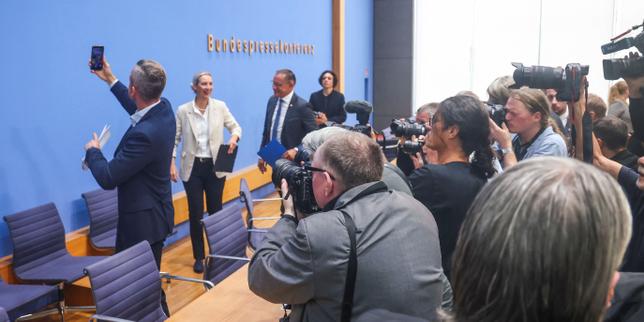
Every time Alternative for Germany notches another win in the former East, the commentariat reaches for the identical panic button. The mainstream narrative treats the rise of right-wing populism in regions like Saxony-Anhalt as a sudden cardiac arrest of the democratic body. Editorial boards churn out identical grief porn about chronic institutional rot, disenfranchised voters falling prey to dark demagoguery, and the slow decay of the post-reunification consensus. It is lazy, self-soothing analysis. It assumes that citizens voting outside the acceptable centrist perimeter are malfunctioning units in a pristine civic machine.
They are not malfunctioning. They are responding rationally to a political marketplace that spent three decades treating eastern Germany as a colonial outpost rather than an equal partner. You might also find this similar coverage useful: Why The Icelandic Whaling Ban Debate Is Built On Pure Hypocrisy.
To understand why Saxony-Anhalt keeps breaking the electoral map, you have to discard the comforting fiction that political radicalization is a disease. It is a symptom of a much simpler reality: the establishment political product in Berlin has zero value proposition for anyone living outside the Frankfurt-Berlin-Munich triangle, and people are finally returning the defective merchandise.
The Pathology of Patronizing Politics As discussed in recent reports by The Guardian, the results are notable.
For thirty years, the political consensus operated on a single core assumption. The East was simply a younger sibling to the West, lagging behind on the development curve, waiting patiently to catch up economically and culturally once enough structural funds were pumped into the soil.
That theory expired a decade ago. Eastern wages still lag significantly behind western counterparts. Corporate headquarters, media empires, judicial power, and institutional leadership remain overwhelmingly concentrated in western hands. When eastern Germans look at the top tier of their own judiciary, corporate boardrooms, or university faculties, they see a governing class imported from Hamburg, Stuttgart, or Cologne.
Mainstream analysts call this an integration challenge. The people living it call it internal colonization.
When you tell a population that their economic stagnation is just a temporary phase while they wait to adopt western standards of living, you are communicating profound condescension. When you dismiss their legitimate anxieties about rapid demographic shifts and cultural displacement as uneducated provincialism, you create an unstoppable market demand for a political force willing to say the establishment is corrupt.
The AfD did not manufacture this resentment out of thin air. They simply monetized a vacuum left by mainstream parties that abandoned class politics in favor of moral lecturing.
The Myth of Democratic Erosion
The standard lament argues that an AfD victory in Saxony-Anhalt erodes the foundations of German democracy. This gets the mechanics backward. High voter turnout and fierce partisan realignment do not signal democratic decay. They signal democratic vitality returning with a vengeance after decades of anaemic consensus politics.
For sixteen years under Angela Merkel, German federal politics operated on a policy of strategic depoliticization. The grand coalition ground down sharp ideological differences into a smooth, technocratic paste. Elections stopped feeling like choices between competing visions of society and started feeling like customer satisfaction surveys for a monopoly utility provider.
Voters hated it. But when you suppress genuine political conflict within institutional channels, pressure builds beneath the floorboards.
When eastern voters turn out in droves for a nationalist party, they are not burning down democracy. They are using the only lever left to shatter a cartel system that treated them as permanent backbenchers. You can detest their platform, abhor their rhetoric, and fight their policies tooth and nail. But pretending that their electoral dominance is an unconstitutional glitch rather than a deafening roar of democratic demand is intellectual cowardice.
The Economic Reality Check
Let us look at the structural data the commentariat conveniently ignores. For decades, the political establishment relied on transfer payments to buy social peace in the east. Solidarity surtaxes, regional development funds, and infrastructure projects flowed eastward like appeasement money.
Money without agency breeds resentment. It turns citizens into recipients of charity rather than architects of their own economic destiny.
When heavy industry transitions happen under green mandates dictated from western ministries, eastern towns bear the brunt of the economic dislocation without seeing any of the upside. The green energy transition is marketed as a planetary rescue mission in Berlin and a job destruction program in Lusatia. When a coal-dependent region watches its primary economic engine dismantled by politicians who commute via high-speed rail from comfortable urban districts, telling those residents to trust the democratic process sounds like a sick joke.
The AfD wins in Saxony-Anhalt because they are the only political actor willing to validate the economic pain caused by elite consensus policies. They offer wrong solutions, certainly. But a wrong solution addressing a real problem will always beat a technocratic platitude telling you that your problem does not exist.
What Actually Happens Next
The establishment response to these electoral shocks follows a predictable playbook. They form cordon sanitaires, isolate elected nationalist politicians, refuse parliamentary committee chairs, and draft breathless op-eds about defending the firewall of decency.
This strategy is gasoline on a fire.
Every time you isolate a popularly elected official, you validate the core populist premise: that the system is rigged by an entrenched elite terrified of losing its monopoly on power. You turn political opponents into martyrs and turn protest voters into permanent radicals.
If the democratic parties want to reverse the trend in Saxony-Anhalt and beyond, they need to stop treating elections as moral battlegrounds and start treating them as performance reviews. That means decentralizing institutional power away from western urban centers. It means stopping the top-down imposition of cultural mandates that alienate working-class communities. It means admitting that the post-reunification bargain failed a significant portion of the population.
Until the political class stops lecturing voters and starts competing for their interests, every new election in the east will deliver the exact same shock to a system that refuses to learn its own reflection.