Wall Street analysts love a tidy domino theory. Washington hits Nvidia with export controls, Beijing retaliates with antitrust probes and procurement bans, and suddenly every financial pundit points at Lisa Su and asks if AMD is next on the chopping block.
That premise is completely backwards.
The lazy consensus assumes AMD is sitting in Beijing’s waiting room, nervously clutching a golden ticket as the designated runner-up in the artificial intelligence hardware race. It treats the Chinese data center market like a zero-sum game where banning one American silicon giant automatically crowns the other. If you have ever actually deployed a large-scale training cluster or sat across the table from an enterprise infrastructure architect in Shenzhen or Hangzhou, you know that hardware procurement does not work like a backup quarterback stepping onto the field.
AMD is not going to be targeted as China’s "second-choice" AI supplier for a very simple reason. In China, AMD was never a viable second choice to begin with.
The Myth of the Drop-In Replacement
To understand why the "AMD is next" narrative falls apart, you have to look past peak floating-point operations per second on a spec sheet and examine the software trench warfare that actually dictates data center economics.
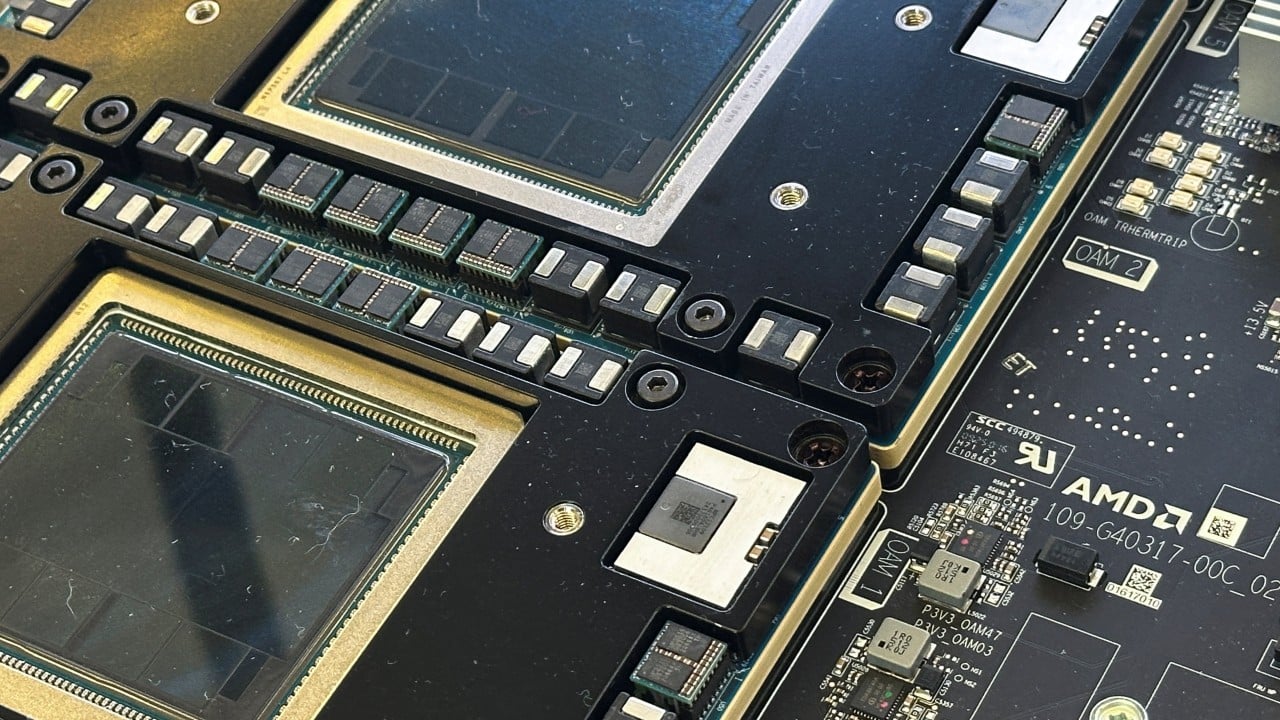
When pundits compare Nvidia’s H20 or H100 against AMD’s Instinct MI300X or China-specific variants, they treat graphics processing units like interchangeable commodities. They assume a hyperscaler like Alibaba, Tencent, or ByteDance can simply swap out green boxes for red boxes when regulatory heat turns up.
I have watched engineering teams burn millions of dollars and six months of runway trying to migrate production inference and training pipelines off Nvidia’s CUDA platform onto AMD’s ROCm stack. On paper, ROCm has made massive strides. In a clean benchmark environment running standard PyTorch models, AMD’s hardware screams. Its high-bandwidth memory capacity actually beats Nvidia’s comparable offerings, making it look like an absolute steal for large language model inference.
Then you try to run custom kernels in production.
You hit undocumented compiler bugs. You discover that the collective communication libraries—the plumbing that allows thousands of chips to talk to each other without stalling—behave unpredictably under heavy multi-node loads. Every hour your senior machine learning engineers spend debugging ROCm translation layers is an hour they are not training models.
Chinese tech giants are ruthless capital allocators. When Washington choked off Nvidia’s flagship silicon, ByteDance and Baidu did not rush to rewrite their entire software infrastructure around AMD’s ecosystem. Why would a Chinese hyperscaler go through the excruciating pain of ripping out CUDA only to lock themselves into another American software ecosystem subject to the exact same Bureau of Industry and Security export restrictions?
They wouldn't. And they didn't.
Beijing’s Real Playbook Is Not Retaliation
When Chinese regulators launched an antitrust investigation into Nvidia and subtly pressured domestic firms to steer clear of Nvidia’s compliant H20 chips, Western media framed it as a tit-for-tat slap on the wrist. The assumption was that Beijing was punishing Nvidia to gain diplomatic pricing power, leaving the door open for AMD to scoop up market share.
That misreads Beijing’s industrial policy entirely.
China is not trying to play American chipmakers off against each other anymore. That was the 2018 playbook. Today, Beijing’s objective is total architectural decoupling at the compute layer.
Every dollar a Chinese state-backed cloud provider spends on an AMD Instinct accelerator is a dollar stolen from Huawei’s Ascend ecosystem, Cambricon, Biren, or Hygon. Look at how Beijing actually wields regulatory pressure. They do not target foreign companies merely because they are successful; they target foreign companies at the exact moment domestic alternatives reach "good enough" parity for state-subsidized workloads.
Nvidia was targeted because its H20 chip—a deliberately hobbled processor designed specifically to slip under U.S. export thresholds—was still selling in massive volumes inside China. Those sales were actively starving Huawei of the commercial cash flow and real-world deployment feedback loops needed to mature its Ascend 910B and 910C architectures.
AMD has no such dominant footprint in Chinese AI data centers to threaten domestic champions. You do not launch a high-profile regulatory crusade against a vendor that barely holds single-digit market share in your sovereign AI clusters. Doing so would waste diplomatic ammunition and spook foreign enterprise investors in legacy server CPUs—a market where AMD’s EPYC processors actually do have deep, lucrative roots across China.
Why Huawei Is the Only "Second Choice" That Matters
If you want to understand the real threat to AMD’s ambitions in Asia, stop looking at the U.S. Commerce Department and start looking at Shenzhen.
Huawei’s Ascend division is not building chips to beat Nvidia in a fair global market. They are building an enclosed, state-mandated compute monopoly inside the world's second-largest economy. Through its CANN software architecture, Huawei has aggressively cloned the developer experience of CUDA while tying hardware allocation directly to government procurement mandates and subsidized green energy quotas for data centers.
Let us run a quick thought experiment. Imagine you are the Chief Technology Officer of a tier-two AI startup in Shanghai in late 2026. You need 2,000 accelerators to train a multimodal model. You have three options on the table:
- Smuggled or gray-market Nvidia hardware: Astronomical markup, zero warranty, and constant anxiety over supply continuity.
- Export-compliant AMD accelerators: Solid raw memory bandwidth, lingering software friction on custom workloads, and a very real risk that Washington tightens the rules tomorrow and cuts off your firmware updates.
- Huawei Ascend clusters: Lower yield rates and higher power consumption per token, yes—but backed by municipal compute vouchers, local engineering support teams camped out in your office, and zero geopolitical supply risk.
Which way do you jump? You take the Ascend cluster, swallow the software headaches, and pocket the state subsidies.
In that scenario, AMD is not squeezed out by a Chinese regulatory ban. AMD is squeezed out by pure economic gravity. Why endure the transition pain of leaving Nvidia for a compromised American alternative when you can endure the transition pain of leaving Nvidia for a domestic alternative that guarantees political immunity?
The Quiet Cash Cow Nobody Talks About
There is a massive irony buried beneath all the breathless headlines about AI GPUs. While analysts obsess over whether AMD will lose an imaginary AI windfall in China, they are completely ignoring the business AMD actually is quietly dominating there.
Traditional server CPUs.
AI clusters do not run on accelerators alone. Every rack of GPUs requires host processors to manage storage, networking, memory orchestration, and data preprocessing. Furthermore, the vast majority of enterprise workloads in China—banking ledgers, e-commerce databases, logistics routing, and telecom infrastructure—still run on standard x86 central processing units.
For years, Intel owned that market. Over the last several product generations, AMD’s EPYC processors have systematically gutted Intel’s data center market share globally, and China has been a massive contributor to that growth. Because x86 server CPUs fall largely outside the strict performance-density thresholds that trap AI accelerators, AMD has been able to ship high-margin EPYC silicon into Chinese cloud providers without triggering Washington’s tripwires.
If Beijing were to suddenly declare war on AMD over its nascent AI chip ambitions, it would blow up a vital supply chain for its own domestic cloud infrastructure. Chinese cloud providers rely heavily on AMD’s general-purpose compute to keep their core non-AI businesses running cheaply and efficiently.
Beijing knows this. Lisa Su knows this. Only financial commentators seem to miss it.
What Everyone Gets Wrong About Export Controls
To be fair to the skeptics, there is one scenario where the conventional wisdom holds water, and ignoring it would be intellectually dishonest.
Washington’s export control regime is not static. The Bureau of Industry and Security has repeatedly demonstrated that it will move the goalposts whenever American chipmakers engineer clever workarounds. When Nvidia created the A800 and H800 to comply with the October 2022 rules, Washington came back a year later and banned those too. When Nvidia engineered the H20, regulators immediately began scrutinizing interconnect speeds and memory bandwidth caps to close the loophole.
If AMD were to suddenly design a bespoke, China-only Instinct accelerator that captured billions of dollars in unexpected revenue from Alibaba or Tencent, two things would happen within ninety days:
- Washington would rewrite the technical thresholds specifically to kill that chip, just as it did to Nvidia.
- Beijing would weaponize regulatory reviews to stall the chip’s adoption while Huawei catches up.
In other words, the only way AMD becomes a regulatory target in China is if AMD first achieves a level of commercial AI success there that its current software ecosystem and supply constraints make nearly impossible. It is a self-negating prophecy.
The Real Battleground Is Not Beijing
Stop asking whether AMD will be China’s next target. Ask why AMD would ever waste precious CoWoS packaging capacity at TSMC trying to win a rigged market in the first place.
Advanced semiconductor manufacturing is supply-constrained. Every wafer of high-bandwidth memory and every advanced packaging slot AMD secures at TSMC is an asset worth its weight in gold. Right now, hyperscalers in North America and Europe—Microsoft, Meta, Oracle, and sovereign cloud initiatives across the Middle East—are desperate for a credible second source to break Nvidia’s 80-percent-plus gross margin stranglehold.
In Ashburn, Dublin, and Riyadh, AMD actually is the second choice. In those markets, customers are willing to co-invest in ROCm optimization because they have no geopolitical incentive to build a domestic silicon industry from scratch. They just want cheaper inference tokens and leverage against Jensen Huang’s pricing power.
Diverting engineering talent to customize firmware for export-crippled Chinese SKUs, navigating diplomatic minefields, and risking retaliatory audits in Beijing makes zero strategic sense when you can sell every single MI325X and MI350 chip you can manufacture to Western buyers at full margin.
How to Actually Read the Silicon Cold War
If you are evaluating semiconductor stocks, planning enterprise infrastructure, or trying to forecast the next phase of the U.S.-China tech decoupling, throw away the "who's next" checklist. Use these three filters instead:
- Follow the software lock-in, not the peak FLOPS. Hardware specs make great press releases, but developer friction dictates market share. Until a non-Nvidia platform achieves frictionless out-of-the-box parity on custom distributed workloads, Western challengers will remain niche players in constrained markets.
- Separate sovereign AI from general enterprise compute. Beijing is willing to absorb massive inefficiencies to force domestic silicon into AI training clusters. It is far less willing to disrupt general-purpose x86 server supply chains that keep the broader economy functioning. Watch EPYC shipments, not Instinct rumors, to gauge AMD’s real health in China.
- Watch TSMC packaging allocation, not geopolitical headlines. In a supply-constrained market, a vendor’s true strategy is revealed by where it ships its limited wafers. As long as U.S. hyperscalers are buying everything AMD can build, China is a distraction, not a growth engine.
The pundits waiting for Beijing to drop the hammer on AMD are fighting the last war. Nvidia was targeted because it built an insurmountable monopoly that threatened China's technological sovereignty. AMD has neither the market share to provoke Beijing's wrath nor the strategic need to beg for its business.
Stop treating AMD like Nvidia’s understudy in a play that China has already canceled.