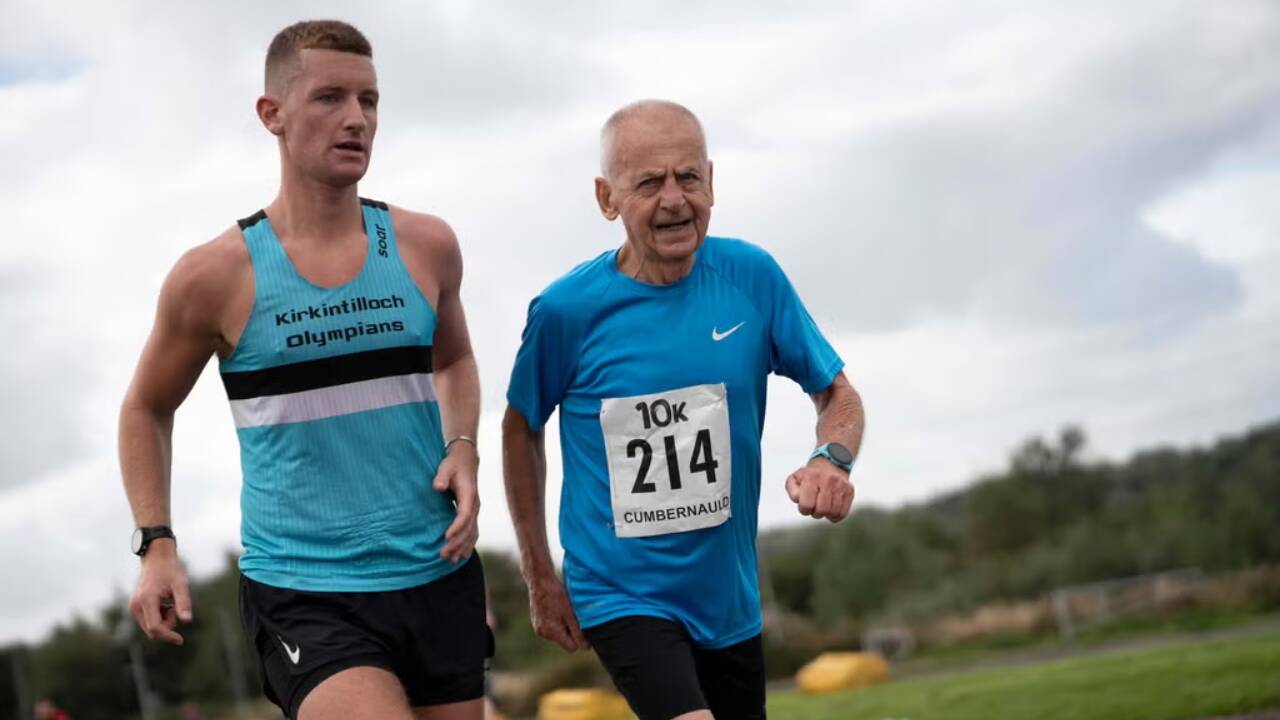
Every time a nonagenarian completes a ten-kilometer run, the media machine whirs into action. We get heartwarming headlines about former paratroopers defying the clock, setting age-graded records, and proving that ninety is the new thirty. Millions share the story. Everyone nods in polite, inspirational agreement.
It is time to stop buying into the feel-good fiction.
The lazy consensus in these viral endurance stories is that biological aging is entirely malleable through sheer grit, and that exceptional octogenarian or nonagenarian athletic feats represent a blueprint for human longevity. This narrative misses the biological reality entirely. When we frame an isolated, outlier ninety-year-old running a ten-kilometer race as a standard of healthy aging, we do two destructive things: we misrepresent the mechanics of human senescence, and we guilt millions of older adults who are engaging in far more appropriate, lower-impact functional movement.
Let us look at the data. I have watched fitness media companies and longevity startups burn millions chasing the statistical outlier. Exceptional longevity and late-life athletic performance are governed by a heavy genetic lottery, lifelong physiological baseline preservation, and survivorship bias. By the time someone reaches ninety and possesses the joint integrity, cardiac output, and neuromuscular coordination to run a ten-kilometer distance, they are already a biological anomaly. They did not achieve this state because they took up jogging at eighty-five. They achieved it because their baseline physiology survived a ruthless natural filter.
To understand why celebrating these stunts is problematic, we have to define terms precisely. Age-grading scales and absolute athletic achievements in the over-ninety brackets measure survivorship, not a repeatable lifestyle intervention. Exercise physiology literature, from researchers tracking master athletes like Dr. Michael Joyner, consistently demonstrates that while endurance training preserves cardiovascular fitness and blunts the rate of VO2 max decline, it cannot rewrite the hard limits of musculoskeletal degradation, arterial stiffening, and cellular senescence.
Imagine a scenario where a sedentary ninety-year-old reads this viral headline, laces up a pair of running shoes, and attempts to log a ten-kilometer training block. The result is not an inspirational journey. It is an orthopedic catastrophe. Stress fractures, tendon ruptures, and acute falls leading to hip fractures are the literal price of chasing statistical anomalies with untrained cartilage.
The hidden downside of our obsession with extreme late-life records is that it devalues ordinary, unglamorous physical competence. Walking four thousand steps a day, maintaining baseline grip strength through resistance training, and preserving postural stability matter infinitely more for functional independence than jogging ten kilometers at a snail's pace just to secure a age-group medal.
We need to stop conflating circus acts with public health. Real longevity isn't about setting age-bracket records on a running track while your tendons scream for mercy. It is about preserving the mechanical autonomy to get off the toilet without assistance when you are eighty. Stop applauding the outliers and start respecting the physics of human decay.