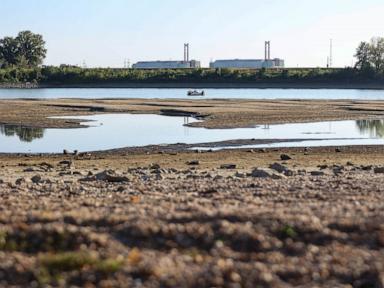
The headlines write themselves because lazy journalism loves a good panic. Budapest panics over low water levels on the Danube. Paks nuclear power plant faces meltdown threats or mandatory shutdowns because the river gets too warm or too shallow. The standard narrative demands immediate, panicked dredging, frantic infrastructure spending, and emergency interventions to force nature to comply with Soviet-era cooling loops.
Everyone is asking the wrong question.
The question is not how to force millions of gallons of low-flow, high-temperature water through a thermal bottleneck designed in the 1960s. The question is why we are still treating a base-load nuclear asset like an agricultural mill sitting on a medieval riverbank.
I spent two decades advising energy conglomerates across Central and Eastern Europe. I have watched utility executives blow millions on frantic riverbed dredging operations that solved nothing while shifting silt fifty yards downstream to choke municipal water intakes. It is magical thinking backed by heavy machinery.
The Physics of Thermal Pollution
Let us get precise about what actually happens at Paks. Nuclear reactors do not consume water; they borrow it to absorb waste heat. They heat up the Danube. When the ambient river temperature spikes during a blistering August drought, and the volumetric flow rate drops, the thermal delta narrows. Push too much heat back into a warm, sluggish river, and you violate environmental protection limits or, worse, trip your reactor safety systems because your ultimate heat sink refuses to accept the thermal load.
The conventional press calls this a climate crisis. It is actually a thermal management failure of imagination.
The lazy consensus says we must dredge deeper channels to secure cooling intake. This ignores basic fluid dynamics. Dredging a sandy, shifting alluvial bed like the middle Danube does not create a permanent swimming pool; it creates a temporary sump that fills back up with the next heavy upstream sediment load. You are paying for an endless subscription to earthmoving contractors.
Worse, shallow water is not just a volume problem. It is a temperature problem. Shallow, wide channels absorb solar radiation faster. Digging a deeper trench in a stagnant pool does not cool the water down. You are just pumping warmer soup through your condensers at a higher velocity, which destroys turbine efficiency and accelerates bio-fouling in your heat exchangers.
Why the Paks Expansion Makes the Panic Worse
Layer on top of this the ongoing construction of Paks II. Adding two new VVER-1200 reactors to the exact same geographical bottleneck on the river doubles down on a single-point-of-failure hydraulic strategy.
It defies engineering logic. If your primary cooling source is subjected to predictable, cyclical low-flow regimes driven by shifting European precipitation patterns, doubling your heat rejection requirement into that exact same cubic meter of water is an exercise in institutional denial.
When I sat in strategy rooms in Vienna and Budapest discussing these exact thermal constraints ten years ago, the uniform response was denial wrapped in a bureaucratic blanket. Engineers knew the cooling towers were undersized for extreme weather anomalies. Operators knew that river water temperatures above 30 degrees Celsius spelled operational misery. Yet, the institutional momentum behind keeping the riverine intake model alive remained absolute because changing it meant admitting the original siting parameters were obsolete.
The Counter-Intuitive Fix
If dredging is a fool's errand and shutting down the plant is economic suicide for Hungary's grid, what is the actual solution?
Stop relying exclusively on single-pass once-through river cooling.
Modern thermal engineering solved this problem decades ago in environments far more hostile than the Danube valley. If you want to keep Paks running through August heatwaves without boiling local fish populations or begging meteorologists for rain, you implement closed-loop hybrid cooling towers.
Admitting the downside is part of the job: hybrid cooling towers are capital intensive, they reduce net electrical output slightly due to parasitic load, and they require real estate. But they decouple your multi-billion-dollar nuclear asset from the mercy of a drought-stricken river.
Instead of pulling massive volumes of water from the Danube and dumping it right back at a legally mandated delta, you circulate water through mechanical draft cooling towers where latent heat rejection handles the heavy lifting via evaporation. Your river intake drops by over ninety percent. You stop caring if the Danube drops another twenty centimeters. You stop funding useless dredging contracts that enrich local gravel barons.
Dismantling the Paks Emergency Narrative
When regulators talk about emergency interventions on the Danube, they are treating a design flaw as a weather emergency. Weather emergencies are temporary. Design obsolescence is permanent until you spend the capital to fix it.
People also ask: Won't closed-loop systems cost billions and take years to permit?
Yes. They will. But do you know what costs more? Unscheduled shutdowns of a facility generating nearly half of a sovereign nation's electricity during a continental energy crunch. The cost of inaction—or worse, the cost of repeating the same cyclic dredging theater every three years—dwarfs the capital expenditure required for proper thermal re-engineering.
We need to stop viewing industrial infrastructure as a permanent fixture that nature must accommodate. Nature does not care about your baseload capacity targets. The Danube will continue to fluctuate. Glacial melt in the Alps is changing, rainfall distribution in Central Europe is shifting, and summer heat domes are the new baseline.
If your engineering relies on historical averages from 1970, your engineering is dead.
Tearing up the riverbed with dredgers is the policy equivalent of rearranging deck chairs on a sinking barge. It looks active. It makes good footage for evening news broadcasts. It reassures politicians who do not know the difference between a condenser and a cooling pond.
It just does not work.
Build the auxiliary cooling infrastructure. Move away from once-through river dependence. Or keep dredging the Danube forever while praying for rain.
Your choice.


