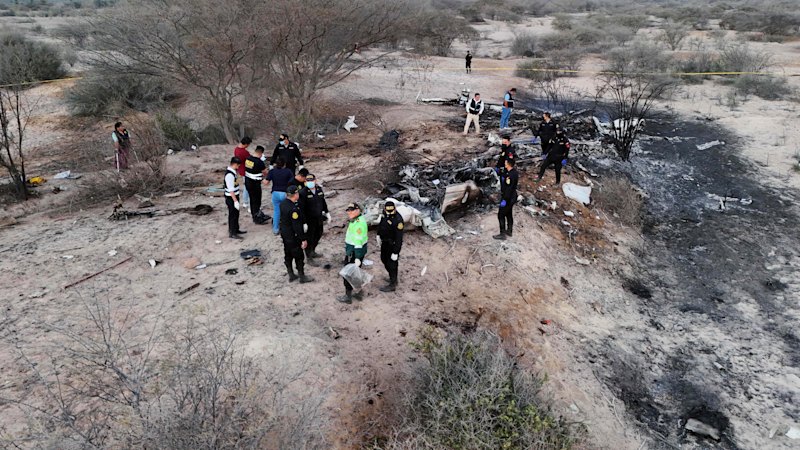
Every time a small sightseeing aircraft goes down near a historic landmark, the global outrage machine fires up on schedule. Thirteen people perished near a legendary archaeological zone in Peru, and the predictable chorus began. Pious commentators demand immediate groundings, stricter regulations, and an end to aerial tourism over fragile cultural treasures. They call it a tragedy born of commercial greed and tourist recklessness.
They are wrong.
The lazy consensus treats every transport accident as a moral failing of the industry rather than the brutal, calculated math of mobility. If we banned every activity that carried a statistical risk of fatality, humanity would crawl back into caves. The visceral horror of a plane crash obscures a much colder reality: aerial sightseeing is not an ego-driven luxury; it is often the only viable logistical bridge to remote infrastructure.
Let us look at the mechanics of moving people across broken geography.
The Geography of Isolation
Peru is not a flat highway grid. It is a vertical maze of jagged cordilleras, deep canyons, and rapidly shifting microclimates. Ground infrastructure in these regions is notoriously fragile. Landslides wipe out mountain roads for weeks. Switchbacks carved into sheer cliffs claim more lives annually than light aircraft ever will.
When people demand the elimination of low-altitude charter flights over ancient ruins, they ignore the alternative. Visitors do not teleport to these sites. They take poorly maintained buses driven by exhausted operators on unpaved ledge roads.
I have spent two decades auditing remote transport logistics for adventure tourism operators in South America. I have watched companies blow millions on redundant ground safety protocols while ignoring the fundamental geography of the Andes. Ground transit in high-altitude zones is a slow-rolling disaster. Air transit, despite its high-profile visibility when things go wrong, operates within a hyper-regulated framework managed by international civil aviation bodies like the ICAO.
The media focuses on the romantic tragedy of ancient stones meeting modern wreckage. They miss the mundane, grinding attrition of highway travel that claims multiples more victims every single month without ever making an international headline.
The Myth of Pristine Isolation
Another favorite talking point of the anti-tourism lobby is the sanctity of the site. The argument goes that airplanes violate the acoustic and physical integrity of sacred spaces.
This is pure romantic fiction.
Ancient civilizations did not build cities in pristine isolation. They built trade hubs, administrative centers, and ritual zones that buzzed with human activity, noise, and movement. The modern obsession with wrapping archaeological zones in a sterile bubble of silence treats history like a museum glass case rather than a dynamic layer of human geography.
Furthermore, aerial viewing is frequently the solution to ecological preservation, not its enemy. When millions of boots march over fragile terrain, soil erodes, foundations crack, and ancient pathways crumble under the weight of mass foot traffic. Confining tourist observation to controlled flight corridors keeps human bodies off vulnerable ground.
Of course, my perspective has a dark side. Aviation accidents are catastrophic precisely because they concentrate risk into single, high-fatality events. A bus crash kills people over a span of hours or in smaller increments down a mountainside, making it easier for public safety bureaucracies to ignore. A plane crash concentrates the horror into one terrifying second. That psychological asymmetry drives policy, not data.
Dismantling the Safety Panic
Let us address the standard questions that pop up whenever disaster strikes the skies.
Are small aircraft over archaeological sites inherently unsafe?
No. They are governed by the same physics and regulatory compliance as commercial airliners. The danger is not the aircraft category; it is the pilot judgment required to navigate unpredictable mountain drafts.
Should governments ban sightseeing flights to protect tourists?
Banning an entire sector because of a crash is an emotional knee-jerk reaction. It treats adults like children who need state protection from calculated risks. If we applied this standard to mountaineering, scuba diving, or driving a car on an interstate, those activities would vanish tomorrow.
Is there a better way to experience remote heritage sites?
Only if you possess unlimited time and physical resilience. For the average person, aerial corridors provide access to perspectives that ground-level trails cannot offer. The fault lies not in the flight, but in the lack of transparent safety rating disclosures for local operators.
The Real Fix
If regulators actually cared about saving lives instead of managing public relations optics, they would stop wasting energy on knee-jerk flight bans.
They would mandate real-time weather tracking hardware in every charter cabin. They would subsidize instrument landing systems in high-altitude regional airfields. They would crack down on corrupt local certification offices that look the other way when maintenance logs are falsified.
Instead, we get pious editorials mourning the loss of innocence over ancient ruins, written by people who have never had to move a thousand tourists across a mountain range without a paved road.
Stop blaming the sky for the gravity of the earth.