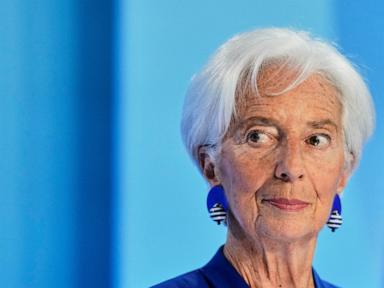
The financial press loves a palace intrigue story. Give them a rumored resignation date—say, February 7—and an anonymous source in Brussels, and watch the ink spill across thousands of breathless column inches.
They will tell you that Christine Lagarde stepping down from the European Central Bank will trigger a crisis of confidence in the eurozone. They will frame her potential departure as a seismic shock to interest rate trajectories, sovereign bond spreads, and the fragile unity of the twenty-member currency bloc. Meanwhile, you can find related stories here: The Anatomy of UK Energy Security and the Rosebank Oil Field.
They are wrong. Completely, fundamentally wrong.
Obsessing over the exact day Christine Lagarde packs her boxes at the Sonnemannstraße tower in Frankfurt is the ultimate retail-investor distraction. It treats modern central banking like a monarchist drama where the whims of a single ruler dictate the price of money. In reality, the ECB is a heavily institutionalized, consensus-bound machine operating inside a narrow corridor of structural constraints. Whether Lagarde leaves on February 7, stays until her official term ends in October 2027, or is replaced tomorrow by a hawk from the Bundesbank or a dove from the Banque de France, the trajectory of European monetary policy barely budges. To explore the complete picture, check out the recent article by CNBC.
I have watched institutional desks blow millions of euros positioning their portfolios around central bank personality cults. Traders bet the farm on a single governor's hawkish rhetoric during a press conference, only to get steamrolled three weeks later when structural inflation data and fiscal reality force the Governing Council’s hand. The person at the podium reads the script. The bond market writes it.
The Myth of the Imperial Central Banker
To understand why a Lagarde resignation on February 7 is noise rather than signal, you have to strip away the media’s obsession with personalities and look at the actual mechanics of the ECB Governing Council.
Unlike the early days of the Federal Reserve under Paul Volcker, or even the era when Mario Draghi could utter three words—"whatever it takes"—and single-handedly alter the gravitational pull of global sovereign debt markets, the modern ECB does not function as a one-person show. Draghi could pull off that miracle in 2012 because the institution was still defining the outer boundaries of its mandate during an existential sovereign debt crisis. Those boundaries are now concrete walls.
Lagarde’s primary skill was never econometric wizardry. She is a lawyer and a political diplomat by trade, brought in after running the International Monetary Fund to herd twenty-six distinct personalities—the six members of the Executive Board plus the twenty governors of the national central banks—toward a unified vote.
When you trade on a headline claiming Lagarde is resigning on February 7, you are making a massive, unverified assumption: that her departure alters the voting math of the Governing Council.
It does not.
Consider the actual decision-making architecture in Frankfurt:
- One Member, One Vote (With Rotation): Under the ECB’s voting system, the top five economies—Germany, France, Italy, Spain, and the Netherlands—share four voting rights, while the remaining fifteen countries share eleven. The President holds just one vote, and in the rare event of a tie, a casting vote.
- The Chief Economist Holds the Pen: Monetary policy proposals do not originate in the President's office. They are drafted by the Chief Economist—a role held by Philip Lane—and the Directorate General Economics. They build the staff macroeconomic projections that anchor the entire debate.
- Consensus Over Dictate: Since 2019, the Governing Council has operated on an unspoken rule of broad consensus. Even when hawks like Isabel Schnabel or Joachim Nagel publicly clash with doves like Fabio Panetta or Yannis Stournaras, the final rate decision almost always lands squarely in the middle of the distribution.
Replacing Lagarde changes the chair at the head of the table. It does not change the chairs around it.
Why the February 7 Rumor Misses the Real Threat
Let us examine the premise of the competitor narrative. The standard story suggests that an early exit on February 7 creates a dangerous leadership vacuum right as Europe navigates sluggish industrial growth, fragmented fiscal rules, and persistent geopolitical energy shocks.
Imagine a scenario where Christine Lagarde actually does walk out the door on February 7. What happens on February 8?
Nothing. The Vice President—a role filled by Luis de Guindos—assumes the chairing duties immediately under Article 11 of the Statute of the European System of Central Banks. The weekly liquidity operations continue without a millisecond of latency. The Transmission Protection Instrument (TPI) remains active on the books. The staff economists keep running the exact same DSGE (Dynamic Stochastic General Equilibrium) models.
The real threat to the eurozone has nothing to do with who holds the gavel in Frankfurt. The real threat is fiscal dominance, and no central bank president can legislate it away.
Fiscal dominance occurs when government deficits and debt loads become so massive that the central bank loses its practical independence, forced to keep interest rates artificially low or expand its balance sheet simply to prevent the sovereign from defaulting.
Look at the balance sheets of the major eurozone sovereigns. France is running structural deficits well above the EU’s 3 percent limit, triggering excessive deficit procedures and widening the OAT-Bund spread. Italy carries a debt-to-GDP ratio hovering around 140 percent. Germany, long the anchor of fiscal probity, is wrestling with an aging industrial base, broken energy supply chains, and mounting pressure to scrap its constitutional debt brake to fund defense and infrastructure.
When sovereign debt hits these levels, the ECB is trapped. If the Governing Council hikes rates aggressively to crush an inflation spike, peripheral bond yields blow out, threatening a repeat of the 2011 sovereign debt crisis. If they cut rates too fast to save heavily indebted treasuries, the euro depreciates, importing fresh inflation through dollar-denominated energy and commodity markets.
Tell me: how does swapping Christine Lagarde for Klaas Knot, François Villeroy de Galhau, or Pablo Hernández de Cos alter the math of a 140 percent debt-to-GDP ratio? It doesn't. The constraint is mathematical, not biographical.
Dismantling the "People Also Ask" Fallacies
Whenever a rumor like a February 7 resignation hits the wire, search engines light up with retail panic. Let’s take the most common questions circulating right now and dismantle the flawed assumptions baked into every single one of them.
Will a new ECB president immediately pivot interest rates?
No. Anyone who tells you a new president can walk into Frankfurt and engineer a sudden 100-basis-point pivot does not understand institutional inertia. Central banks move like oil tankers, not speedboats. Forward guidance, market expectations priced into overnight index swaps (OIS), and multi-quarter inflation forecasts lock the committee into a narrow path. A sudden, un telegraphed rate shock would detonate European bank stocks and trigger immediate intervention from finance ministers in Brussels. A new president might shift the tone of the press conference by ten degrees, but the actual policy rate will track headline and core HICP (Harmonised Index of Consumer Prices) data.
Does Lagarde’s departure mean the euro will crash?
Foreign exchange markets do not price currency pairs based on executive biographies; they price them on interest rate differentials and capital flows. The EUR/USD exchange rate is governed primarily by the spread between US Treasury yields and German Bund yields, alongside the eurozone’s current account balance. Unless a leadership transition sparks an actual, ratified treaty change—which is practically impossible given EU unanimity rules—currency desks will fade any knee-jerk drop in the euro within forty-eight hours.
Who would replace her, and would a German hawk ruin the recovery?
This is the oldest bogeyman in European finance: the fear that a hardline German central banker will take the helm and strangle Southern European growth in the name of price stability. First, political horse-trading in Brussels almost guarantees that top EU jobs are balanced across regions and political families. If a Northern European takes the ECB, a Southern European takes a top Commission or Council post, and vice versa. Second, even the most ardent hawks on the Governing Council soften the moment they sit in the President’s chair. Once you are responsible for the systemic stability of the entire currency union—not just domestic German inflation—ideological purity evaporates quickly.
The Unspoken Truth About Central Bank Forward Guidance
If you want to understand why institutional insiders ignore resignation rumors, look at the track record of central bank forward guidance over the past decade.
In 2021, under Lagarde’s leadership, the ECB insisted that inflation was "transitory" and promised rates would stay at record lows well into 2023. By July 2022, the bank was executing the fastest rate-hiking cycle in its history, pushing the deposit facility rate from minus 0.5 percent to 4.0 percent in just over a year.
Why did they break their own promise? Because the data forced them to.
Central bank presidents do not control the economy; they react to it with a twelve-to-eighteen-month lag. Lagarde’s speeches are carefully calibrated communication tools designed to manage market expectations so that financial conditions tighten or loosen before the bank actually has to pull the trigger. When analysts dissect every syllable of her press conferences—counting how many times she says "data-dependent" versus "vigilant"—they are engaging in modern augury, reading bird entrails while ignoring the weather radar.
The same applies to any successor. Whether a resignation happens on February 7 or two years later, the incoming president inherits the exact same dashboard:
- Negotiated Wage Growth: The ECB’s proprietary tracker of collective bargaining agreements across the bloc. As long as European labor unions secure wage hikes above 3.5 to 4 percent without corresponding productivity gains, services inflation stays sticky.
- The Credit Impulse: Bank lending surveys showing whether commercial banks in Frankfurt, Paris, and Milan are tightening credit standards for small and medium-sized enterprises. Because European companies rely heavily on bank loans rather than corporate bond markets (unlike their US counterparts), the bank lending channel is the true transmission mechanism of ECB policy.
- Energy Base Effects: Europe remains structurally short on domestic energy. Any flare-up in Liquefied Natural Gas (LNG) prices hits European industrial competitiveness and headline inflation immediately.
None of these three variables care who is sitting in the president's office.
Admitting the Downside of the Structural View
Now, let’s be brutally honest about the flaw in my own argument. If you treat central banking purely as a deterministic machine driven by macro data and structural debt constraints, you will miss the rare, tail-risk moments when leadership actually does matter.
There are two specific scenarios where an abrupt departure—whether on February 7 or any other unscheduled date—creates genuine market friction:
- An Acute Liquidity Panic: During a sudden, 2008-style or March 2020-style market freeze, committees are too slow. You need an executive with the political capital and personal nerve to call an emergency weekend meeting, override legal objections from national central banks, and deploy trillions in liquidity before Asian markets open on Monday morning. Lagarde learned this lesson the hard way in March 2020 when she infamously stated that the ECB was "not here to close spreads," triggering a historic sell-off in Italian bonds that forced her to reverse course days later with the Pandemic Emergency Purchase Programme (PEPP). An untested rookie president facing a sudden liquidity crisis on day two would cause real damage.
- The Digital Euro Rollout: Lagarde has championed the digital euro project as a cornerstone of European financial sovereignty. A successor deeply skeptical of Central Bank Digital Currencies (CBDCs) could quietly stall the legislative and technical momentum behind it, altering the long-term plumbing of European retail banking.
Acknowledging these tail risks does not validate the breathless hype around a February 7 resignation. It simply places the risk where it belongs: in crisis response and long-term regulatory plumbing, not in day-to-day interest rate management.
How to Actually Position Around ECB Noise
If you manage capital, run a business with euro-denominated exposure, or simply want to stop getting whipsawed by financial journalism, stop trading the headlines. Here is how to strip the noise out of your decision-making when leadership rumors hit the tape:
- Watch the 2-Year OIS Curve, Not the Press Conference: Overnight Index Swaps reflect where institutional money actually thinks rates are going, stripped of credit risk. If a resignation rumor breaks and the 2-year EUR OIS rate moves less than five basis points, the market is telling you the news is irrelevant. Trust the swap desk over the editorial desk.
- Track the BTP-Bund Spread as Your True Stress Gauge: Forget the euro exchange rate during political rumors. Watch the yield spread between 10-year Italian government bonds (BTPs) and 10-year German Bunds. If that spread stays contained below 150 basis points, the ECB’s implicit backstop is holding firm regardless of who is in charge.
- Fade Emotional FX Spikes: Whenever an unverified rumor about an EU official resigning causes a sudden 50-pip drop in EUR/USD during thin trading hours, recognize it as algorithmic stop-hunting. Without a fundamental shift in transatlantic rate differentials or energy terms of trade, those moves almost always mean-revert once London and New York liquidity deepens.
- Focus on Fiscal Policy in Paris and Berlin: If you want to predict what the ECB will do six months from now, stop reading speeches from Frankfurt and start reading budget drafts from the French Ministry of Economy and Finance and the German Bundestag. Fiscal deficits dictate the terminal interest rate far more reliably than central bank rhetoric ever will.
The financial media will keep publishing clickbait about secret resignation dates because fear and intrigue sell subscriptions. Let them chase shadows in Brussels.
Close the news feed, open the swap curve, and watch the bond market—because the people actually pricing European risk already moved on.

