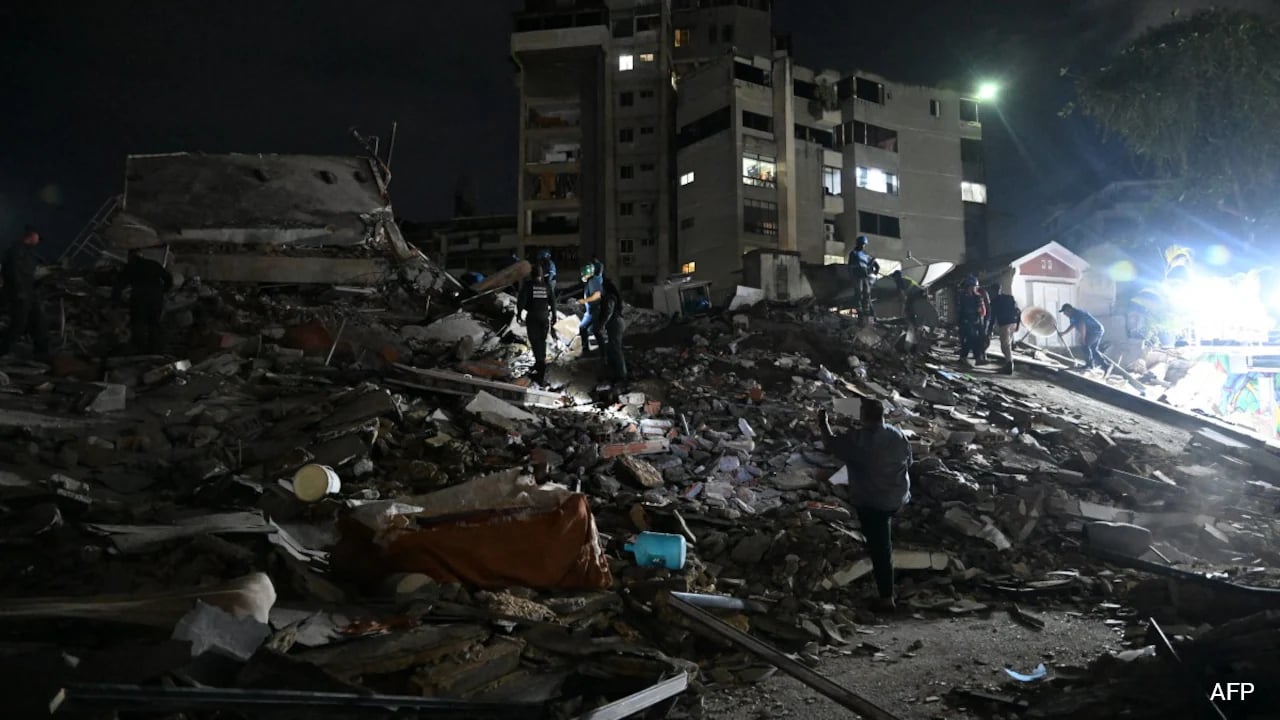
The media treats natural disasters like a ranking game. Every time a fault line twitches in South America or a tremor rattles a capital city, the headlines follow an predictable script. They scramble to list magnitudes, draw comparisons to historical tragedies, and publish generic "Top 10 Deadliest Earthquakes" lists.
It is lazy journalism. It misses the point completely.
The collective obsession with earthquake magnitude is fundamentally flawed. We panic over a 7.5 magnitude event while ignoring the actual variable that dictates whether people live or die. Earthquakes do not kill people. Structural corruption, terrible zoning, and macroeconomic neglect do.
When you look at a list of history’s deadliest seismic events, you are not looking at a list of the most powerful natural phenomena. You are looking at a historical ledger of engineering and political failures. If we want to prevent future catastrophes, we have to stop tracking the Richter scale and start tracking the real killer: bad concrete.
The Fallacy of the Richter Scale
The public has been conditioned to judge an earthquake by its raw energy release. We hear "Magnitude 8.0" and assume total devastation is inevitable. We hear "Magnitude 6.0" and assume it is minor news.
This metric is functionally useless for assessing human risk.
Consider two historical data points. In 2010, Haiti was hit by a magnitude 7.0 earthquake. The catastrophic event resulted in an estimated 100,000 to 300,000 fatalities. A few weeks later, a massive magnitude 8.8 earthquake struck Chile. The Chilean quake released approximately 500 times more seismic energy than the Haitian event. Yet, the death toll in Chile was limited to just over 500 people.
The math does not track if you only look at the physical event. It only makes sense when you look at building codes and governance.
Haiti suffered from a total lack of enforcement for structural engineering, unreinforced masonry, and soft-story construction (buildings with weak first floors prone to collapsing). Chile had spent decades implementing and strictly enforcing rigorous seismic design laws based on the structural dynamics of the structural engineering world. One nation built structures to flex; the other built structures that acted as concrete traps.
When a building suffers a "pancake collapse"—where upper floors drop directly onto lower ones because the vertical supports fail—it is almost never because nature was too strong. It is because the builder cut corners on rebar, or the local inspector took a bribe.
Dismantling the Top 10 Deadliest Myth
Mainstream news outlets love to recycle lists of historical tragedies, citing events like Shaanxi in 1556, Tangshan in 1976, or the 2004 Indian Ocean tsunami. They frame these events as random acts of a cruel planet.
This framing hides a structural reality. Let us dissect what actually happens when you map high seismic risk zones against human populations.
As visible in global risk modeling, the worst disasters happen exclusively where massive population density collides with substandard infrastructure. An 8.0 earthquake in the middle of the Alaskan wilderness kills no one. The same earthquake in an overpopulated, poorly regulated urban center creates a mass casualty event.
The focus on the physical tremor allows local governments to escape blame. They claim the disaster was an unavoidable act of God. It rarely is. It is almost always a predictable consequence of rapid, unchecked urbanization. When poor communities are forced to build improvised housing on steep, unstable hillsides or uncompacted landfill, they are being set up for structural failure.
The Real Variable: Brittle Concrete and Soft Stories
If you want to evaluate your actual vulnerability to a seismic event, stop looking at tectonic maps. Look at how the buildings around you are constructed.
The single greatest threat to human life during an earthquake is brittle, unreinforced concrete. Concrete is excellent under compression (holding weight up), but it is exceptionally weak under tension (pulling or twisting forces). When seismic waves pass through a structure, they shake it horizontally. Without proper steel rebar looping through the concrete to give it tensile strength, the material shears and shatters instantly.
The secondary killer is the soft-story design. You see this everywhere in modern cities: apartment complexes or office buildings where the ground floor features large open spaces for parking lots, lobbies, or retail shops.
The Mechanics of Failure: During a major tremor, the stiff upper floors of a soft-story building move as a solid block. All the lateral force is transferred down to the ground floor columns. If those columns lack dense steel wrapping, they snap, causing the entire building to drop straight down.
Fixing this issue does not require futuristic tech or billions in speculative spending. It requires basic civil engineering and zero tolerance for regulatory evasion.
The Unpopular Solution: Retrofitting Over Predicting
The scientific community spends immense amounts of funding attempting to predict exactly when and where earthquakes will strike. It is an exercise in futility. Despite decades of research into foreshocks, animal behavior, and satellite data, we cannot reliably predict an earthquake more than a few seconds before it happens.
Stop wasting money on prediction algorithms. Spend it on structural retrofitting.
I have seen municipal budgets pour millions into elaborate emergency alert systems while thousands of schools, hospitals, and apartment complexes remain structurally unreinforced. An alert that gives you 12 seconds of warning is worthless if you are trapped on the fourth floor of a building designed to collapse.
The solution is expensive, unglamorous, and politically unpopular:
- Mandatory Retrofits: Forcing property owners to install steel jackets around weak concrete columns.
- Foundation Isolation: Placing buildings on flexible bearings or shock absorbers to detach them from the ground's movement.
- Strict Code Enforcement: Criminalizing the practice of watering down concrete mixes or skimpy rebar installation to save cash.
The downside to this approach is obvious. It drives up housing costs and slows down development. It forces difficult financial choices on cash-strapped cities. But it is the only variable within human control that changes the outcome.
We cannot control the movement of tectonic plates. We can absolutely control the structural integrity of the roofs over our heads. Stop fearing the earth's natural movement, and start holding the construction industry accountable for building structures that double as tombs.