The foreign policy press loves a shiny distraction.
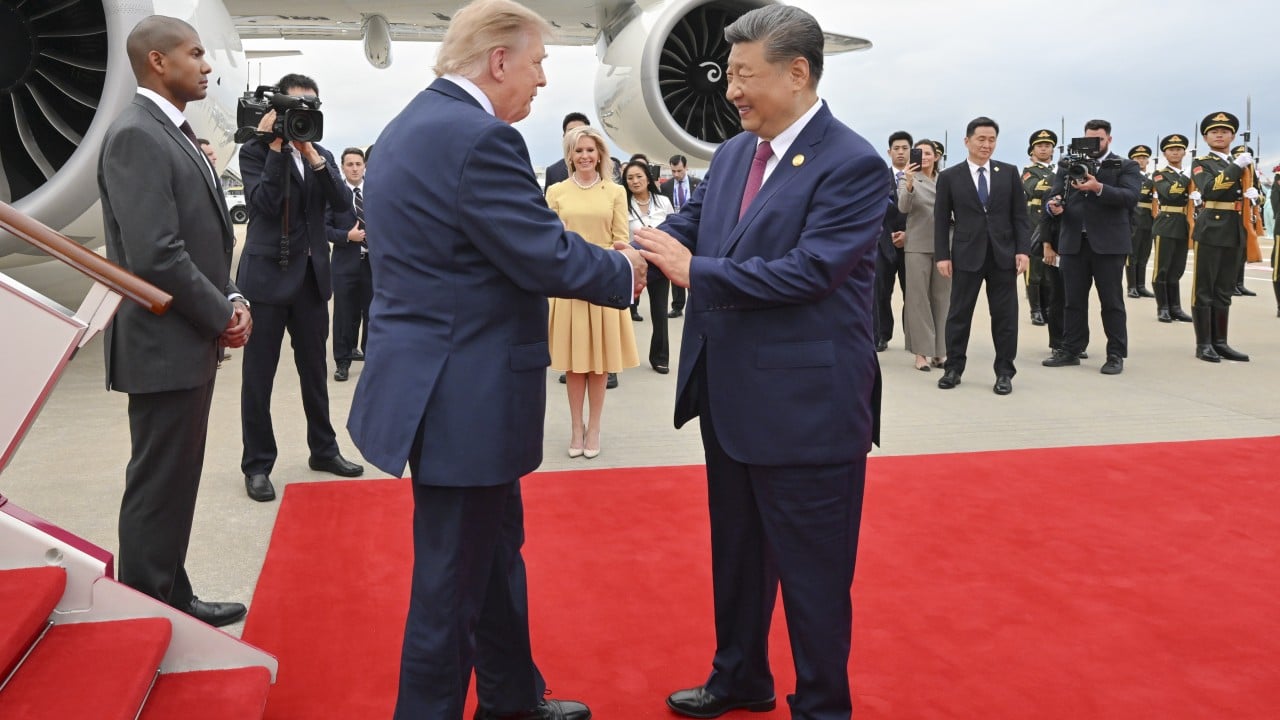
When Donald Trump stepped off Air Force One in Shenzhen for the 2026 APEC summit, mainstream commentators immediately locked onto a single visual detail. Standing a few paces behind the American president and Xi Jinping—who had broken decades of precedent by greeting a US leader directly on the tarmac—was Monica Crowley in a bright yellow dress. Within hours, outlets like the South China Morning Post were running profiles framing the former Fox News commentator and current US Chief of Protocol as the master architect behind Trump’s summit stagecraft.
That narrative is comforting. It is also completely backwards.
Treating the Office of the Chief of Protocol as the puppet master of high-stakes geopolitics is the laziest consensus in Washington journalism. It reduces brutal, structural power politics to event planning. It assumes that seating charts, motorcade choreography, and lapel pins move the needle when superpowers collide. They do not.
The Protocol Fallacy
Let’s look at what the Office of the Chief of Protocol actually does. Created in 1928, the office manages the ceremonial mechanics of American diplomacy. It accredits foreign ambassadors, coordinates Blair House stays, arranges gift exchanges, and ensures nobody accidentally insults a visiting head of state by serving the wrong wine or mispronouncing a title.
Monica Crowley assumed that post on May 30, 2025, bringing a Columbia PhD in international relations—written, notably, on Nixon and Truman’s China strategy—alongside decades of cable news combat. Her critics point to her media background and past controversies to argue she lacks traditional diplomatic polish. Her admirers claim her television instincts make her uniquely suited to "orchestrate" optics for a media-obsessed president.
Both camps miss the point.
In a standard administration, the Chief of Protocol has limited strategic leverage. In a Trump administration, that leverage drops to near zero. Donald Trump does not outsource his optics to a State Department office. He is his own advance team, his own stage director, and his own communications strategist. Nobody choreographs Donald Trump on a tarmac in Shenzhen. At best, a protocol chief keeps the logistical rails greased so the principal doesn't trip over a cable while improvising live on global television.
Why Xi Jinping Was Really on That Tarmac
The competitor narrative credits US protocol choreography for the striking visuals in Shenzhen. That ignores the most basic rule of summitry: the host controls the stage.
When Xi Jinping walked onto the Shenzhen tarmac on November 18, 2026, he wasn't following a script written by Monica Crowley. Chinese state protocol—managed by the Ministry of Foreign Affairs' Protocol Department and the General Office of the Communist Party—is the most tightly controlled political theater on earth. Nothing happens by accident within fifty yards of Xi Jinping.
Xi broke precedent for domestic and strategic reasons, not because Washington requested a nice photo op. By greeting Trump personally at the aircraft stairs, Beijing signaled two things simultaneously:
- To the Chinese public: China is a confident, magnanimous superpower welcoming an equal on its own turf—specifically in Shenzhen, the crown jewel of China’s tech-driven economic miracle.
- To Washington and Moscow: Ahead of an unprecedented trilateral sit-down involving Xi, Trump, and Vladimir Putin, Beijing wanted to establish itself as the indispensable host and mediator of global order.
Crediting the US Chief of Protocol for Xi Jinping’s tarmac appearance is like crediting a visiting theater troupe’s stage manager for the architecture of the Sydney Opera House.
Does Diplomatic Stagecraft Actually Change Policy?
People ask whether summit optics matter. The honest answer is brutal: optics are a lagging indicator, never a leading cause.
I have watched administrations burn millions of dollars and thousands of staff hours obsessing over summit choreography—arguing for weeks over the exact width of a conference table, the order of flag placements, or the length of a bilateral handshake—only to watch the resulting agreements collapse before the ink dries.
Look at the real news coming out of November 2026. While pundits were dissecting Monica Crowley’s dress on the Shenzhen tarmac, the actual US-China relationship was being shredded by structural friction. Days before the summit, internal rifts erupted in Washington over AI chip export controls, with Treasury Secretary Scott Bessent and Commerce Secretary Howard Lutnick clashing over restrictions on Nvidia hardware. Immediately after the summit, new export curbs threatened to blow up the fragile trade truce altogether.
No amount of protocol perfection fixes an export control war. No carefully staged motorcade resolves semiconductor supply chains, Taiwan Strait deterrence, or Russian sanctions.
Henry Kissinger—a figure Crowley worked under during her years assisting Richard Nixon—understood this distinction coldly. During the secret 1971 trips to Beijing and the 1972 Nixon summit, Kissinger and Zhou Enlai used ceremony strictly as a wrapper for hard, pre-negotiated geopolitical reality. The Shanghai Communiqué mattered because both nations needed a counterweight to the Soviet Union. The banquet toasts with Mao Zedong were merely the victory lap.
Today, Washington commentators have inverted the formula. They treat the victory lap as the race itself.
What Actually Matters in Modern Summitry
If you want to understand who actually shapes outcomes at summits like APEC 2026, stop watching the protocol chief and start tracking three things:
- Interagency cohesion before wheels-up. When Treasury, Commerce, and the National Security Council cannot agree on export restrictions 72 hours before a presidential flight, the summit is already compromised. Foreign adversaries read Federal Register notices far more closely than they read body language.
- The pre-cooked communiqué. Real diplomacy happens in windowless rooms in Geneva, Vienna, or Anchorage months before leaders pose for cameras. If the deliverables aren't locked before Air Force One lands, the trip is just expensive tourism.
- Domestic political constraints. A leader facing a hostile Congress or economic headwinds at home cannot make binding concessions abroad, regardless of how warm the state dinner looks.
The Counter-Argument Worth Taking Seriously
There is one area where protocol genuinely carries weight, and ignoring it would be dishonest. Protocol acts as a circuit breaker during moments of acute crisis.
When relations are on a knife-edge, strict adherence to diplomatic rules prevents accidental humiliation. In East Asian political culture especially, "face" is a tangible strategic asset. A botched greeting, an unannounced schedule change, or a perceived slight can give hardliners in Beijing or Washington the domestic ammunition they need to tank backchannel negotiations. In that narrow, defensive sense, Monica Crowley’s job is vital: she is paid to ensure ceremonial friction doesn't accidentally spark a real diplomatic fire.
Stop Confusing Visibility With Power
The media profiles Monica Crowley because she is telegenic, polarizing, and standing right next to the president in high-resolution wire photos. She makes for easy copy. Explaining the technical nuances of semiconductor export controls or trilateral nuclear stability does not.
The next time a major summit dominates your feed, ignore the pundits analyzing the seating chart and the protocol chief’s wardrobe. Look at the trade tariffs, the military deployments, and the interagency memos signed the week before. Ceremony is just the paint on the hull; it never steers the ship.