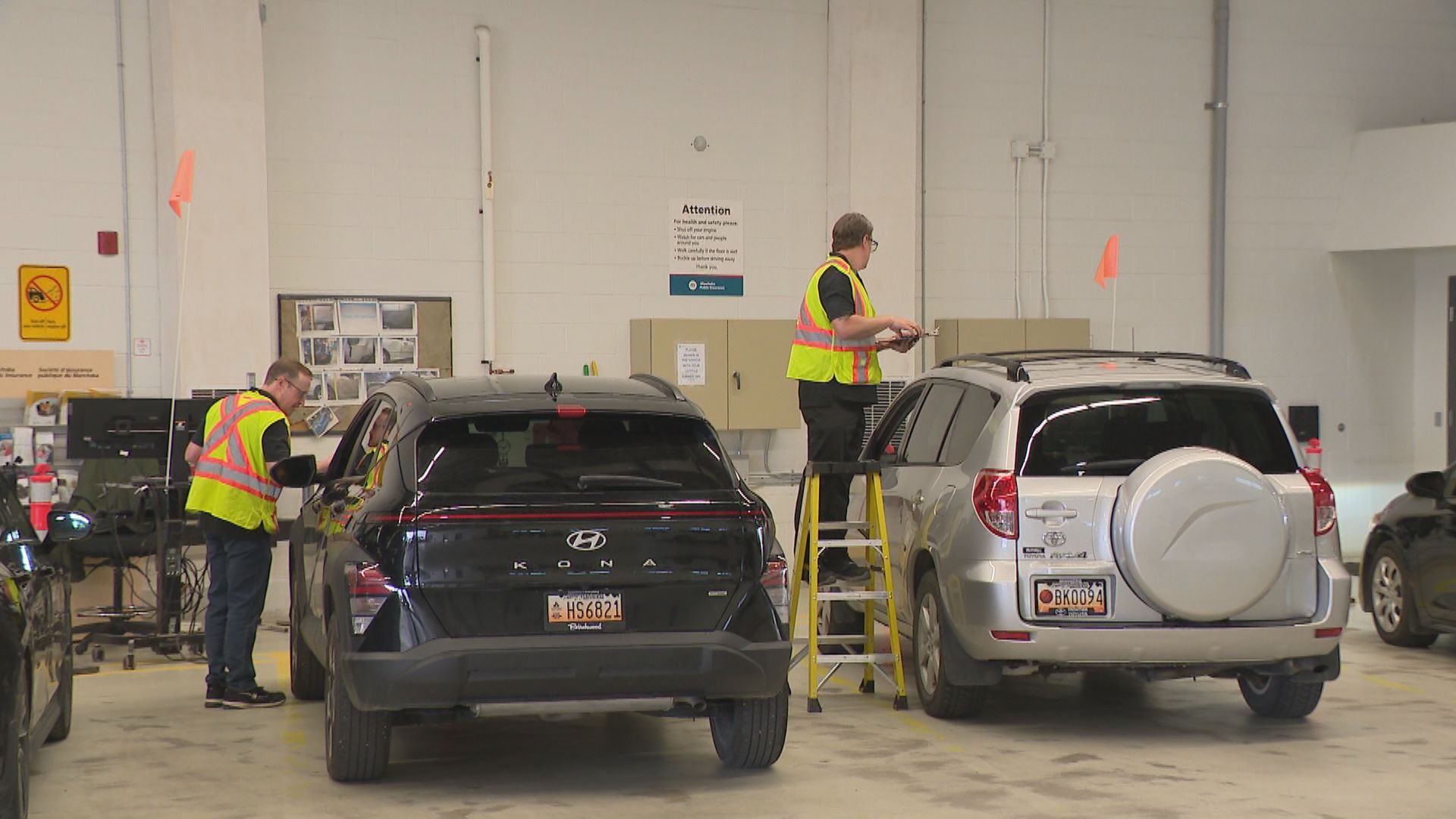
Manitoba Public Insurance wants a standing ovation for opening its new Gateway Road Hail Response Centre. The local news is feeding the frenzy, breathlessly reporting on the assembly-line efficiency of filtering 300 vehicles a day through a 15-minute drive-thru assessment. Drivers leave feeling relieved, clutching their freshly minted estimate papers, believing they are finally on the fast track to getting their storm-battered cars fixed.
It is an absolute illusion.
This entire pop-up catastrophe operation is corporate theater designed to manage public outrage, not solve a crisis. It shifts the massive backlog from the insurer’s phone lines directly onto the shoulders of an already choking local auto body industry. Processing 22,000 claims in record time means absolutely nothing when the actual repair pipeline is backed up for the next two years.
The Myth of the 15-Minute Victory
The math behind the Gateway Road operation looks impressive on a superficial press release.
- 300 vehicles assessed daily.
- 15 to 20 minutes per appointment.
- Seven days a week of non-stop operation.
But let's look at the mechanics of a 15-minute hail estimate. An estimator stands on a ladder, counts a few dozen dimples on the roof, notes a smashed windshield, and prints a sheet. That is not a comprehensive repair blueprint. It is a glance.
When those thousands of vehicles eventually roll into independent, accredited Winnipeg collision repair shops, those initial 15-minute estimates will fall apart. Real damage assessment requires clean surfaces, specialized lighting, and tearing down trim panels to see if structural pillars are warped.
The immediate result? A tidal wave of supplement requests. Shops will have to halt work, document the omitted damage, submit it back to the provincial crown corporation, and wait for approval. The administrative gridlock will simply mutate from a front-end scheduling problem to a back-end production nightmare.
The Auto Body Supply Chain Cannot Be Arbitraged
I have seen public auto insurance monopolies pull this exact playbook during previous extreme weather events. They claim success by clearing their internal queues. They boast about how fast their online portal processed the initial intake. They wash their hands of the bottleneck the second the claimant leaves the facility.
The reality on the ground is brutal. Winnipeg auto body shops were already struggling with systemic technician shortages and parts delays before the June 9 super-cell storm hit. You cannot suddenly dump an estimated 30,000 to 40,000 vehicle claims into a fixed-capacity geographic market and expect anything other than total system failure.
Consider the physical limits of local repair capacity. If every certified shop in the province maximizes production, working extended shifts, they can only process a finite number of panels per day. Paint booths take time to cycle. Paintless dent repair experts are flying in from across North America, commanding premium contract rates that drive up the real cost of execution.
Local shop managers are already warning that they are booking repairs into 2028. An accelerated estimate at Gateway Road does not manufacture a single hour of technician labor. It just gives the consumer a piece of paper that guarantees a multi-year wait.
The Crown Monopoly Flaw
In a competitive insurance landscape, a catastrophic storm triggers a market response. Private insurers compete on how fast they can settle claims, often offering total-loss write-offs more aggressively to clear their books and keep customers loyal. They have varying thresholds for what constitutes a economic repair versus a write-off based on their specific risk portfolios.
Under a single-payer public monopoly like Manitoba Public Insurance, the threshold is rigid. The focus leans heavily toward processing everything through standard accredited channels to protect the pool fund. When the scale of damage reaches historical heights, the monopoly model exposes its rigidity.
By steering thousands of drivers toward a centralized response facility, the insurer standardizes the valuation process in a way that minimizes immediate financial outflows for the crown corporation while maximizing the logjam for the private businesses tasked with doing the actual work.
The Flawed Premise of Early Assessment
The media keeps asking whether insurance rates will climb next year because of this historic storm. That is the entirely wrong question. The real question is how many vehicle owners will simply pocket an initial cash settlement for a drivable, dented vehicle, fundamentally degrading the valuation of the province's secondary automotive market.
When faced with a twenty-four-month wait to fix a hood that looks like a golf ball, a significant percentage of policyholders will opt to take a payout and live with the cosmetic damage. This creates a massive fleet of compromised vehicles on Manitoba roads. It drives down resale values across the board and leaves consumers exposed to massive out-of-pocket losses if those same vehicles are involved in a subsequent collision.
The temporary response plan encourages people with drivable damage to get estimated and then "work with the shop." It sounds cooperative. In practice, it forces small business owners to act as the bad guys, explaining to angry consumers why their car cannot be touched until the next federal election.
Shifting the Catastrophe Downstream
True operational efficiency is measured by completed repairs, not by the speed of intake logging. The Gateway Road center is a textbook example of sub-optimizing a single metric to create the appearance of agility.
Imagine a manufacturing facility that quadruples its raw material intake without adding a single machine to the assembly line. The factory floor doesn't produce more goods; it just becomes a warehouse for clutter. That is Winnipeg's automotive ecosystem for the foreseeable future.
The dedicated hail center will shut its doors in two or three months, declare a logistical victory, and return to normal operations. Meanwhile, the actual crisis will just be beginning for the local repair trade, buried under a mountain of paperwork, impossible customer expectations, and a structural deficit of labor that no pop-up tent can fix.