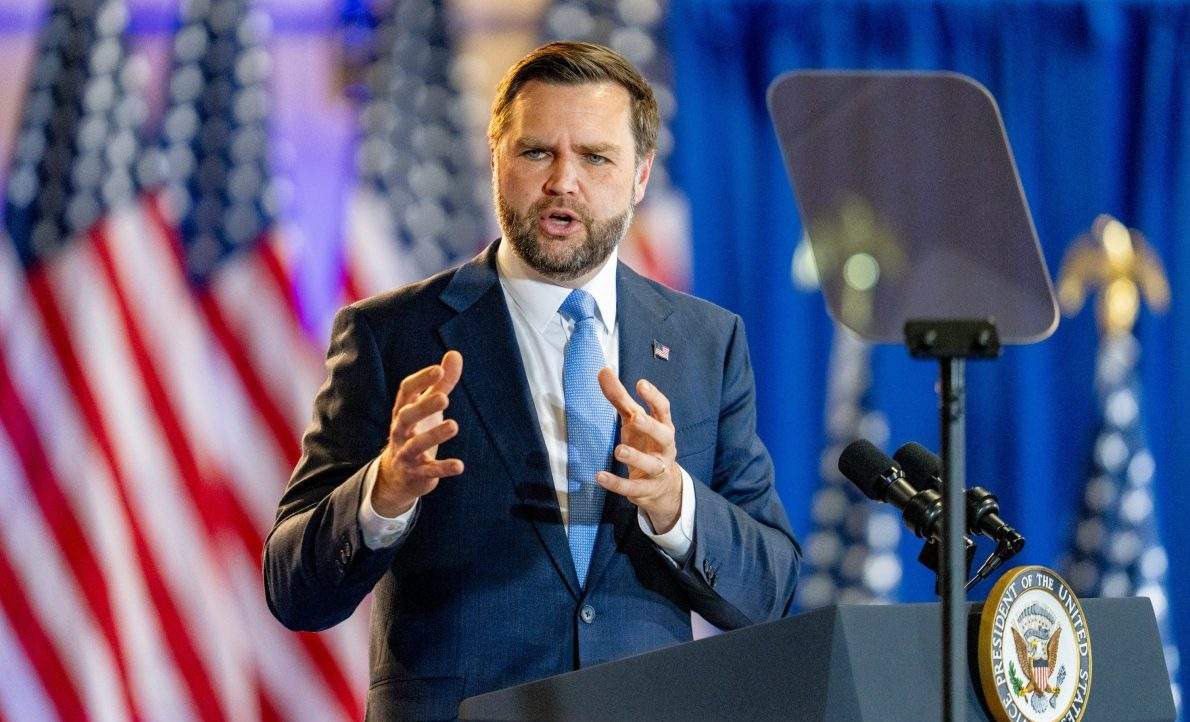
The media wants you to hyperventilate over J.D. Vance calling Canada a state. They are framing it as a microaggression, a Freudian slip, or a deliberate imperialist dog whistle from a Washington administration spoiling for a fight. Prime Minister Mark Carney and Ontario Premier Doug Ford are playing their assigned roles to perfection, clutching their pearls about sovereignty, suspending talks, and threatening to lock down critical mineral supply chains.
It is all political theater masking an economic reality nobody in Ottawa wants to admit out loud: Canada stopped being a distinct economic entity the moment it tied its demographic growth, currency velocity, and industrial supply lines entirely to the American consumer base. Vance did not commit a slip of the tongue. He stated an architectural truth about North American trade dependency that makes Canadian nationalists squirm.
Let us dispense with the polite fiction that a nation sending nearly seventy-five percent of its exports south of an undefended border operates as a sovereign superpower. Sovereign nations with independent leverage do not panic when automotive tariffs hit fifty percent; they diversify. Canada hasn't. For decades, Ottawa used the American security umbrella as a subsidy to run down its own defense capabilities, pouring capital into domestic social programs while treating the United States as both an ATM and a shield.
When Carney walked away from the bargaining table, the mainstream press reported it as a courageous stand for national dignity. That is economic illiteracy. Canada does not have the luxury of walking away when its largest trading partner decides to rewrite the rulebook. The U.S. market is an existential necessity for every maple syrup producer in Quebec, every tech hub in Vancouver, and every auto parts manufacturer in Ontario. Without it, the Canadian treasury dries up overnight.
The Myth of Bilateral Reciprocity
We need to address the lazy consensus that bilateral trade between equals defines the current U.S.-Canada dynamic. It does not. An asymmetric partnership is not a partnership; it is an economic dependency disguised by polite diplomacy.
For years, I have watched corporate boards and trade analysts evaluate cross-border agreements as if both sides held equal cards. They don't. Imagine a scenario where a subsidiary threatens to fire its parent company. That is essentially what happens every time a provincial premier threatens to cut off electricity or minerals to the United States. The friction hurts both, but one side absorbs a bruised ego while the other absorbs an existential shock to its GDP.
Vance pointed out that Canada acts as a backdoor for Chinese transshipments, dodging U.S. protectionist walls. That is not a wild conspiracy theory; it is standard supply chain arbitrage. When you share a porous, multi-thousand-mile border with a global superpower, your economic policy is written in Washington, whether your prime minister admits it on television or not.
Carney wants to posture as a tough negotiator who will only return to discussions when Washington respects Canadian sovereignty. It plays well to domestic voters tired of being treated like a punchline. But bravado does not pay for public healthcare systems buckling under strain or close structural budget deficits.
Why the Tariff Fallout is a Wake-Up Call
The collapse of these trade talks exposes the deep rot of complacency in Canadian governance. For generations, Ottawa coasted on the assumption that geographic proximity and historical affinity guaranteed perpetual preferential treatment. That era ended the day Washington prioritized domestic manufacturing over hemispheric harmony.
The 50% auto tariff threat is not a temporary negotiating tactic you can outlast with retaliatory liquor boycotts. It is a structural redesign of North American commerce. The U.S. is signaling that integration without alignment is dead. If you want access to the American consumer, you match American security spending, you align your trade barriers against third-party actors like China, and you stop treating the U.S. market as a unilateral privilege.
Canada has two choices. It can keep playing the indignant victim while its economic foundation erodes under mounting protectionist pressure, or it can accept the hard geometric reality of its geography. Sovereignty isn't a speech given by a prime minister in Levis; it is the economic leverage to back it up. Right now, Ottawa has the rhetoric, but Washington has the leverage.
Stop buying the narrative that this is just another diplomatic spat that will blow over with a change in administration. The map hasn't changed, and neither has the balance of power.