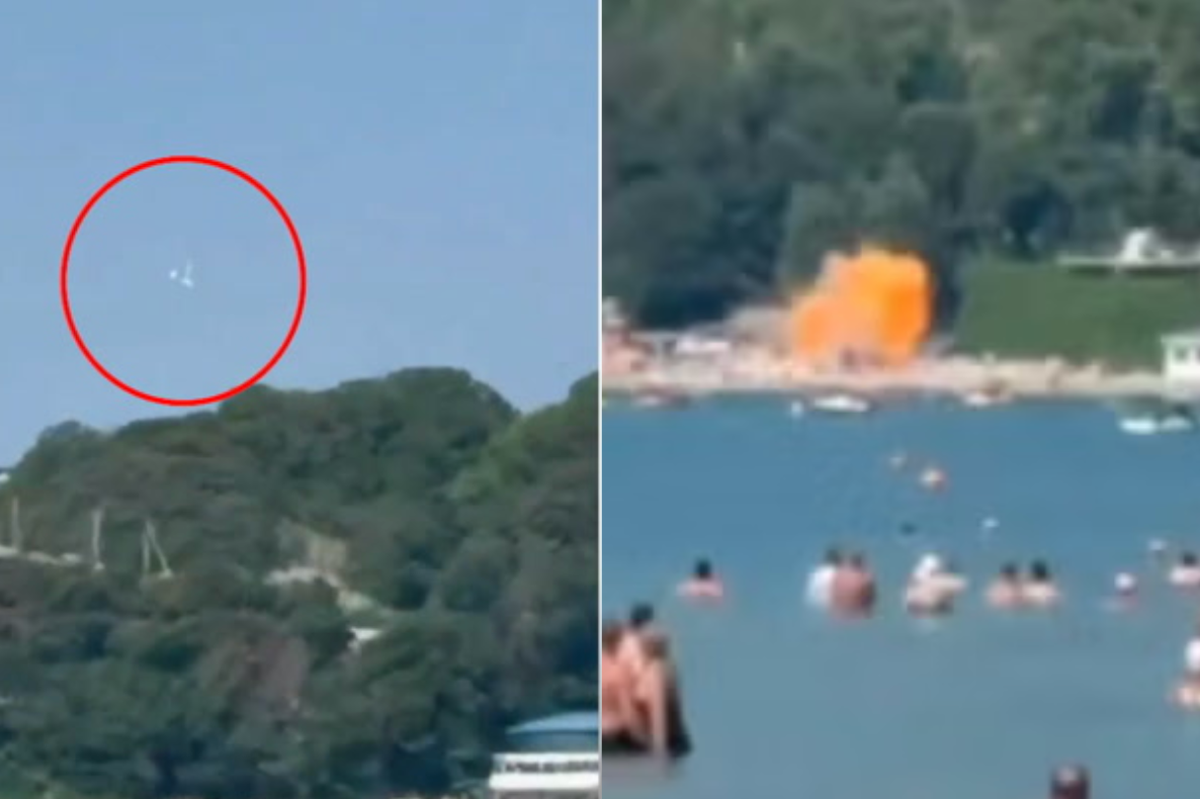
The media wants you to believe that a tragedy on a beach in Crimea is a random stroke of bad luck. They paint a picture of sunbathers sipping lemonade, completely blind to the geopolitical maelstrom surrounding them, until fate cruelly intervenes.
It is a comfortable narrative. It allows everyone to point fingers, feign shock, and pretend that consequence is optional.
It is also complete nonsense.
Let us stop sanitizing reality for the sake of polite discourse. If you park your towel on a heavily militarized peninsula that serves as a primary logistical hub, naval base, and staging ground for an active, brutal invasion, you are not testing your luck against a stray lightning bolt. You are participating in a lethal gamble with the house.
The Geography of Denial
For over a decade, the Crimean peninsula has not been a resort destination. It is occupied territory. It is an armed camp bristling with S-400 air defense batteries, radar installations, ammunition depots, and military airfields. Every square inch of its coastline and airspace is a legitimate military objective under international law.
When mainstream outlets run headlines about civilians caught in the crossfire on a sunny afternoon, they deliberately obscure a fundamental rule of modern conflict: Geographic proximity to military infrastructure erodes civilian immunity in practice, even if it remains intact on paper.
You cannot turn an aircraft carrier into a sunbathing deck and then act surprised when enemy ordnance targets the hull.
I have spent years analyzing conflict zones and military logistics. I have watched analysts, intelligence officers, and risk assessors pull their hair out over the sheer audacity of human normalization. People adapt to anything. Put enough palm trees next to an occupancy zone, and tourists will happily check into a hotel fifty yards away from a primary supply artery for a mechanized army.
They convince themselves that war respects vacation schedules. It does not.
Dismantling the Human Shield Fallacy
Let us address the uncomfortable mechanism behind these incidents. Military commanders across history have understood a grim reality: putting high-value assets near civilian populations creates an effective, if cynical, defensive buffer.
When a nation uses a contested region for recreation while simultaneously moving troops, fuel tankers, and command posts through the exact same transport networks, they create an impossible targeting dilemma. If the adversary strikes the military asset, civilian casualties are practically guaranteed due to proximity. If the adversary holds fire, the military asset operates with impunity.
Blaming only the terminal kinetic strike ignores the calculated decisions made long before the missile or drone ever left the launchpad.
The lazy consensus in international reporting treats every civilian casualty in a war zone as an unprovoked massacre disconnected from context. It strips away the agency of the individual who chose to vacation in a combat zone, and it absolves the occupying power of using civilian proximity as an operational shield.
Both things can be true at the exact same time: a tragic loss of life is devastating, and walking willingly into an active theater of war is staggering negligence.
The Myth of Safe Zones in Total War
People love to ask: "Aren't civilians protected by international humanitarian law regardless of where they are?"
The textbook answer is yes. The practical answer is an absolute, resounding no.
International humanitarian law requires combatants to take feasible precautions to minimize civilian harm. It also requires civilians to avoid operating in close proximity to military objectives precisely because those objectives invite attack. When a government actively encourages tourism to a strategic peninsula during an active war, they are using human bodies as geopolitical ballast.
Tourists flocking to coastal hotels in Crimea are told by state media that air defenses are impenetrable. They are sold a bill of goods. They are told that the umbrella of protection is so absolute that families can splash in the surf without a care in the world.
That is not just misleading. It is homicidal marketing.
When those air defenses fail—as they inevitably do when intercepting high-speed supersonic missiles or swarming loitering munitions—the debris falls somewhere. And that somewhere is usually the crowded beach directly beneath the flight path of the intercept.
The Cold Calculus of Risk
Let us look at the data points that the soft-focus news coverage leaves out.
- Strategic Proximity: Most Crimean beaches sit within a few miles of key logistics rail lines, military ports, or radar stations.
- Air Defense Interception Zones: Intercepting a drone or a missile over a city or a populated coastline guarantees that falling shrapnel will rain down on unarmored targets.
- State-Sponsored Normalization: Domestic tourism campaigns in occupied regions are explicitly designed to project normalcy and assert sovereignty, weaponizing civilian presence to deter strikes.
When you pack your bags for a vacation spot that doubles as an active logistical throat for a military campaign, you are not a neutral observer. You are a pawn in a sovereignty contest.
Stop Waiting for War to Play Fair
The tragedy of civilians losing their lives on a beach is visceral and heartbreaking. It makes for compelling television and visceral social media outrage.
But outrage is a poor substitute for situational awareness.
Until we stop pretending that war zones can be partitioned into safe zones by sheer willpower, people will continue to pay the ultimate price for state propaganda and personal denial. War does not respect your itinerary. It does not care about your sunburn.
If you choose to vacation on a battlefield, you are sharing the risk profile of the army stationed next door.
Stop blaming the weather. Stop acting like the catastrophe dropped out of a clear blue sky.
Geography is destiny, and ignorance is lethal.