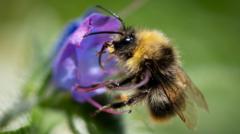
The Sugar Water Delusion
Your backyard sugar-water station isn't saving the environment. It's an ecological junk food drive that concentrates disease, disrupts native forage patterns, and rewards human vanity while bumblebee populations quietly implode.
Every summer, the same well-intentioned advice sweeps through media outlets across the UK: the moment temperatures spike, leave out a spoonful of sugar dissolved in water to "revive" an exhausted bumblebee. It sounds simple. It feels heroic. It's complete nonsense.
Feeding high-concentration sucrose solution to wild pollinators is the ecological equivalent of handing a dehydrated marathon runner a cans of energy drink in the middle of a desert. It gives them a temporary spike in energy while completely ignoring the underlying physiological crisis: heat stress, lack of micro-nutrients, habitat fragmentation, and exposure to pathogens. Worse, these artificial feeding stations act as superspreader hubs for microsporidian parasites like Nosema bombi and Crithidia bombi, allowing infected individuals to pass deadly gut parasites directly to healthy populations.
If you actually care about pollinator survival during extreme heat, you need to throw out the lazy internet advice and understand how wild bee physiology actually functions under climate stress.
Why Heatwaves Kill Bumblebees (It Is Not Starvation)
The popular narrative assumes that a sluggish bee on a hot pavement is just hungry. That assumption is flatly wrong.
Bumblebees are cold-adapted organisms. Their bodies are built for temperate, cool climates—covered in dense hair (setae) and engineered to maintain internal thoracic temperatures above 30°C even on chilly spring mornings. When ambient UK temperatures break past 30°C, bumblebees face a critical thermal threshold, not a caloric deficit.
Thermal Stress and Desiccation
- Hyperthermia: Once a bumblebee’s internal temperature pushes past critical limits, its flight muscles cease to function efficiently. The insect drops to the ground to avoid overheating.
- Desiccation: Flying in hot, dry air rapidly drains metabolic moisture. What that insect needs is shade and humidity, not a concentrated syrup that requires additional internal water to digest.
- Resource Evaporation: High heat causes flower nectar to evaporate rapidly, leaving behind hyper-viscous sugar solutions that bees struggle to lap up, while simultaneously scorching delicate floral blooms.
When you offer sugar water to an overheated bee, you are forcing an already heat-stressed insect to expend critical metabolic energy processing complex carbohydrates rather than cooling down in shade.
The Backyard Trap: How Individual Interventions Fail
I have watched well-meaning conservation campaigns sink millions into public awareness drives that promote superficial micro-actions while ignoring structural habitat loss. We tell citizens to plant a single lavender bush in a plastic container and leave out a bottle cap of sugar water, telling them they've "done their part."
It creates a false sense of accomplishment that pacifies public demand for actual ecological accountability.
+-----------------------------------------------------------------------+
|                       THE VECTORED DISEASE CYCLE                      |
|                                                                       |
|   [ Infected Bee ]  --->  Drops pathogen on public spoon / feeder    |
|                                         |                             |
|                                         v                             |
|   [ Healthy Bees ]  <---  Feed from the exact same unsterilized spot  |
|                                         |                             |
|                                         v                             |
|   [ Colony Collapse ] <--- Hive infected via worker cross-contamination|
+-----------------------------------------------------------------------+
When hundreds of neighborhood gardens set out stagnant, unsterilized sugar feeders, they create artificial feeding bottlenecks. Instead of dispersing across natural floral corridors, bees from multiple distinct hives aggregate at a single unsterilized plastic dish. Pathogenic loads spike. Diseases that would normally burn out in isolated colonies spread freely across entire urban postal codes.
What Actually Works: Real Strategies for Heat Resilience
If you want to create a space where wild pollinators can survive 35°C summers, stop treating your garden like a soup kitchen and start managing it like a micro-climate ecosystem.
1. Build Micro-Refugia, Not Feeding Stations
Bees do not die in heatwaves because they ran out of sugar; they die because they ran out of shade and moisture.
- Create Cool Soil Micro-zones: Place heavy, unglazed terracotta tiles directly over bare soil in heavily shaded corners. Soil under terracotta stays significantly cooler than ambient air temperatures, giving bees a safe surface to dump heat.
- Drip-Irrigated Pebble Trays: Fill shallow dishes with gravel, moss, and clean water. Bees cannot swim; they drown in deep open liquids. A wet moss-and-pebble tray provides ambient humidity and direct drinking water without the lethal risk of deep water or sticky sugar residue.
2. Prioritize Thermally Resilient Native Flora
A garden full of ornamental, heavily hybridized garden-center flowers is an ecological desert. Many modern nursery cultivars produce zero functional pollen or nectar, selected strictly for petalled appearance over biological utility.
- Viper's Bugloss (Echium vulgare): Produces nectar deep inside tubular flowers, protecting the reward from rapid heat evaporation.
- Red Clover (Trifolium pratense): Deep taproots allow it to continue nectar production long after surface-rooted garden flowers have withered in dry spells.
- Borage (Borago officinalis): Replenishes nectar reserves every two hours, offering a continuous, heat-stable carbohydrate source.
Stop Asking the Wrong Questions
The mainstream discussion around urban conservation asks: "How can I help the bee on my patio today?"
That question is fundamentally flawed. It prioritizes human emotional gratification over systemic ecological impact. The question you should be asking is: "How do we restore thermal buffers and deep-rooted forage networks across urban landscapes?"
Relying on hand-feeding individual insects is an admission of complete structural failure. It ignores the reality that local councils continue to mow roadside verges into barren green deserts during peak blooming months, while residential developers pave over front gardens for off-street parking.
Leave the sugar in the pantry. Plant deep-rooted native flora. Create damp, shaded micro-habitats. Stop treating wildlife like pets and start giving them the functional habitat they actually need to survive.