"Be realistic" is the favorite battle cry of failed urban planners.
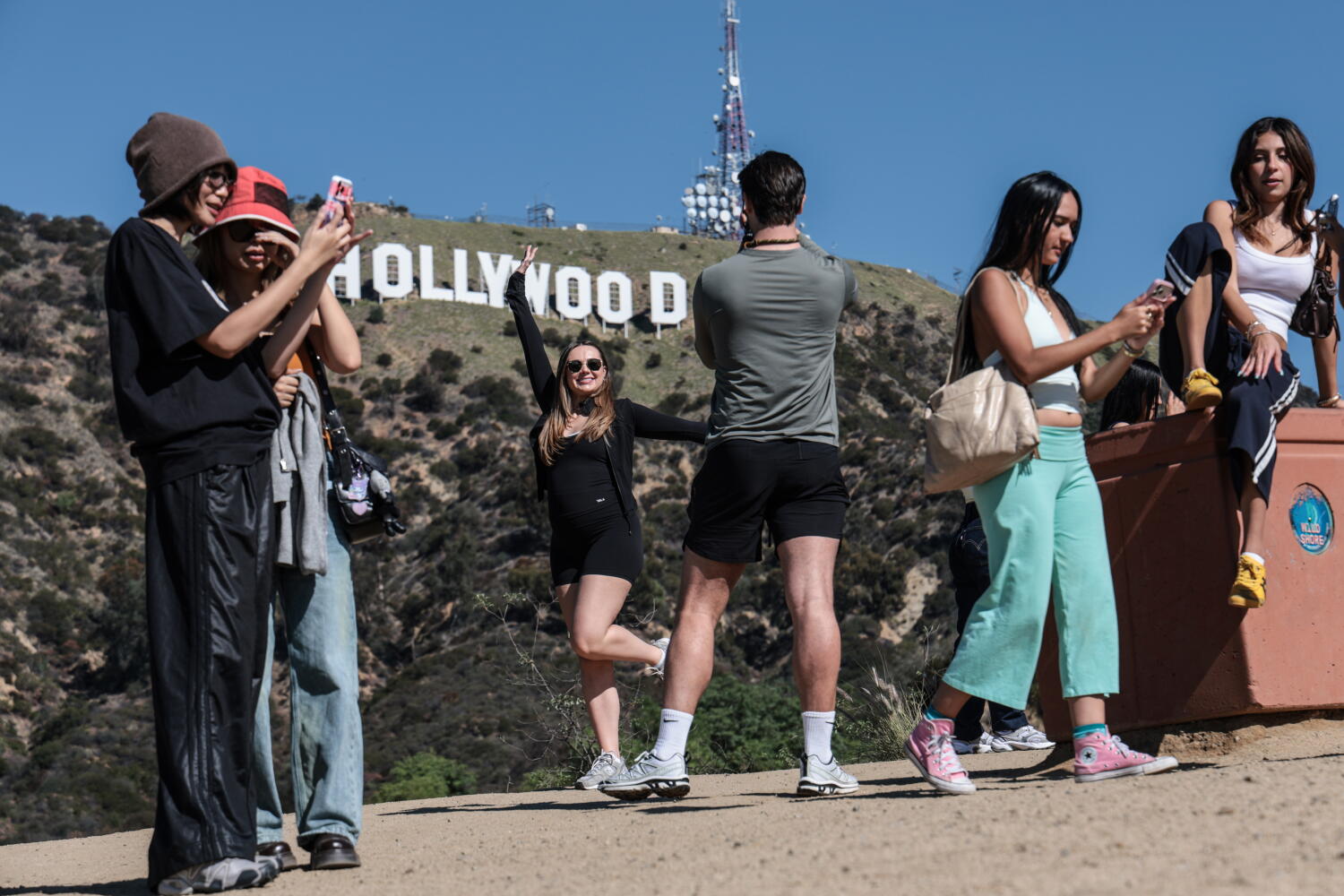
Every few months, the same tired debate resurfaces in the letters to the editor of Los Angeles newspapers. Residents of Beachwood Canyon and Lake Hollywood demand barricades, permit-only parking, and heavy police enforcement to choke off the flow of tourists trying to get a selfie with nine giant white letters on Mount Lee. On the other side, weary pragmatists sigh and tell the neighborhood to "be realistic"—to accept the gridlock, build a massive viewing platform, or surrender the narrow hillside roads to the inevitable crush of global tourism. Also making news in this space: Glass, Steel, and the Weight of the Crowd.
Both sides are dead wrong.
The residents are fighting a war against human nature, and the pragmatists are trying to solve an infrastructure bottleneck by building a wider funnel. If you want to understand why Los Angeles has spent decades failing to manage the Hollywood Sign, you have to stop treating it like a traffic problem and start treating it like what it actually is: a classic, textbook case of induced demand and catastrophic product design. More information regarding the matter are detailed by Lonely Planet.
The Lie of "Realistic" Infrastructure
I have spent years consulting on high-volume destination management and municipal crowd control, and I have watched cities burn tens of millions of dollars on the exact kind of "realistic" solutions currently being pitched for the Hollywood Hills.
When local commentators argue that Los Angeles needs to "be realistic" about Hollywood Sign visitors, they usually mean one of two things. Either they want the city to pave over the friction—build a dedicated visitor center, install a tram, widen the access points—or they want the city to accept permanent residential misery as the cost of doing business in a tourist town.
Here is the brutal reality of urban planning that nobody in those letters wants to admit: you cannot build your way out of congestion at a singular geographic bottleneck.
In transportation economics, there is a well-documented principle known as the Fundamental Law of Road Congestion, rigorously proved by economists Gilles Duranton and Matthew Turner. The rule is simple. When you expand capacity to relieve traffic—whether by adding lanes to a highway or building a shiny new tourist tram up a mountain—you do not eliminate the congestion. You simply lower the cost of the trip (measured in time and frustration), which immediately attracts latent demand until the system clogs right back up to its previous level of misery.
If Los Angeles builds an aerial tram or a massive parking structure near Mount Lee, it will not clear the cars out of Beachwood Canyon. It will turn a regional annoyance into an industrial-scale throughput machine, multiplying total foot traffic by a factor of five while the overflow still spills onto Deronda Drive and Mulholland Highway.
You don't fix a flooded basement by installing a bigger pipe from the street.
Why the Hollywood Sign Is Broken by Design
To understand the chaos on Mount Lee, look at the physical geometry of the problem. The Hollywood Sign sits inside Griffith Park, a 4,210-acre urban wilderness, yet it is geographically wedged right above a network of narrow, winding, 1920s-era residential streets originally graded for horses and Model Ts.
There is no sidewalk infrastructure. There are blind hairpin turns. There are fire hydrants that get blocked every Saturday afternoon by rental Mustangs idling while a passenger runs out to take a vertical video.
The lazy consensus blames the tourists. It paints visitors as entitled trespassers who ignore Google Maps reroutes and stomp over private lawns. That is a comforting lie for locals, because it turns a systemic failure into a moral failing.
Tourists are not evil. They are rational actors responding to terrible signage and a broken user experience. When a family flies four thousand miles to Los Angeles, opens their phone, and types "Hollywood Sign" into a navigation app, the algorithm does what it is programmed to do: it calculates the shortest physical distance between their current coordinates and the target pin.
For years, that pin dropped them directly onto residential dead-ends with zero turnaround radius. Even after the city lobbied tech companies to scrub certain residential streets from routing algorithms, the problem merely shifted to the next closest neighborhood. Why? Because the city of Los Angeles refuses to separate the brand from the location.
The Counter-Intuitive Fix: De-Market the Mountain
If you ask "How do we accommodate millions of visitors at the Hollywood Sign?", you have already lost. The mountain cannot hold them. The brush fire risk alone—in a region where dry Santa Ana winds can turn a discarded cigarette or an overheated catalytic converter into a billion-dollar inferno—makes mass tourism on those ridges a ticking time bomb.
Instead, ask the question urban planners are too terrified to utter: How do we make going to the sign completely unappealing without banning a single person?
Smart destinations don't fight demand with concrete; they redirect it with psychology and friction. Look at how the world's most overwhelmed landmarks actually survive. When the Faroe Islands realized fragile hiking trails were being destroyed by overtourism, they didn't pave the trails. They closed them for maintenance, framed the closure as an exclusive conservation effort, and redirected visitors to durable, high-capacity alternatives. When Amsterdam wanted to stop stag parties from ruining its historic center, it didn't build bigger bars; it launched a targeted digital campaign telling rowdy tourists to stay away, intentionally raising the social friction of the trip.
Los Angeles needs to stop acting like a passive victim of its own landmark and start actively managing the funnel. That requires three aggressive moves that will make both the neighborhood activists and the Chamber of Commerce furious.
1. Kill the "Close-Up" Myth
The irony of the Hollywood Sign is that the closer you get to it, the worse it looks. Up close, it is a collection of aging, corrugated sheet-metal panels bolted to steel scaffolding, fenced off by chain-link and monitored by motion sensors. It is an industrial billboard, not the Parthenon.
The iconic image every tourist actually wants—the sweeping, cinematic shot of the letters nestled into the Santa Monica Mountains—can only be captured from a distance. Yet the city does almost nothing to aggressively market its superior, high-capacity vantage points. Locations like the Griffith Observatory, Lake Hollywood Park's lower meadows, or the elevated terraces of Ovation Hollywood on Hollywood Boulevard offer vastly better sightlines, actual bathrooms, and mass-transit access.
Instead of spending millions on hillside enforcement, the city should treat the residential approach roads like an undesirable product. Strip away any municipal amenities near the trailheads. Eliminate all street parking within a two-mile radius of the residential access points—not with confusing permit signs that tourists ignore, but with aggressive, dynamic geofencing in navigation apps and instant, automated license-plate camera enforcement.
2. Price the Friction, Not the View
Right now, the cost of clogging up Beachwood Canyon is paid entirely by residents and the Los Angeles Fire Department. The tourist pays zero dollars to park on a blind curve, and if they get a ticket, a rental car company quietly bills their credit card three weeks later. The feedback loop is broken.
In economics, when a shared resource has zero upfront price, it gets destroyed—a phenomenon Garrett Hardin famously termed the Tragedy of the Commons.
If you want to stop cars from entering the Hollywood Hills, stop writing $73 parking tickets that feel like a cheap valet fee to an international traveler. Deploy automated camera enforcement at the canyon mouths that issues immediate, escalating congestion fees for non-resident vehicles during peak hours. Make the drive up the hill cost $50 just to enter the zone, while simultaneously making the shuttle from the Hollywood/Highland Metro station free.
Watch how fast "unstoppable" tourist demand evaporates when the price signal hits them before they turn the steering wheel.
3. Build a Decoy Experience
Purists hate this idea, which is precisely why it works.
Consider how Las Vegas or major theme parks manage massive crowds. They understand that 80% of visitors do not want a rugged, two-hour uphill hike in 90-degree heat. They want a ten-minute photo op, a cold drink, and air conditioning. Right now, those 80% are being forced onto narrow mountain fire roads because there is no friction-free alternative that satisfies the visual itch.
Imagine a scenario where Los Angeles builds a massive, high-design, elevated skywalk or interactive viewing terrace directly above the Hollywood Boulevard transit hub—complete with calibrated optical viewfinders, curated lighting, and unobstructed sightlines to the actual sign on Mount Lee. Pair it with zero-cost transit access and heavy promotion across every travel app and airline magazine on earth.
You siphon off the casual photo-seekers at the base of the hill, leaving the actual trails in Griffith Park to the hikers who actually want to walk in nature.
The Honest Downside Nobody Mentions
There is a catch to this approach, and anyone pitching a clean, painless solution is lying to you.
If you use aggressive congestion pricing, geofencing, and decoy hubs to push casual tourists out of the hills, you inevitably create a two-tier system. Wealthy visitors won't care about a $50 canyon toll; they will pay it and drive up anyway, effectively turning public access to a public park into a luxury good. Meanwhile, working-class Angelenos who just want to take their kids hiking on a Saturday morning get caught in the bureaucratic crossfire of permit systems, app registrations, and toll cameras.
Furthermore, redirecting crowds to Hollywood Boulevard doesn't make the people disappear. It simply trades a suburban traffic jam in Beachwood Canyon for an urban crowd-control headache on Hollywood and Highland—an area already struggling with sidewalk congestion and safety concerns.
You never eliminate pressure in a dense city. You only decide where you are willing to absorb it.
Stop Negotiating With Gravity
The letters to the editor will keep coming because complaining about traffic is Los Angeles's favorite civic pastime. Residents will keep demanding that the city somehow make a world-famous monument invisible to the world, and armchair pragmatists will keep preaching a watered-down "realism" that amounts to surrendering public safety for tourist dollars.
Both camps are clinging to the fantasy that you can have a quiet, sleepy residential neighborhood sitting directly underneath the most photographed hillside on planet Earth without radical intervention.
You can't. Either Los Angeles weaponizes pricing, navigation algorithms, and urban design to push the crowds back down to the flatlands where the transit lines live, or the city can keep pretending that a few more orange traffic cones will stop eight million people from trying to take the exact same picture.
Put the cameras at the canyon mouths, kill the street parking, and move the party back to Hollywood Boulevard.


