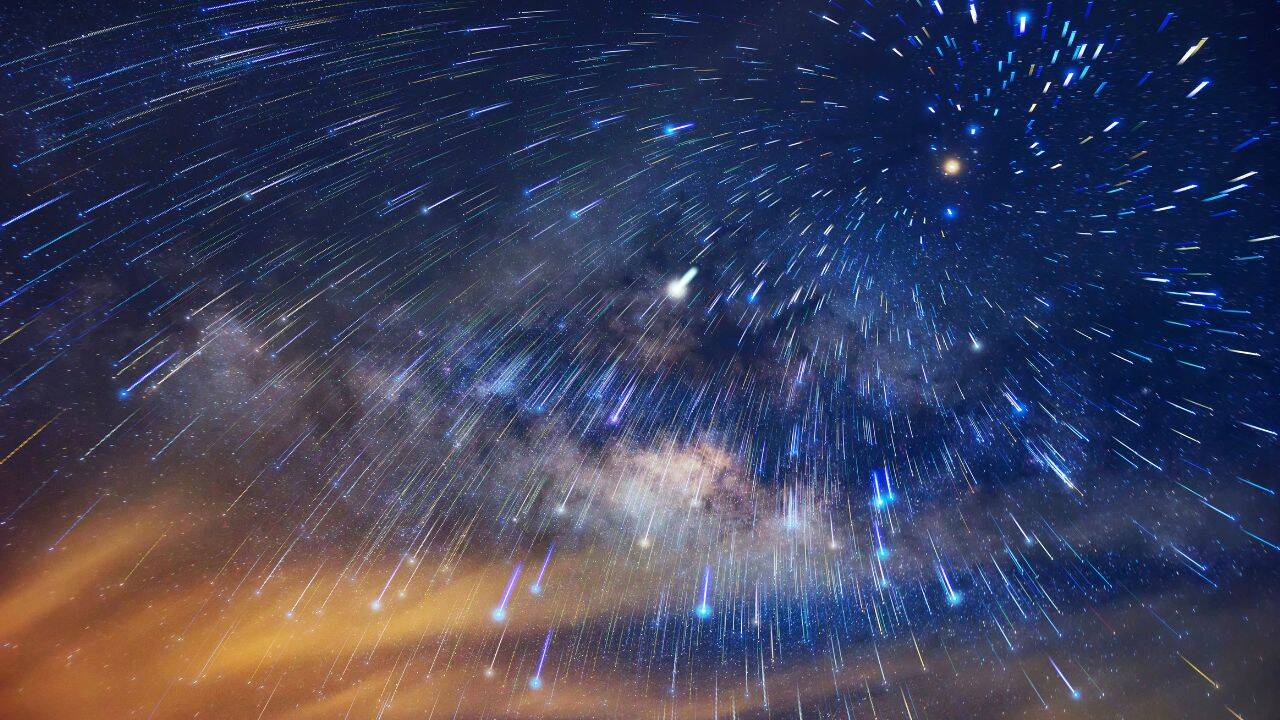
Every single autumn, the exact same copy-pasted press releases flood your newsfeed. NASA drops a routine skywatching update, and within hours, every mainstream outlet is breathless about a "stunning November supermoon" colliding with the Leonids and the Taurids.
Here is the reality nobody in astronomy media wants to admit because clicks pay the bills: most of what you are being told to stay up freezing for is an optical letdown.
I have spent over a decade hauling heavy glass and tracking mounts into sub-zero fields across North America. I have watched hundreds of wide-eyed beginners drive two hours out of city limits, set up lawn chairs in muddy pastures, and go home bitter because the "spectacular celestial show" looked like a slightly bright Tuesday night with two faint streaks in four hours.
If you follow the lazy consensus of mainstream stargazing guides this month, you are setting yourself up for disappointment. Let’s strip away the hype, look at the actual orbital mechanics, and talk about what is actually worth losing sleep over in November’s night sky.
The Supermoon Illusion Is Pure Marketing
Let’s start with the biggest offender in modern astronomy journalism: the "supermoon."
First, the term wasn't even coined by an astronomer. Astrologer Richard Nolle invented it in 1979. Astronomers call it a perigee-syzygy—the moment when a full moon coincides with the moon reaching its closest orbital point to Earth.
The headlines tell you the moon will look massive. Giant. Unmissable.
The math says otherwise.
At perigee, the moon is roughly 226,000 miles away, compared to its average distance of 238,900 miles. That translates to an apparent size increase of about 7 percent compared to an average full moon, and up to 14 percent larger than a moon at apogee (its farthest point).
Put a quarter next to a nickel on a table across the room. Now squint. Unless you have both coins sitting side-by-side for direct visual comparison, your brain cannot register a 7 percent difference in angular diameter. The only reason the moon ever looks enormous when it rises is the Ponzo illusion—a psychological trick where your brain compares the moon against foreground objects like trees, buildings, and distant ridges. That illusion happens during every moonrise, regardless of whether the moon is at perigee or apogee.
Even worse? A full supermoon is the single worst thing that can happen to a November night sky if you actually care about stargazing.
A perigee full moon is roughly 15 percent brighter than an average full moon and up to 30 percent brighter than an apogee full moon. In practical terms, it acts like a massive orbital floodlight. It bleaches the sky, ruins your eyes' dark adaptation (which takes 20 to 30 minutes of complete darkness to build via rhodopsin regeneration in your rod cells), and wipes out faint stars, nebulae, and every single dim meteor trying to burn up in the upper atmosphere.
If you want to actually see the moon's surface—the craters, the mountain ranges, the rilles—never look at it when it is full. Direct sunlight hits the lunar surface straight on, eliminating all shadows and turning a rugged, three-dimensional world into a flat, blinding white dinner plate. Wait for the first or third quarter, look along the terminator line (the boundary between light and dark), and you will see craters throwing dramatic, razor-sharp shadows across the lunar regolith.
The Leonid Meteor Shower Lives Off 25-Year-Old Nostalgia
Next on the mainstream hype train is the Leonid meteor shower, radiating from the sickle of the constellation Leo.
Every November, articles mention that the Leonids are famous for producing "meteor storms" of thousands of meteors per hour. What they bury in paragraph seven—if they mention it at all—is that those storms only happen roughly every 33 years when Earth plows through the dense debris trail left behind by Comet 55P/Tempel-Tuttle near its perihelion.
The last true Leonid storms happened between 1998 and 2002.
In a standard off-peak year, the Leonids produce a Zenithal Hourly Rate (ZHR) of about 10 to 15 meteors per hour.
Let’s define ZHR accurately, because mainstream articles constantly abuse this number. ZHR is not how many meteors you will see standing in your backyard. It is a theoretical baseline calculated assuming:
- You are under pitch-black, Bortle Class 1 skies with zero light pollution and a limiting magnitude of 6.5.
- You have an unobstructed 360-degree view of the entire horizon.
- The radiant point (the constellation Leo) is directly overhead at the zenith.
Under real-world suburban skies, a ZHR of 15 drops to maybe 3 or 4 meteors per hour. And if a bright moon is sitting in the sky anywhere near Leo? Cut that number in half again.
Are Leonid meteors cool when you actually catch one? Yes. Because Comet Tempel-Tuttle orbits the sun in a retrograde direction—meaning it moves opposite to Earth's orbital path—its debris slams into our atmosphere head-on at roughly 44 miles per second (71 kilometers per second). They are among the fastest meteors you will ever witness, often leaving glowing ionized gas trails (persistent trains) that hang in the air for several seconds.
Just don't go outside expecting a cinematic barrage of shooting stars. You are hunting snipers, not watching fireworks.
The Taurids Are Slow, Sparse, and Easily Ruined
Then we have the Southern and Northern Taurids, derived from the debris stream of Comet 2P/Encke.
Mainstream coverage loves calling the Taurids "Halloween fireballs" or "November fireballs." And to be fair, there is a grain of truth here. Because Comet Encke's debris stream is ancient and dispersed, the smaller dust grains have largely been pushed away by solar radiation pressure, leaving behind heavier, pebble-sized chunks of cometary rock. When those hit the atmosphere at a relatively sluggish 17 miles per second, they penetrate deeper before disintegrating, occasionally producing bright bolides that outshine Venus.
Here is the catch: the Taurids have a ZHR of roughly 5 meteors per hour.
Five. Under ideal, pitch-black conditions.
You can sit in a freezing lawn chair for ninety minutes and see literally nothing. Then, if you are lucky, one green-tinted fireball will tear slowly across the southern sky, and you will spend the next two hours convincing yourself that the frostbite in your toes was worth it.
What Everyone Gets Wrong About November Skywatching
When people search for November astronomy events, they usually ask the wrong questions: "What time is the supermoon peak?" or "Which direction do I look for the Leonids?"
Let’s dismantle both premises immediately.
- You don't need to know the exact minute of the full moon. A full moon looks visually indistinguishable to the human eye for roughly 24 hours before and after its exact astronomical peak. Watching the moon rise just after sunset is the only timing that actually matters, because low-angle atmospheric refraction gives it that deep amber hue and triggers the foreground size illusion.
- Never stare directly at the radiant constellation. If you stare straight at Leo during the Leonids or Taurus during the Taurids, the meteors you see will be foreshortened—appearing as tiny, brief pinpricks of light coming straight toward you. Look about 45 degrees away from the radiant, roughly halfway up the sky, where meteors appear longest as they streak across your field of view.
- Stop buying cheap department-store telescopes for meteor showers. Telescopes and binoculars have tiny fields of view. Using a telescope to watch a meteor shower is like trying to catch a fly with a drinking straw. Your unaided eyes, reclining flat on your back, give you the widest possible optical sensor.
The Downside of My Own Approach
I am telling you to ignore the hype, skip the full moon glare, and lower your expectations for off-peak meteor showers. The obvious downside to this cynical realism is that if you wait for perfect conditions—zero moon, Bortle Class 1 dark skies, peak storm years, crystal-clear atmospheric seeing—you will never leave your house.
Astronomy is a game of patience and probability. Even a "bad" night under the stars beats scrolling on your couch. My goal isn't to keep you indoors; it's to stop you from burning out on false promises so you actually learn how to read the sky properly.
How to Actually Win November's Night Sky
If you want a genuinely memorable experience outside this month without falling for press-release fluff, flip the script entirely:
- Use the Full Moon as an Urban Filter: Since a bright moon ruins deep-sky observing anyway, don't waste gas driving to a dark-sky park during the supermoon. Stay in your driveway. Watch the moonrise at sunset, then pivot to targets that cut straight through moonlight and city glare: Jupiter, Saturn, and tight double stars like Albireo or Castor. Planetary contrast actually benefits from slightly bright ambient conditions because your eyes aren't overwhelmed by the planet's brilliance.
- Hunt the Dark Windows for Meteors: Ignore the calendar "peak" dates if the moon is bright. Check a lunar phase calendar, find the nights around the New Moon, and head out between 1:00 AM and 4:00 AM. That is when your local slice of Earth rotates directly into the forward windshield of our orbital path around the sun, scooping up more cometary debris regardless of whether it's the official peak night.
- Dress for Ten Degrees Colder Than the Forecast: Radiative cooling under clear November skies drops ground temperatures fast, and sitting motionless in a chair cuts your metabolic heat production in half. Wear insulated boots, a wool base layer, and pack a thermos of hot broth or tea. If you are shivering, your eyes won't track faint motion.
- Ditch Your Phone Screen Completely: One glance at a smartphone—even on "night mode" or lowest brightness—instantly destroys your night vision. If you must use a star-chart app, tape two layers of red cellophane over your screen, or better yet, learn three anchor constellations (Orion, Taurus, and Leo) before you walk outside and leave your phone in your pocket.
Stop chasing headlines written by people who haven't looked through an eyepiece since high school. Check the lunar phase, wait for true darkness, lay flat on your back in the cold, and let real orbital mechanics do the work.